Sunday Sep 13, 2026
Sunday Sep 13, 2026
Wednesday, 18 February 2026 00:00 - - {{hitsCtrl.values.hits}}
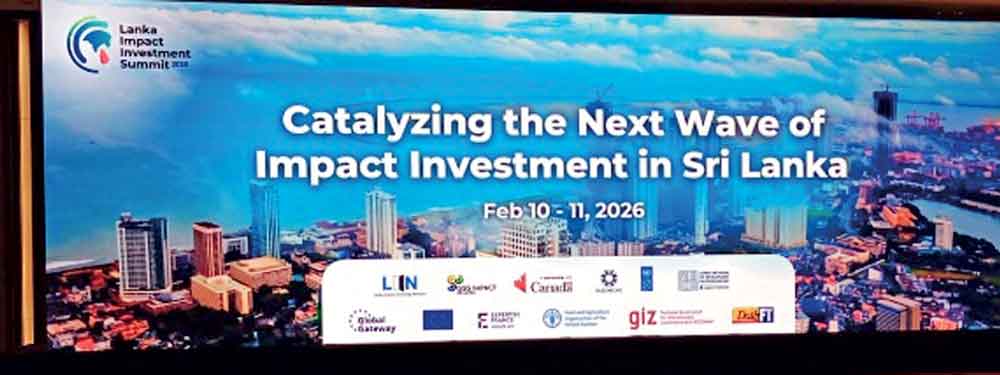
Snapshot of Summit partners

LIIN Founder and Chairman and GSG Impact Sri Lanka Chairman Chandula Abeywickrema

Senior Economic Adviser to the President Duminda Hulangamuwa

High Commission of Canada Counsellor for Political and Trade Affairs Gwen Temmel

GSGII Director of Coordination Raffaella DeFelice

Keynote Speaker for Plenary One: UNDP Sri Lanka Resident Representative Azusa Kubota
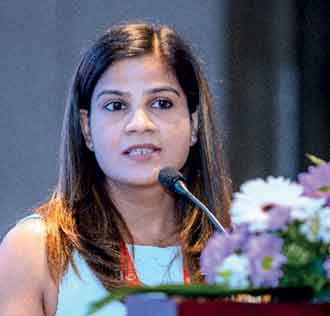
Plenary Two keynote address was delivered by responsAbility Investments AG Head – Sustainable Food Debt Neha Baid
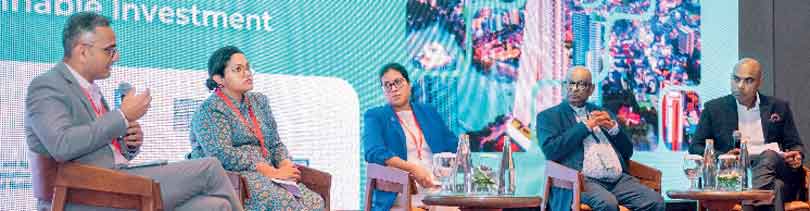
Plenary One, titled “From Potential to Impact,” was moderated by RNH Ventures Group Director Dr. Nirmal De Silva (extreme right). The speakers (from right) were Lanka Impact Investing Network and GSG Impact Sri Lanka Chair Chandula Abeywickrema, UNDP Policy and Program Specialist and Team Leader – Sustainable Growth Dulani Sirisena, Selyn Sri Lanka Director – Business Development Selyna Peiris, and Gojo & Company Inc. Deputy Chief Investment Officer Sohil Shah
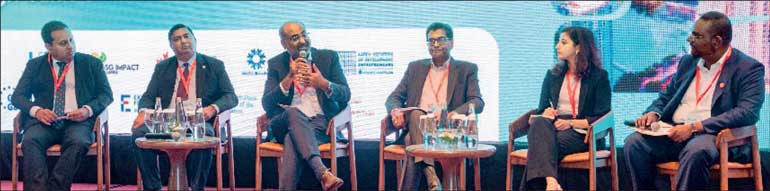
Plenary Two, titled “Sustainable Food Systems for Impact,” was moderated by Impact Investment Exchange, Singapore Associate Vice President Vasanthen Sivakajan (extreme right). The speakers (from right) were responsAbility Investments Senior Investment Officer Richa Tripathi, Vidullanka Director Rizvi Zaheed, Aavishkaar Capital Partner Abhishek Mittal, Food and Agriculture Organisation of the United Nations in Sri Lanka Assistant FAO Representative – Program Nalin Munasinghe, and MA’s Tropical Food Processing Chief Executive Officer Maliek De Alwis

The keynote address was delivered by Asian Development Bank Senior Financial Sector Specialist Manohari Gunawardhena

Plenary Three keynote address was delivered by Synamon Global Senior Adviser Rajendra Theagarajah

Plenary Four keynote address was delivered by GSG Japan Chair Masataka Uo

World University Service of Canada Country Director Mumtaz Aroos Faleel

Chandula Abeywickrema delivering the closing remarks
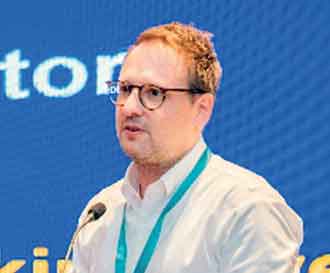
Deutsche Gesellschaft für Internationale Zusammenarbeit GmbH Adviser – Circular Economy in the Food Sector Gideon Kletzka
Sri Lanka reached a significant milestone in its sustainable finance journey with the successful convening of the Lanka Impact Investment Summit 2026, hosted by the Lanka Impact Investing Network (LIIN) and GSG Impact Sri Lanka, with the Global Affairs Canada (GAC) as the anchor partner through the World University Service Canada (WUSC), and in partnership with key ecosystem actors such as the Food and Agriculture Organisation (FAO), the UNDP, the GIZ Sri Lanka, and the Aspen Network of Development Entrepreneurs.
The summit marked the country’s first dedicated national platform focused exclusively on impact investing, bringing together policymakers, development partners, investors, financial institutions, enterprises, and ecosystem builders from Sri Lanka, South Asia, and beyond.
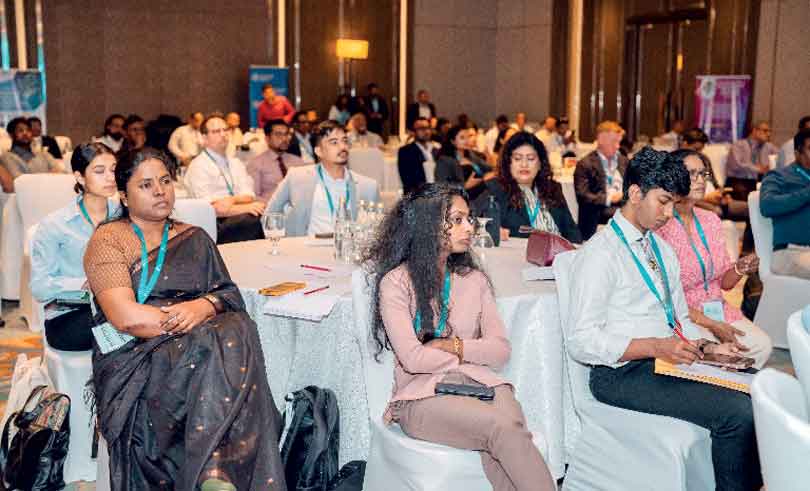
Designed as both a convening and a catalyst, the summit, attended by over 180 participants, laid the groundwork for positioning Sri Lanka as an emerging regional hub for impact investment, with a strong emphasis on translating dialogue into tangible investment pathways.
Curtain raiser: Setting the strategic context
The summit commenced with a high-level curtain raiser on the evening of 10 February, designed to frame Sri Lanka’s impact investment journey within its broader economic, policy, and regional context.
Delivering the opening remarks, Lanka Impact Investing Network (LIIN) Founder and Chairman and GSG Impact Sri Lanka Chairman Chandula Abeywickrema emphasised the need to rethink how capital is mobilised in Sri Lanka. He noted that impact investing offers a powerful framework to align private capital with national priorities such as SME development, climate resilience, inclusive growth, and job creation, particularly at a time when Sri Lanka is rebuilding its economic foundations.
In his keynote address, Senior Economic Advisor to the President Duminda Hulangamuwa highlighted that Sri Lanka is well on track in its rebuilding journey following the economic crisis of 2022, despite facing significant external shocks.
He noted that the country had demonstrated resilience even after suffering one of the most severe natural disasters in its history with Cyclone Ditwa in November 2025, underscoring the importance of mobilising long-term, resilient capital to support recovery and future-proof growth. Hulangamuwa emphasised that impact-oriented investments can play a critical role in strengthening SMEs, rebuilding productive sectors, and attracting patient capital aligned with Sri Lanka’s development priorities.
The evening also featured a keynote address by High Commission of Canada Counsellor for Political and Trade Affairs Gwen Temmel, who reaffirmed Canada’s long-term commitment to Sri Lanka’s development journey. She highlighted Canada’s strong focus on gender empowerment, inclusive economic participation, and sustainable development, with particular emphasis on supporting underserved regions, including the Northern Province of Sri Lanka.
Temmel also referenced Canada’s support for ecosystem-level initiatives that strengthen entrepreneurship and resilience, including programs that enable women-led and impact-oriented enterprises to access skills, markets, and capital. In this context, she acknowledged initiatives such as the GRIT (Growth, Resilience, Investment and Training) Program, funded by Global Affairs Canada (GAC) and implemented by LIIN in partnership with World University Service of Canada (WUSC), which is focused on fostering a gender-responsive entrepreneurial ecosystem in Northern Sri Lanka. Her remarks underscored the importance of pairing capital with capacity-building and institutional support to achieve sustainable, inclusive growth.
Concluding the curtain raiser, Global Steering Group for Impact Investment (GSGII) Director – Regional Coordination Raffaella DeFelice placed Sri Lanka’s efforts within a global and regional context. She noted that national impact investment ecosystems succeed when they are deliberately structured to channel capital toward measurable outcomes.
DeFelice also highlighted LIIN’s ongoing efforts to establish a local impact fund, designed to provide early-stage capital to growing impact enterprises in Sri Lanka, addressing a critical financing gap and strengthening the country’s pipeline of investment-ready enterprises. She emphasised that such initiatives are essential to translating dialogue into deployable capital and long-term ecosystem impact.
Day Two: From dialogue to direction
The second day of the summit focused on deep-dive discussions under the overarching theme of mobilising capital for sustainable and inclusive growth.
Opening the day, Lanka Impact Investing Network (LIIN) Founder and Chairman and GSG Impact Sri Lanka Chairman Chandula Abeywickrema emphasised that sustainable growth is no longer optional for Sri Lanka, it is as fundamental to the country’s future as water is to life. Drawing on this analogy, he highlighted that growth pursued without resilience, inclusion, and long-term value creation risks deepening vulnerabilities rather than strengthening the economy.
He underscored that Sri Lanka’s recovery must be anchored in investment approaches that balance financial returns with measurable social and environmental outcomes. Impact investing, he noted, offers a practical framework to achieve this balance, supporting SMEs, strengthening productive sectors, and directing capital toward areas that build resilience and long-term prosperity. His remarks set the tone for a day of discussions focused not only on opportunity, but on how capital can be structured and deployed responsibly to support the country’s next phase of growth.
Plenary One: From potential to impact – Making Sri Lankan enterprises capital ready
Plenary One opened with a keynote by UNDP Sri Lanka Resident Representative Azusa Kubota, who highlighted the deep resilience embedded across Sri Lanka’s entrepreneurial landscape. She briefly shared the story of a woman tailor she met during flood relief efforts, someone who had lost her livelihood to flooding yet was already planning to rebuild, for the third time. The example underscored the strength and determination of micro and small entrepreneurs across the country.
Building on this framing, the panel discussion focused on identifying the specific areas that need strengthening to improve enterprise readiness, ranging from financial discipline and governance to impact measurement and operational controls. The panellists emphasised that combining patient capital with targeted technical assistance is essential to ensure that Sri Lanka’s resilient enterprises can transition from survival to scale and become investable at the level required to drive long-term economic growth. The discussion also highlighted that micro, small, and medium enterprises cannot be expected to adopt complex or costly systems designed for larger corporates. Instead, there is a need for tailor-made, affordable, and scalable control mechanisms that reflect the realities of smaller enterprises while still providing investors with confidence and transparency.
The panel comprised Lanka Impact Investing Network (LIIN) Founder and Chairman and GSG Impact Sri Lanka Chairman Chandula Abeywickrema; UNDP Policy and Programme Specialist and Team Leader – Sustainable Growth Dulani Sirisena; Gojo and Company Inc. Deputy Chief Investment Officer Sohil Shah; and Selyn Sri Lanka Director – Business Development Selyna Peiris. The discussion was moderated by RNH Ventures Group Director Dr. Nirmal De Silva.
Plenary Two: Sustainable food systems for impact
Plenary Two focused on ‘Sustainable food systems for impact’, with a keynote address delivered by responsAbility Investments AG Head – Sustainable Food Debt Neha Baid, a leading global impact investor headquartered in Switzerland.
Baid highlighted responsAbility’s long-standing engagement in Sri Lanka, underscoring the firm’s continued commitment to the country’s agri-food sector. She also referenced responsAbility’s recent investment in English Tea Shop, which places a strong emphasis on strengthening livelihoods across smallholder farmer networks and building resilient, sustainable supply chains. Her remarks set the stage for a discussion on how patient capital, when deployed with a value-chain lens, can drive both commercial returns and meaningful impact in food systems.
The panel discussion that followed centred on four critical dimensions shaping the investability of sustainable food systems. Panellists examined where value is currently created and lost across agri-value chains, and which segments present the strongest opportunities for investment. The discussion then turned to the persistent barriers to scaling capital, including risk perceptions, fragmentation, and structural gaps that continue to constrain investment into agriculture and food systems.
Panellists also explored how key partners such as Food and Agriculture Organisation of the United Nations Assistant FAO Representative (Program) in Sri Lanka Nalin Munasinghe can play a catalytic role in addressing these barriers by supporting aggregation, capacity building, and market linkages. The session concluded with a forward-looking discussion on what Sri Lanka should, and should not, prioritise over the next five to ten years to build resilient, investable food systems capable of attracting long-term capital. The panel featured responsAbility Investments Senior Investment Officer Richa Tripathi; Vidullanka PLC Director Rizvi Zaheed; Aavishkaar Capital Partner Abhishek Mittal; Food and Agriculture Organisation of the United Nations Assistant FAO Representative – Program in Sri Lanka Nalin Munasinghe; and MA’s Tropical Food Processing Chief Executive Officer Maliek De Alwis. The panel was moderated by Impact Investment Exchange Associate Vice President Vasanthen Sivakajan.
ADB keynote: Scaling capital for sustainable development
The Summit featured a keynote address by Asian Development Bank Senior Financial Sector Specialist Manohari Gunawardhena, who focused on the critical role of the financial sector in mobilising capital for sustainable development in Sri Lanka. She highlighted the importance of strengthening financial market infrastructure and aligning financial institutions with emerging priorities such as climate resilience, SME development, and inclusive growth.
Gunawardhena emphasised that while public capital and development finance play a foundational role, achieving scale will require greater mobilisation of private capital, supported by innovative financial instruments and risk-sharing mechanisms. She noted that ADB continues to support Sri Lanka through policy engagement, financial sector reforms, and targeted interventions designed to crowd in private investment and strengthen the flow of capital into priority sectors.
Her remarks reinforced the need for closer collaboration between policymakers, financial institutions, investors, and development partners to create enabling conditions for sustainable investment. The keynote provided a clear bridge between policy intent and practical financial solutions, underscoring ADB’s commitment to supporting Sri Lanka’s transition toward a more resilient, inclusive, and investment-ready economy.
Plenary Three: From vision to investment – Unlocking capital for impact
Plenary Three, held under the theme “From vision to investment,” examined how Sri Lanka can translate long-term development aspirations into deployable capital and investable opportunities. The session was anchored by a keynote address from Synamon Global Senior Advisor Rajendra Theagarajah, who highlighted the country’s growing need for patient growth capital to support the next phase of economic expansion. Drawing from his experience working with private wealth and institutional investors, he emphasised the significant yet underutilised role that family offices and private wealth can play in Sri Lanka’s impact investment ecosystem. He noted that impact investing provides a credible framework for aligning generational wealth with long-term national development priorities while maintaining financial discipline.
Building on this framing, the panel discussion explored key sectors and thematic areas ripe for impact investment in Sri Lanka, with particular emphasis on gender lens investing, the importance of an ecosystem-level approach, and the role of impact measurement and verification in strengthening investor confidence. Panellists also discussed innovative investment structures that could be adapted to the Sri Lankan context, highlighting the need for flexibility, risk-sharing mechanisms, and alignment with local market realities.
The panel featured Impact Investment Exchange Senior Vice President – Strategic Initiatives Richa Kothari; Aspen Network of Development Entrepreneurs Executive Director Devin Chesney; and Greenpower SL Chief Investment Officer Mike Edge. The discussion was moderated by KPMG Partner – Climate Change and Sustainability Services, Global Assurance, Family Business and Board Governance Pyumi Sumanasekara.
Strategic milestone: LIIN–IIX partnership and the Orange Movement
A key milestone of the Summit was the signing of a Memorandum of Understanding between the Lanka Impact Investing Network (LIIN) and Impact Investment Exchange (IIX), marking a strategic partnership to strengthen Sri Lanka’s impact investment ecosystem and deepen regional and global linkages.
The partnership brings together LIIN’s local ecosystem-building efforts with IIX’s global leadership in impact investing, particularly through the Orange Movement, IIX’s flagship initiative focused on advancing gender equality, inclusive finance, and women’s economic empowerment through market-based solutions. The collaboration aims to support impact enterprises in Sri Lanka by strengthening investment readiness, facilitating access to capital, and promoting innovative financing structures aligned with measurable impact outcomes.
As part of this partnership, it was also announced that Colombo will host the Orange Forum later this year, positioning Sri Lanka as an important convening point for regional and global stakeholders advancing gender-lens and inclusive impact investing. The Orange Forum will provide a dedicated platform to showcase investment opportunities, share best practices, and catalyse collaboration among investors, development partners, and enterprises.
The LIIN–IIX partnership signals a shared commitment to moving beyond dialogue toward action, leveraging global experience, regional networks, and local insight to mobilise capital for impact and accelerate the growth of Sri Lanka’s impact investment landscape.
Plenary Four: Building a sustainable impact investing ecosystem in South Asia
Plenary Four broadened the lens to a regional perspective under the theme “Building a sustainable impact investing ecosystem in South Asia.” The session opened with a keynote address by GSG Japan Chair Masataka Uo, who shared insights from Japan’s impact investing journey and the deliberate steps taken to integrate impact considerations into mainstream capital markets. He emphasised that while national ecosystems are critical, regional cooperation plays an increasingly important role in attracting global capital, sharing best practices, and achieving scale. Drawing from Japan’s experience, he highlighted how collaboration across markets can strengthen credibility, reduce fragmentation, and create larger, more investable opportunity sets for international investors.
Building on this perspective, the panel discussion examined the practical dimensions of regional integration and capital mobilisation. Panellists explored why regional coordination matters to global impact investors, particularly in reducing transaction costs and improving deal flow. The discussion addressed the structural and regulatory barriers that prevent capital from moving seamlessly across borders, and how the absence of shared standards and interoperable platforms continues to limit scale. Panellists emphasised the importance of harmonised frameworks, common impact measurement standards, and regional pipelines in reducing friction and improving investor confidence.
The session also highlighted the potential of a South Asia Impact Fund as a catalytic mechanism to unlock scale for SMEs across the region, enabling pooled capital, diversified risk, and cross-border investment opportunities. The panel featured GSG India Chair Royston Braganza; GSG Bangladesh Chair Farhadur Reza; and Global Steering Group for Impact Investment Regional Manager Clint Coo. The discussion was moderated by World University Service Canada Country Director Mumtaz Aroos Faleel.
South Asia Impact Declaration: A regional commitment
Plenary Four concluded with the announcement of the South Asia Impact Declaration by the speakers, marking a collective commitment to deepen regional collaboration in advancing impact investing across South Asia. The Declaration affirmed the importance of shared standards, coordinated platforms, and cross-border cooperation to mobilise capital at scale, particularly for SMEs and impact-oriented enterprises. It also signalled a shared intent to explore regional mechanisms, to unlock pooled capital, diversify risk, and strengthen the region’s attractiveness to global impact investors.
Concluding remarks: From commitment to action
In his concluding remarks, Lanka Impact Investing Network (LIIN) Founder and Chairman and GSG Impact Sri Lanka Chairman Chandula Abeywickrema extended an invitation for deeper collaboration and collective action beyond the Summit. He emphasised that the conversations and commitments made during the Summit must now translate into sustained engagement, through partnerships, capital mobilisation, and ecosystem-building initiatives.
He noted that the Summit represents a starting point rather than an endpoint, and called on investors, development partners, policymakers, and enterprises to work together to build credible pipelines, strengthen enterprise readiness, and deploy capital in ways that deliver measurable impact alongside financial returns. His remarks underscored LIIN’s commitment to convening, connecting, and catalysing action as Sri Lanka advances its role within a growing regional impact investment ecosystem.
Impact Capital Connect: Translating dialogue into deal-making
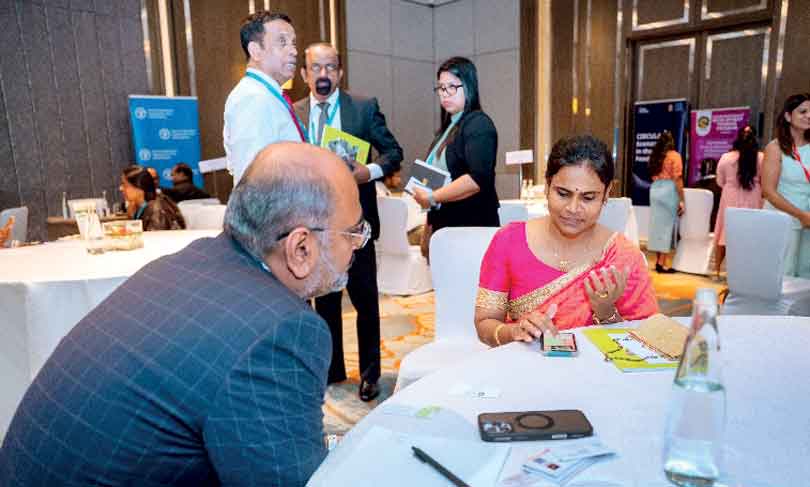
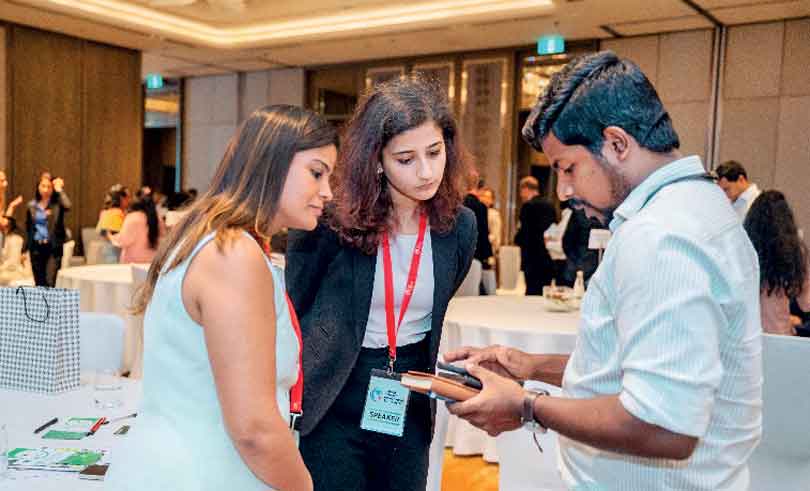
A key highlight of the Summit was Impact Capital Connect, a curated engagement platform designed to move conversations from dialogue to deployable capital. The session brought together 15 international investors and 10 local investors, who engaged in structured discussions with 25 impact-oriented enterprises operating across diverse sectors within Sri Lanka’s impact investment landscape.
Conducted as a single, integrated engagement forum, Impact Capital Connect enabled direct interaction among investors, enterprises, corporates, and financial institutions, fostering candid discussions around capital needs, investment readiness, and pathways to scale. Enterprises benefited from direct feedback on governance, financial discipline, and structuring expectations, while investors gained visibility into a credible and increasingly mature pipeline of impact-driven businesses.
The quality of engagement during the session also reflected the importance of targeted investment readiness support in strengthening deal flow. Several participating enterprises had previously engaged with LIIN-led programmes implemented on behalf of GIZ, which focus on advancing circular economy solutions and the prevention of food loss across agri-value chains. By supporting enterprises to adopt circular business models, improve resource efficiency, and strengthen commercial viability, these initiatives have contributed to building more resilient and investable enterprises, enabling more substantive and informed investor conversations during Impact Capital Connect.
Discussions during the session explored opportunities across growth-stage financing, blended finance structures, impact measurement, and scalable circular solutions. While not positioned as a deal-closing forum, Impact Capital Connect succeeded in advancing relationship-building, clarifying investor expectations, and identifying follow-on engagement opportunities. The strong participation reinforced the value of intentional matchmaking platforms in bridging the gap between capital and opportunity, and reaffirmed LIIN’s role as a trusted intermediary in catalysing impact-driven investment in Sri Lanka.

Plenary Three, titled “From Vision to Investment,” was moderated by KPMG Partner – Climate Change and Sustainability Services, Global Assurance, Family Business and Board Governance Pyumi Sumanasekara (extreme right). The speakers (from right) were Impact Investment Exchange Senior Vice President – Strategic Initiatives Richa Kothari, Aspen Network of Development Entrepreneurs Executive Director Devin Chesney, Tundra Fonder AB ESG Analyst Chau Le, and Greenpower SL Chief Investment Officer Mike Edge

Plenary Four, titled “Building a Sustainable Impact Investing Ecosystem in South Asia,” was moderated by World University Service Canada Country Director Mumtaz Aroos Faleel (extreme right). The speakers (from right) were Lanka Impact Investing Network and GSG Impact Sri Lanka Chairman Chandula Abeywickrema, GSG India Chair Royston Braganza, GSG Bangladesh Chair Farhadur Reza, and Global Steering Group for Impact Investment Regional Manager Clint Coo
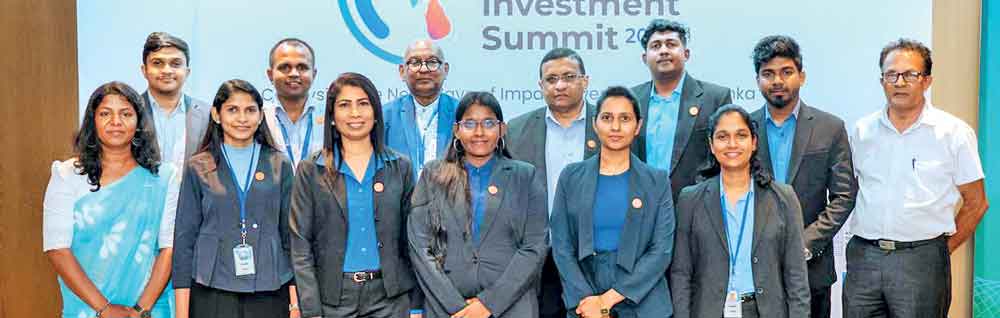
LIIN team members

The MoU was signed by Impact Investment Exchange
Chief Operating Officer Angela Ng (right) and Lanka Impact Investing Network and GSG Impact Sri Lanka
Chairman Chandula Abeywickrema