Monday Oct 12, 2026
Monday Oct 12, 2026
Thursday, 4 June 2026 00:23 - - {{hitsCtrl.values.hits}}
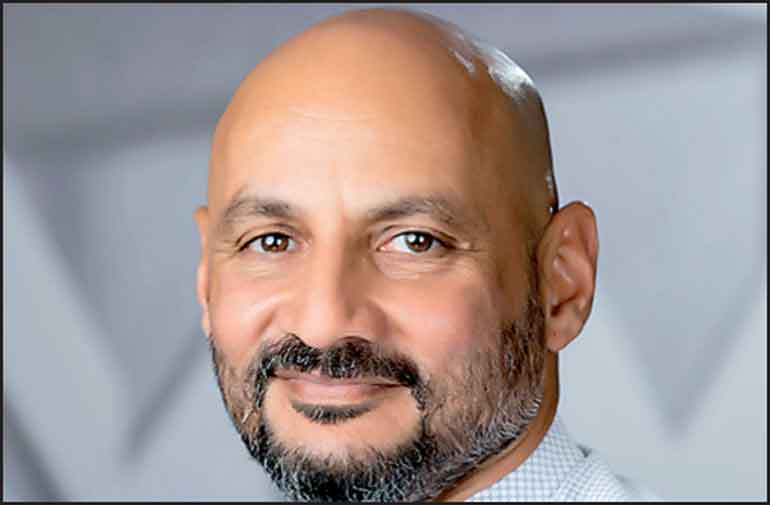
Secretary General
Yohan Lawrence
Sri Lanka has been placed in the higher 12.5% tier of a proposed new US duty regime targeting economies that the Office of the United States Trade Representative (USTR) says have failed to impose or effectively enforce prohibitions on imports produced using forced labour.
The proposal was announced by the USTR following investigations conducted under Section 301 of the Trade Act of 1974.
The USTR determined that Sri Lanka’s acts, policies, and practices relating to the failure to impose and effectively enforce a prohibition on the importation of goods produced with forced labour were unreasonable and burdened or restricted US commerce.
Commenting on the proposal, US Trade Representative Jamieson Greer said the failure of trading partners to address forced labour imports created conditions that forced American workers to compete on an uneven playing field.
Under the proposal, economies that have imposed forced labour import prohibitions, committed to such measures through reciprocal trade agreements, or implemented partial regimes preventing the importation of certain forced labour goods would face an additional duty of 10%. All other economies, including Sri Lanka, would face an additional duty of 12.5%.
Joint Apparel Association Forum (JAAF) Secretary General Yohan Lawrence said the proposed measure was not entirely unexpected given recent developments in US trade policy, but warned that Sri Lanka’s competitiveness could be affected if rival apparel exporters such as Cambodia, Bangladesh, Indonesia, and Pakistan remain subject to the lower 10% duty.
“Our challenge would be in terms of competitiveness if countries such as Cambodia continue to enjoy the 10% rate and we bear the 2.5% disadvantage. However, we believe there is an appeals process and we hope to have a favourable outcome,” Lawrence told the Daily FT.
According to the USTR, public hearings on the proposed measures are scheduled for 7 July, while written submissions will be accepted until 6 July. Requests to participate in the hearings must be submitted by 22 June.
“Sri Lanka should use this opportunity to lobby in this window,” Lawrence urged.
The US, Sri Lanka’s largest single export market accounting for around 22% of merchandise exports, recorded a 3.15% year-on-year (YoY) decline in imports from Sri Lanka to $ 196.37 million in April. Cumulative exports to the market during the first four months of 2026 fell 2.09% to $ 945.76 million compared with the corresponding period last year.
Last August, the US reduced the reciprocal tariff proposed on Sri Lankan exports to 20% from the 44% rate announced in April 2025. Following a February 2026 US Supreme Court ruling that struck down tariffs imposed under the International Emergency Economic Powers Act (IEEPA), Sri Lankan exports became subject to a temporary 10% tariff under Section 122 of the Trade Act of 1974.
According to the Institute of Policy Studies, Sri Lanka’s effective tariff rate on exports to the US fell to 21.6% from around 31% under the previous regime.
The new proposal would impose additional duties on all products originating from the investigated economies, subject to exemptions contained in a Federal Register notice. It also includes a textile mechanism that would permit a specified volume of apparel and textile imports from certain economies to enter the US at a reduced Section 301 tariff rate.
The affected economies include major US trading partners such as China, India, Japan, South Korea, the UK, the EU, Canada, Mexico, Australia, Brazil, and South Africa.
The USTR said 54 economies, including Sri Lanka, had failed to impose and effectively enforce prohibitions on forced labour imports, while six economies, including Canada, Mexico, Pakistan, Indonesia, Ecuador, and the EU, had failed to effectively enforce existing regimes.
Sri Lanka was not among the 46 economies that participated in confidential government-to-government consultations conducted by the USTR during the investigation.
Countries that took part included India, Cambodia, Indonesia, Pakistan, Japan, the EU, and the UK. According to the USTR, the remaining economies either declined requests for consultations or were unable to participate.




