Sunday Sep 13, 2026
Sunday Sep 13, 2026
Saturday, 10 January 2026 00:10 - - {{hitsCtrl.values.hits}}
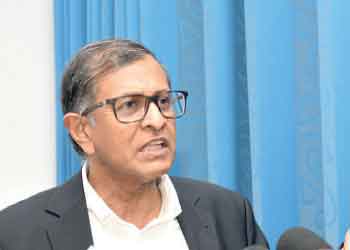 |
| ODI Visiting Senior Fellow Dr. Ganeshan Wignaraja |
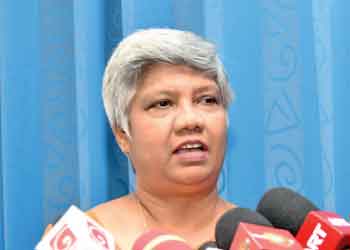 |
| Former CBSL Senior Deputy Governor Yvette Fernando |
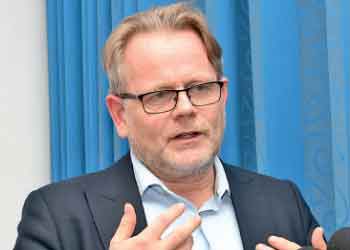 |
| ODI Global Principal Research Fellow and Director Dirk Willem te Velde |
By Amira Cader
Sri Lanka must stay the course with the International Monetary Fund (IMF) program, invest decisively in tourism-related infrastructure, and cut regulatory red tape for foreign investors if it is to convert recent economic stabilisation into sustained and inclusive growth, speakers said yesterday at a policy discussion held alongside the launch of the report ‘Sustaining transformative growth in Sri Lanka, 2025–2030’ by the Centre for Poverty Analysis (CEPA) and ODI Global at the Sri Lanka Foundation Institute in Colombo.
ODI Visiting Senior Fellow and Independent Growth Study Group Convenor Dr. Ganeshan Wignaraja said the country had made significant progress since the 2022 debt default but warned that the recovery remained fragile without consistent reform implementation.
“Tourism is booming and this momentum must be supported with targeted infrastructure—better transport links, upgraded airports, improved facilities in emerging destinations, and stronger safety and service standards,” Dr. Wignaraja said.
He stressed that expanding tourism investment beyond Colombo to less-visited regions would generate jobs, spread incomes, and strengthen inclusive growth.
He also underscored the urgency of simplifying regulations and easing entry, operation, and exit for investors, cautioning that Sri Lanka risks missing out on regional supply chains and foreign direct investment (FDI) amid intensifying competition in Asia. “If approvals remain slow and rules unclear, capital and jobs will go elsewhere,” he said.
The panel noted that the recovery effort is taking place against the backdrop of recent shocks such as Cyclone Ditwah, which has had a significant economic impact. Preliminary estimates indicate that the cyclone caused around $ 4.1 billion in direct damage, affecting nearly all districts that together generate approximately 82-84% of Sri Lanka’s GDP, with losses equivalent to about 4% of national output.
Despite these setbacks, speakers noted that Sri Lanka is midway through its IMF program, has rebuilt foreign exchange reserves, and has made substantial progress in recovering from the 2022 economic crisis.
The panellists stressed that the policy agenda outlined in ‘Sustaining transformative growth in Sri Lanka, 2025–2030’ is not merely about crisis management but about locking in stability and positioning the economy for resilient, future-oriented growth.
Former Central Bank of Sri Lanka (CBSL) Senior Deputy Governor Yvette Fernando emphasised that policy credibility and institutional discipline were critical to preserving hard-won stability.
She noted that adherence to the IMF-supported reform framework had helped tame inflation, rebuild reserves, and restore confidence but cautioned against complacency.
“Macroeconomic stability must not be compromised. Losing credibility now would be extremely costly,” she said.
ODI Global Principal Research Fellow and Director Dirk Willem te Velde said stabilisation alone would not deliver prosperity. “Sri Lanka now needs to move decisively towards export-led growth, deeper integration into global supply chains, and higher-quality FDI,” he said, adding that implementation capacity would be the defining challenge.
The book, launched in English, Sinhala, and Tamil, outlines six priority policy pillars for 2025-2030, including maintaining macroeconomic stability, promoting exports and FDI, improving factor markets, supporting high-growth sectors such as tourism and the digital economy, strengthening poverty reduction, and building political consensus and State capacity.
The panellists agreed that policy consistency, tourism-led investment, and a more investor-friendly regulatory environment together offer the most realistic path to sustaining growth above 5%, reducing poverty, and avoiding a return to debt distress.




