Thursday Oct 01, 2026
Thursday Oct 01, 2026
Thursday, 1 October 2026 00:00 - - {{hitsCtrl.values.hits}}
The real estate sector has evolved far beyond the simple trading of land and buildings. Today, it encompasses a dynamic ecosystem comprising property development, residential housing, commercial real estate, industrial parks, mixed-use developments, special economic zones, and hospitality infrastructure. As such, it forms the physical foundation upon which modern economies operate, providing the framework for habitation, commerce, services, and industry.
The historical footprint and a changing landscape
Historically, Sri Lanka’s real estate story was rooted in agrarian land ownership and low-rise suburban settlements. While the economic liberalisation reforms of 1977 triggered the country’s first significant wave of urbanisation, it was the end of the civil conflict in 2009 that accelerated the sector’s transformation.
Over the past two decades, horizontal expansion has steadily given way to a vertical revolution. Colombo’s skyline has been reshaped by luxury high-rises, mixed-use developments, and modern gated communities, fundamentally changing how Sri Lankans live, work, and invest.
Today, the landscape is evolving once again. The industry is moving beyond conventional property development toward resort-style living, serviced residences, integrated townships, and sustainable master-planned communities that reflect changing consumer preferences and global lifestyle trends.
The ultimate economic catalyst
The real estate and construction sectors remain among the most powerful engines of economic growth in Sri Lanka. As major attractors of foreign direct investment (FDI), large-scale property developments have historically contributed significantly to capital inflows while stimulating economic activity across a broad network of industries.
The sector’s impact extends far beyond construction sites. It supports a vast value chain that includes cement and steel manufacturing, architecture, engineering, quantity surveying, interior design, financial services, legal advisory, technology solutions, logistics, and professional consultancy.
Furthermore, the sector is a significant generator of employment, creating opportunities for hundreds of thousands of individuals across the skills spectrum, ranging from masons and construction workers to structural engineers, architects, lawyers, financial professionals, and corporate planners. It supports a vibrant and diverse value chain catering to market segments that range from affordable housing and community development projects to luxury and highly specialised real estate offerings.
With macroeconomic conditions gradually stabilising, the sector’s growth potential remains substantial. Domestic investors increasingly view real estate as an effective hedge against inflation, while international investors are beginning to recognise Sri Lanka as an attractive and relatively undervalued investment destination.
A sector at a crossroads: Strengths and challenges
Strengths
Strategic Geographic Location: Sri Lanka’s position along key Indian Ocean maritime routes continues to make it attractive to regional and global investors.
Resilient Corporate Brands: Large, vertically integrated real estate and construction groups have demonstrated their ability to navigate economic volatility while continuing to deliver projects.
Investment Potential: Real estate remains one of the country’s most effective long-term wealth preservation and inflation-hedging assets.
Challenges
Macroeconomic Vulnerabilities: The sector remains sensitive to currency fluctuations, material cost inflation, financing costs, and interest rate movements.
Regulatory Bottlenecks: Approval processes involving multiple regulatory authorities often delay project implementation.
Foreign Investor Concerns: Historical challenges surrounding capital repatriation, ownership regulations, and policy consistency continue to influence investor sentiment.
Charting the path forward: Real estate 2030
Bringing together these diverse perspectives, the MBA Alumni Association of the University of Colombo (MBAAA) will host Real Estate 2030: Investment, Innovation and Urban Futures in Sri Lanka on 2 October 2026 at the Port City Colombo Sales Gallery.
Organised as part of the Association’s ongoing thought leadership and professional engagement initiatives, the forum will serve as a platform for meaningful dialogue among leaders from real estate, investment, finance, construction, urban planning, technology, sustainability, and public policy. Discussions will focus on key themes including foreign investment, urban transformation, smart-city development, sustainability benchmarks, Prop-Tech integration, infrastructure readiness, and the policy reforms required to build a globally competitive and future-ready real estate sector.
By convening this high-level dialogue, the MBAAA seeks to generate actionable insights, foster industry collaboration, and contribute to a shared vision for the future of Sri Lanka’s built environment. The question is no longer whether real estate will shape Sri Lanka’s future, but how effectively its leaders across policy, development, finance, and technology can unite to unlock its full potential.
Inside the mind of the industry: Expert perspectives
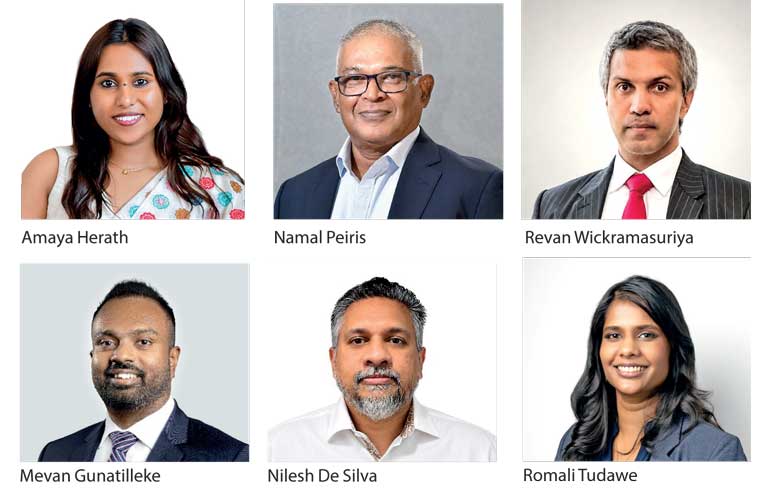
1. Positioning Sri Lanka for Global Investment: Amaya Herath
As Executive Director of Home Lands Group, Amaya Herath represents a new generation of industry leadership, combining expertise in law, technology, and real estate. She believes Sri Lanka has the potential to emerge as the world’s next real estate investment destination.
“At Home Lands, we believe Sri Lanka has the potential to become the world’s next real estate investment destination. Our strategic location, natural beauty, lifestyle advantages, and evolving infrastructure create a compelling proposition for global investors, offering opportunities for long-term capital appreciation and attractive returns. As Sri Lanka enters its next phase of economic growth, real estate can play a pivotal role in attracting international capital and creating globally competitive destinations,” she explains.
Amaya also highlights the growing demand for resort-style living, beachfront villas, serviced apartments, and integrated communities, reflecting the evolving expectations of both local and international investors.
2. The builder’s perspective: Namal Peiris
As a veteran engineer and Managing Director and CEO of the International Construction Consortium Private Limited (ICC), Namal Peiris believes Sri Lanka possesses a powerful combination of locational, lifestyle, and investment advantages. However, he emphasises that sustained success depends on strengthening accountability and execution.
“Foreign investors look beyond pricing; they look at construction progress, timely delivery, and clear exit mechanisms,” he observes.
According to Peiris, maintaining political stability, reducing logistics inefficiencies, and addressing construction material costs are essential to sustaining the sector’s upward trajectory.
3. The SEZ advantage: Revan Wickramasuriya
From a policy and investment perspective, Revan Wickramasuriya, Director General of the Colombo Port City Economic Commission (CPCEC), highlights the transformative role of the Colombo Port City Special Economic Zone (SEZ). As the regulator of Port City Colombo, the Commission acts as a single-window investment facilitator, providing streamlined approvals, facilitating access to clean land titles, and enabling the flexibility to transact in multiple foreign currencies. Through this integrated framework, the Commission seeks to address longstanding barriers faced by international investors.
Wickramasuriya believes that progressive investor friendly frameworks enabling investors to live and work in Sri Lanka and unrestricted access to their funds when held in Sri Lankan financial institutions will be crucial in attracting global businesses, retaining talent, and positioning Sri Lanka as a competitive regional hub.
4. Going global: Mevan Gunatilleke
Representing a new wave of internationally focused Sri Lankan engineering expertise, Mevan Gunatilleke highlights the opportunities for local firms to expand their reach into overseas markets.
His perspective centres on exporting Sri Lankan engineering, project management, and construction expertise to emerging markets across South Asia, the Maldives, and parts of Africa.
Such international expansion, he argues, can generate valuable foreign exchange earnings while elevating local technical standards through global exposure and best practices.
5. Contemporary design and architecture: Nilesh De Silva
Archt. Nilesh De Silva, Chartered Architect and Principal Design Partner of Kahawita De Silva and Associates Pvt Ltd (KDS), believes the future of architecture lies in balancing aesthetics, functionality, sustainability, and cost efficiency. Drawing on a multi-generational design legacy, Archt. Nilesh De Silva advocates the adoption of innovative materials, people-centric design philosophies, and sustainable master planning.
In his view, successful developments of the future must seamlessly integrate local identity with international standards while responding directly to evolving consumer expectations.
6. Legal foundations and institutional longevity: Romali Tudawe
Romali Tudawe brings a legal and governance perspective to the industry’s future, emphasising the importance of vigilance in financial management, sustainable industry practices and responsible stakeholders. She argues that robust governance frameworks, clear land titles, effective dispute-resolution mechanisms, and regulatory compliance which are practical and critical for attracting institutional and foreign investment.
Her perspective underscores a simple reality: trust, proper valuation, and responsible ring-fencing of money remain some of the most valuable principles in any real estate market.



