Saturday Oct 10, 2026
Saturday Oct 10, 2026
Saturday, 10 October 2026 00:00 - - {{hitsCtrl.values.hits}}
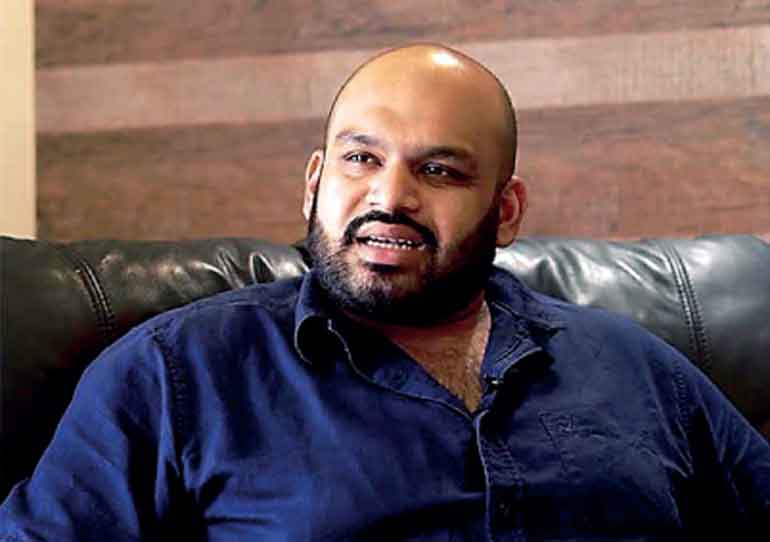
MP Shanakiyan Rasamanickam
Batticaloa District MP Shanakiyan Rasamanickam yesterday called on the Government to disclose the revenue, tax liabilities and outstanding arrears of hotels in the Northern and Eastern Provinces. He told Parliament that local councils were being deprived of revenue legally due to them while large operators profited from land in the regions.
Rasamanickam said comprehensive information on major hotels, their revenues, tax liabilities and contributions to local authorities was not being made available to Parliament. Without it, he argued, the House could not assess whether tourism establishments were meeting their legal and financial obligations. Nor, he said, could the Government credibly claim tourism was benefiting local communities without showing where the revenue was going.
He asked the Government to table district-wise data on hotels and tourist accommodation registered or licensed with the Sri Lanka Tourism Development Authority (SLTDA).
He also sought annual figures from 2018 to 2026 on establishments that had paid the Tourism Development Levy. For each establishment, he wanted to know its room capacity, annual revenue, applicable tax rates, tax liabilities, actual payments and outstanding arrears.
He also asked for the number of Sri Lankan and foreign employees at each.
Rasamanickam raised particular concern over Batticaloa District. He said hotels and tourism establishments there had failed to make payments legally due to Pradeshiya Sabhas, the rural local councils. Several of these councils were already in serious financial difficulty, he said, and the shortfall further weakened their ability to deliver essential services. He questioned the fairness of small traders being expected to meet their tax obligations while payments from major hotel operators remained outstanding.
Responding, Tourism Minister Vijitha Herath said Pradeshiya Sabhas had the legal authority to act under the relevant tax legislation. He acknowledged that problems existed in relation to taxation and said steps were being taken to amend the applicable laws.
Rasamanickam said Pradeshiya Sabhas should not be treated merely as institutions responsible for garbage collection. He called for them to be strengthened financially by ensuring they received the revenue owed to them, so they could improve services and undertake local development.
He also sought an investigation into extensive state land allocated in the Eastern Province during former Minister Basil Rajapaksa’s tenure. Substantial extents, in some cases several acres, had gone to private companies and politically connected individuals, he said. He called for Parliament’s Committee on Public Finance (COPF) to examine whether the beneficiaries were meeting their tax and other financial obligations, with action taken where necessary.
Beyond taxation, Rasamanickam questioned how Sri Lanka measures tourism performance. He noted that performance was largely judged by tourist arrivals, while revenue was estimated from assumptions about average length of stay and daily spending. He asked the Government to submit annual data from 2018 to 2026 on arrivals, average length of stay, average daily expenditure and estimated revenue. He also wanted the sources used and any subsequent revisions disclosed.
He further sought district-wise figures on funds allocated to and actually spent on tourism development in the North and East, including the projects implemented and the institutions responsible. He wanted spending on archaeological sites separated from investment in infrastructure that directly supports local tourism businesses.
To ensure the benefits reach local communities, he proposed enforceable conditions on local employment, local procurement and community benefits. These would apply before new tourism zones are established or state land is allocated for hotels, with annual district-wise reports to monitor compliance. He also questioned the role of an official representing the tourism authorities in the Valaichchenai area, and called for greater support for local entrepreneurs entering the sector.
The President recently visited Batticaloa and highlighted the potential for new tourism destinations along the district’s coast. Rasamanickam urged the Government to turn the proposal into properly planned projects that create jobs and support local businesses in coastal communities.
He also raised the cultural side of the industry. Star-class hotels in the North and East had traditionally welcomed guests with the Tamil greeting ‘Vanakkam’, he noted, but were increasingly using the Sinhala greeting ‘Ayubowan’. He acknowledged it might appear a minor issue, but said respecting regional languages and traditions was part of responsible tourism development.
Herath agreed that ‘Vanakkam’ was equally appropriate. He said instructions could be issued encouraging hotels in the regions to use Tamil greetings, including ‘Kaalai Vanakkam’ (Good Morning) and ‘Maalai Vanakkam’ (Good Evening).
Concluding, Rasamanickam said tourism success should be measured not only by arrivals, hotel construction or estimated national revenue. He said it should also be judged by the jobs created for local residents, the opportunities for small businesses, the taxes paid to local authorities and the benefits reaching surrounding communities.




