Thursday Sep 17, 2026
Thursday Sep 17, 2026
Thursday, 17 September 2026 05:09 - - {{hitsCtrl.values.hits}}
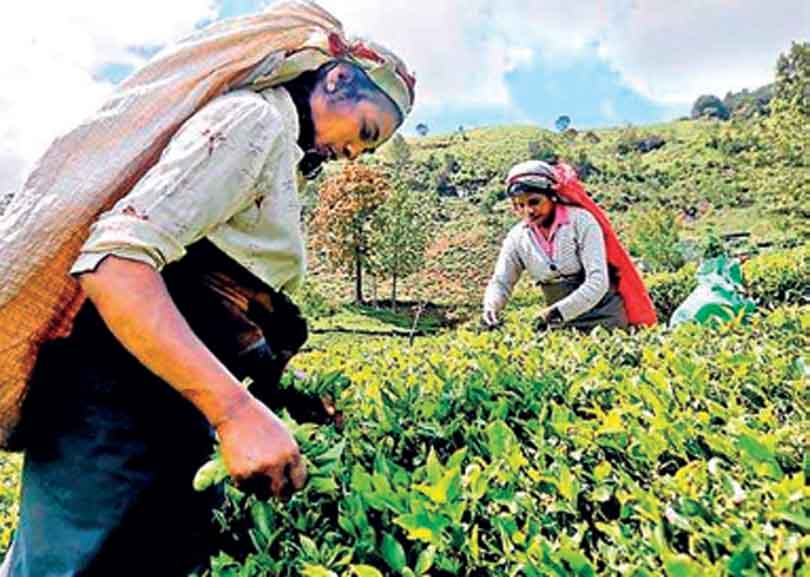
Sri Lanka’s High Grown tea production fell to 3.1 million kilograms (MnKg) in August, the lowest monthly output recorded from the elevation category in any month since the El Niño-affected year of 1992, according to Asia Siyaka Commodities.
The 1992 El Niño remains one of the most damaging weather events to have hit the industry; High Grown production that year fell to just 2.2 MnKg in April.
Citing Department of Meteorology records from 1992, Asia Siyaka noted that the country experienced a severe drought that year, marked by a sharp fall in rainfall between January and March. “During the 19911992 El Niño event, Sri Lanka experienced a significant drought characterised by a sharp drop in rainfall during the early part of the year (January to March).” The brokerage added that meteorological data showed roughly 46% of the island’s land area received less than 10% of normal rainfall during that period.
Asia Siyaka said it referenced the 1992 records to highlight the challenges the industry could face in the first quarter of 2027, when extremely dry and hot conditions are anticipated. It made no forward-looking comment on the remainder of 2026 in this report. Conditions in August 2026 itself were markedly different from 1992, the brokerage said, with excessive rainfall and persistent overcast weather, rather than drought, adversely affecting production.
National tea output for August totalled 19 MnKg, down 3.65% from 19.72 MnKg in the corresponding month of 2025 and down 10.97% from 21.34 MnKg in August 2024, according to Forbes & Walker Research. By elevation, High Grown production fell 16.17% year-on-year (YoY) to 3.02 MnKg and Medium Grown output declined 14.77% YoY to 2.7 MnKg. Low Growns were the sole gainer among the major categories, rising 2.59% YoY to 13.09 MnKg, while Green Tea edged up 0.17% YoY to 0.18 MnKg.
Asia Siyaka’s own estimates showed a similar pattern, with total output down 3.7% YoY to 18.9 MnKg from 19.7 MnKg, Low Growns rising to 13.1 MnKg from 12.7 MnKg, Medium Growns falling 14% YoY to 2.7 MnKg, and High Growns down 15.8% YoY.
Cumulative production for January-August stood at 172.21 MnKg, a decline of 2.7% from 176.98 MnKg in the same period of 2025, Forbes & Walker Research data showed. High Grown output for the eight months was marginally ahead of last year, up 0.14% to 37.35 MnKg, while Green Tea rose 8.17% to 1.74 MnKg. Medium Growns declined 6.21% YoY to 29.75 MnKg and Low Growns fell 2.81% YoY to 103.37 MnKg.
Against the same period of 2024, cumulative output was down a marginal 0.16%, with High Growns and Green Tea ahead by 3.01% and 16.45%, respectively, while Medium and Low Growns remained below 2024 levels.
Asia Siyaka’s cumulative figures broadly corroborated this picture, putting High Growns marginally ahead of last year at 38.3 MnKg against 38.1 MnKg, Medium Growns down 6% YoY to 30.4 MnKg, and Low Growns down almost 3% YoY to 103.3 MnKg.
The brokerage also gave a breakdown by manufacturing method, showing Orthodox Tea (the traditional whole-leaf process) down about 3% YoY, while CTC (crush-tear-curl, the machine-processed method typically used for tea bags) rose almost 7% YoY and Green Tea increased 8% YoY.



