Friday Oct 02, 2026
Friday Oct 02, 2026
Thursday, 5 February 2026 05:40 - - {{hitsCtrl.values.hits}}
|
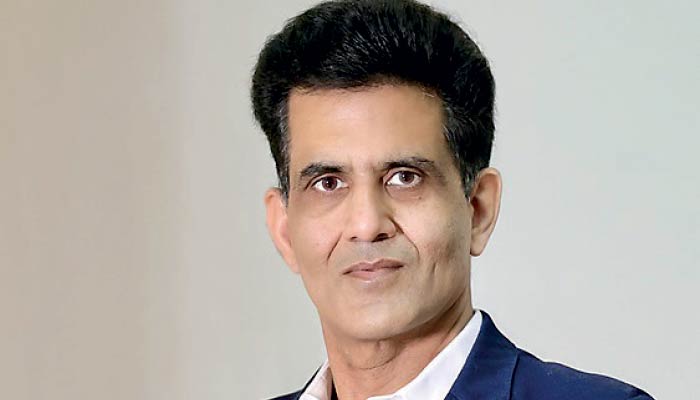
Group CEO Ashish Chandra
|
Hemas Holdings PLC has reported cumulative earnings of Rs. 5.9 billion, up 7.5% year-on-year (YoY), for the nine months to end-December 2025 supported by revenue growth of 9.4% to Rs. 95.8 billion and a significant reduction in net finance costs.
Operating profit was broadly stable at Rs. 9.8 billion, with margin pressures in select Consumer Brands categories offset by robust performance in Healthcare and Mobility, both of which delivered double-digit growth in revenue and earnings.
On a quarterly basis, revenue grew by 5.3% YoY to Rs. 35 billion, driven by continued strength in Healthcare and Mobility. However, quarterly earnings declined by 12.8% to Rs. 2.6 billion, reflecting two temporary factors. First, Consumer Brands performance was impacted by a seasonality shift at Atlas, where sales were advanced into earlier quarters compared to the prior year. Second, Cyclone Ditwah disrupted distribution and consumer demand during November and December 2025, particularly within Consumer Brands, resulting in lower volumes during the peak quarter.
During the period, the Group commenced a structured, enterprise-wide digital transformation program focused on standardising core business processes, implementing integrated enterprise systems, and strengthening real-time data and reporting capabilities across the Group. Further, the Group strengthened its Artificial Intelligence (AI) capability-building agenda through the establishment of Hemas AI Labs, a structured platform to develop internal capabilities and incubate use-case-led AI solutions across businesses.
Reflecting strong investor confidence, the Hemas share price increased 68% YoY, significantly outperforming the broader market. In comparison, the All Share Price Index (ASPI) and S&P SL Top 20 Index gained 41.9% and 26.6%, respectively.
In the Consumer Brands segment, cumulative revenue increased marginally to Rs. 36.5 billion, while earnings reached Rs. 4.2 billion for the nine-month period to end-December 2025. During the period, it encountered margin pressure due to the Home Care segment, higher overhead costs earlier in the year, and investments in brand building and capability enhancement.
The sector reported a softer quarterly performance, with revenue declining 9.9% YoY to Rs. 14.5 billion. The decline was largely attributable to a timing-led preponement of Learning segment demand into the second quarter following proposed curriculum changes, and temporary demand and distribution disruptions arising from Cyclone Ditwah.
In the Home and Personal Care – Sri Lanka segment, the Personal Care and Personal Wash categories continued to record positive underlying cumulative volume growth of 4.6%, supported by strong performance in Beauty and Baby Care. In contrast, the Home Care segment experienced a volume decline during the quarter, reflecting temporary demand softness following the cyclone.
In line with the Group’s innovation-led premiumisation strategy, Diva launched its 3-in-1 ‘Power Pods’, introducing an advanced laundry format to the Sri Lankan market. The Diva ‘Fresh’ range was also re-launched with enhanced formulation, fragrance longevity, and refreshed packaging, aimed at strengthening category competitiveness.
Despite ongoing macroeconomic challenges in Bangladesh, the international consumer business delivered strong cumulative revenue growth of 18% YoY (in BDT terms), driven by volume expansion and pricing actions within the value-added hair oil category.
In the Learning segment, Atlas continues to grow and delivered cumulative revenue growth ahead of the industry, fuelled by a 12.6% volume growth compared to last year. However, quarterly revenues declined YoY due to a timing shift, with a significant portion of demand being realised in the second quarter following anticipated changes to the school curriculum.
Atlas completed the rollout of its school bags and water bottles range, while its Educational Toys segment continued to scale, supported by an expanding sales network and steady progress in the preschool teacher training program.
In the Healthcare segment, cumulative sector revenues increased by 14.6% to Rs. 57.6 billion for the nine months to end-December 2025, driving growth in operating profits to Rs. 4.8 billion and earnings of Rs. 3.2 billion, recording increases of 9.2% and 16.9%, respectively.
The sector posted a revenue of Rs. 19.9 billion for the quarter, achieving a growth of 19.6%, with operating profits of Rs. 1.7 billion and earnings growth of 19.9% to Rs. 1.1 billion. Higher volumes from the Pharmaceuticals segment contributed to the increase in revenue, while the Hospital segment saw increased inpatient and outpatient demand.
In the Pharmaceuticals segment, the Pharmaceutical Distribution business achieved significant YoY cumulative revenue growth of 17.8% despite impact from the cyclone in November 2025, which was totally recovered in December 2025. Morison’s own branded products continued to gain market traction, and also successfully secured a further one-year extension to the buyback agreement with the Government.
Hemas Pharmaceuticals continues to be the market leader in the Pharmaceutical Distribution industry segment, while in the Pharmaceutical Manufacturing industry segment, Morison has moved up by 19 places during the last four years, as per the latest available IQVIA market data.
In the Hospitals segment, increases in both inpatient, outpatient numbers and lab services saw the hospital segment recording strong revenue growth during the quarter, delivering cumulative revenue growth of 26% compared to last year. New services such as the Cath-lab and the Health Plus OPD facility have contributed to the revenue growth.
In the Mobility segment, the sector achieved a cumulative revenue of Rs. 1,730.3 million in the nine-month period to end-December 2025, reflecting a growth of 18.5% which contributed to a 16.4% growth in earnings to Rs. 634.1 million. The revenue growth was backed by healthy volume growth across all the segments.
The quarterly revenue and earnings increased to Rs. 612.4 million and Rs.237.9 million, respectively, recording a growth of 18.1% and 42.7%, respectively. This performance was supported by the successful introduction of the China–India Express service, which emerged as a key driver of incremental volumes.
The Maritime segment delivered strong cumulative volume growth of 8.7%, with increased throughput across import, export, and transshipment operations. In the Aviation segment, passenger numbers continued to improve by 15.2% during the year, driven by increased frequencies and enhanced marketing efforts, while cargo volumes and yields remained broadly stable, reflecting steady demand conditions.
The Group continued to advance its environmental and social priorities in line with its long-term sustainability strategy, strengthening circular economy outcomes, improving resource efficiency, scaling community impact, and reinforcing its position as a purpose-led corporate leader.
Cumulative plastic recovery reached 2.5 million kilograms, reaffirming the Group’s commitment to collect 50% of plastic sent to market by 2025 and 100% by 2030. Water intensity increased marginally from 1.3 to 1.5. However, efficiency improvement initiatives remain under way across operations to mitigate resource risk and drive long-term conservation. Renewable energy adoption continued to progress, with 10% of total electricity consumption sourced from renewable energy, supporting the Group’s goal to ensure 25% of its energy is from renewable sources. The Group delivered meaningful social impact across education, health and wellbeing, and inclusion, reaching over 31,600 individuals during the quarter, reinforcing its commitment to inclusive growth. Through the Hemas Outreach Foundation, three new preschools were added, expanding the network to 75 schools.
Hemas Holdings PLC was recognised among 200 Best Under a Billion 2025 companies by Forbes Asia, as one of Sri Lanka’s top three corporate citizens by The Ceylon Chamber of Commerce and as one of the Top 10 Best Employers in Sri Lanka for 2025 by the Employers’ Federation of Ceylon.
The company announced a planned Board transition with long-serving Chairman and former Group CEO Husein Esufally retiring from the Board on 31 December 2025, following over four decades of service that shaped Hemas into a leading diversified conglomerate in the country. Deputy Chairman Dr. Anura Ekanayake also retired upon completing his term on the same date. From 1 January 2026, Ajith Fernando, a veteran investment banker and a member of the Board since July 2024, assumed the role of Chairman, while Murtaza Esufally, member of the Board and the Chairman of the Healthcare cluster, was appointed as Deputy Chairman, reflecting Hemas’ commitment to balancing continuity with renewal, preserving the Group’s heritage while strengthening its leadership to achieve its growth priorities and deliver superior shareholder value.
Looking ahead, the Group is experiencing an improvement in operating conditions as the economy recovers, supporting improved consumer sentiment and normalisation of demand, which will fuel growth in coming quarters.
In parallel, the Group is in the process of finalising its long-range plan, which will set the strategic agenda and capital allocation priorities for the next five years, with a continued focus on sustainable growth, portfolio resilience, and disciplined value creation.
During the quarter, macroeconomic conditions reflected selective cost pressures alongside areas of stability, with a moderated net impact on the Group’s performance. The LKR depreciated by 2.4%. This created some pressure on imported inputs, particularly in Consumer Brands and Healthcare, which was partially mitigated through pricing actions, procurement discipline, and cost optimisation initiatives.
The Average Weighted Prime Lending Rate (AWPLR) rose marginally but the impact on the Group was contained due to its strong balance sheet, negative net gearing, and disciplined funding strategy. Inflation remained low at 2.1%, helping to contain operating cost escalation and preserve consumer affordability.
In parallel, softer global palm oil and crude oil prices provided relief on input and energy costs, partially offsetting currency pressures.
Cyclone Ditwah, which struck Sri Lanka on 25 November 2025, was one of the most severe natural disasters experienced by the country in recent decades. The Group’s manufacturing and service facilities did not sustain any direct physical damage, however, the cyclone caused temporary supply-chain and distribution disruptions during November and December 2025, alongside a short-term deterioration in consumer sentiment.
As a result, demand softness was observed during the latter part of the third quarter, particularly within the Consumer Brands and Healthcare sectors. Demand has since stabilised, with encouraging recovery trends evident, entering the fourth quarter.
In parallel, the Group mobilised a coordinated, multi-sector disaster response, working closely with Government authorities, community organisations, and local stakeholders. The Group committed approximately Rs. 30 million in financial and in-kind humanitarian assistance, focused on immediate relief for vulnerable communities. In addition, the Group has factored in Rs. 200 million for targeted support to small and medium enterprises across the value chain through extended credit terms, stock replenishment, and business restoration initiatives.