Wednesday Aug 19, 2026
Wednesday Aug 19, 2026
Wednesday, 24 June 2026 00:23 - - {{hitsCtrl.values.hits}}
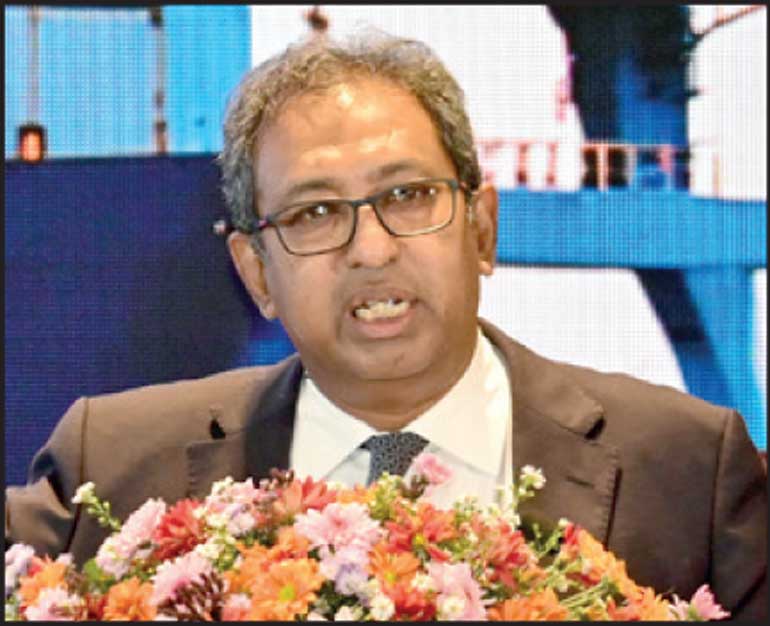
SJB MP Dr. Harsha de Silva
Sri Lanka must move beyond the 25-year-old India-Sri Lanka Free Trade Agreement (ISFTA) and conclude the long-discussed Economic and Technology Cooperation Agreement (ETCA) with India if it is to integrate into regional value chains, attract investment and accelerate economic growth, Samagi Jana Balawegaya (SJB) MP Harsha de Silva said.
Addressing the forum titled “25 Years of ISFTA – Powering the Next Wave of Trade, Investment and Growth,” organised by the High Commission of India in Colombo in collaboration with the Indo Lanka Chamber of Commerce and Industry, de Silva argued that Sri Lanka risks missing a historic opportunity if it fails to align itself with India’s rapid economic expansion.
“We have to move from the old first-generation trade agreement to a second-generation agreement, where we integrate with manufacturing value chains and production networks,” he said.
Dr. de Silva, the original ISFTA helped liberalise trade, but future growth would depend on Sri Lankan firms becoming part of Indian and regional supply chains through improved access to raw materials, intermediate goods and investment opportunities.
He said the rationale for ETCA was straightforward: it would enable Sri Lanka to integrate more deeply with India’s vast internal market and production ecosystem.
The SJB MP noted that while discussions on a Comprehensive Economic Partnership Agreement (CEPA) and later ETCA have continued for nearly 15 years, progress has remained stalled despite India’s emergence as one of the world’s fastest-growing major economies.
“India has gone ahead and signed trade agreements with many countries while we are still stuck in the same place and unable to move beyond the FTA,” he said.
Dr. de Silva argued that Sri Lanka should negotiate future trade arrangements based on value-chain rules rather than traditional tariff concessions alone, allowing domestic industries to supply inputs into India’s expanding manufacturing base.
While supporting ETCA, he acknowledged concerns over liberalisation of the services sector, which accounts for around 60% of Sri Lanka’s GDP.
He said the debate should move beyond simplistic arguments for or against opening services and instead focus on designing appropriate safeguards.
“What services do we open? How do we open them? What regulations and accreditation systems do we put in place?” he asked, stressing that professional standards and workforce protections must be incorporated into any agreement.
He also highlighted foreign direct investment (FDI) as a key benefit of a modern economic partnership with India, arguing that stronger legal and regulatory certainty could encourage greater investment inflows.
Dr. de Silva questioned why ETCA had received little political attention despite repeated high-level exchanges between Sri Lanka and India particularly under the current Government, noting that references to the agreement had been largely absent from recent joint statements issued during official visits.
The MP suggested that political leadership would be required to finally move negotiations forward.
At the same time, he stressed that deeper integration would require India to address longstanding concerns raised by Sri Lankan exporters regarding non-tariff barriers.
Dr. de Silva pointed to difficulties relating to product certification, testing requirements and logistics constraints, arguing that these practical obstacles often undermine the benefits of formal trade agreements.
“If India is not willing to accept certification from Sri Lankan authorities, how can exports move smoothly?” he asked.
He also highlighted transportation and port-related inefficiencies, saying that such barriers must be resolved if trade ties are to expand meaningfully.
Dr. de Silva criticised what he described as persistent anti-CEPA and anti-ETCA lobbying that has delayed economic integration efforts for years.
He argued that Sri Lanka’s long-term growth prospects depended on looking beyond its domestic market and capitalising on opportunities presented by India’s economic rise.
“India is growing rapidly. Tamil Nadu, Karnataka, Andhra Pradesh and Telangana are all expanding at a remarkable pace. We are just a short distance away, yet we have not been able to connect ourselves to that growth story,” he said.
The MP warned that Sri Lanka could be left behind if it continues to delay reforms and integration measures, stressing that the country’s future growth would depend on expanding beyond the limits of its domestic market.
“The only way we can grow much faster is if our marketplace extends beyond the shores of this island,” he said.
Dr. de Silva also pledged bipartisan support for any future agreement that is beneficial to both countries, stating that the Opposition would back efforts to advance economic cooperation with India if the final outcome serves Sri Lanka’s national interest.



