Tuesday Oct 13, 2026
Tuesday Oct 13, 2026
Tuesday, 31 March 2026 06:28 - - {{hitsCtrl.values.hits}}
|
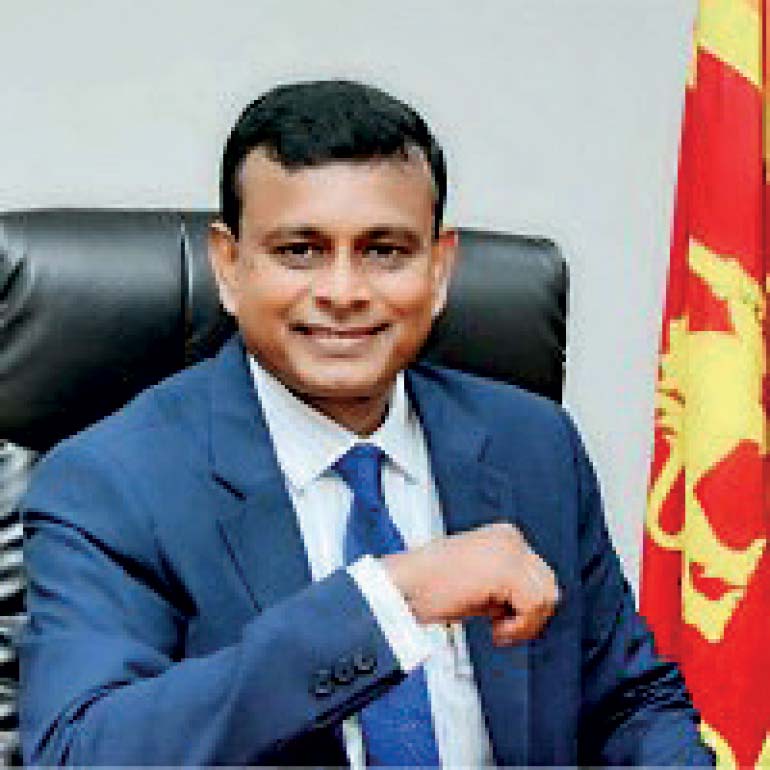
Essential Services Commissioner General Prabath Chandrakeerthi
|
The Government has intensified countrywide conservation efforts with a series of strict guidelines aimed at curbing fuel and electricity consumption, as authorities warn of mounting pressure from the global energy crisis and emerging dry weather conditions.
The directives, issued by Essential Services Commissioner General Prabath Chandrakeerthi, place immediate emphasis on reducing energy use across both public and private sectors.
Under the new measures, all air conditioning units in Government and statutory institutions must be switched off by 3 p.m., while illuminated billboards and digital advertisements are required to go dark by 8 p.m.
Local authorities have also been tasked with implementing programs to limit street lighting during peak evening hours.
In a further push to ease pressure on the national grid, organisers of large-scale events exceeding 100 participants have been instructed to rely on independent power sources rather than drawing electricity from the grid. Private sector entities have also been strongly encouraged to adopt similar energy-saving practices.
Separately, Public Administration Minister Prof. Chandana Abayarathna stressed that conservation must extend beyond Government institutions to include the general public, warning that the country is entering a period of heightened vulnerability due to reduced rainfall and rising temperatures.
He noted that excessive and inefficient electricity use, particularly during peak hours between 6 p.m. and 10 p.m., is placing unnecessary strain on the system.
Street lighting, he said, has been identified as a major area for savings, with instances of lights being switched on too early and left on unnecessarily in the morning contributing to wastage.
The Minister also called for practical behavioural changes, including switching off unused lights and fans, reducing lift usage in public buildings, and limiting energy consumption from advertising displays.
He noted that even small individual actions, when adopted collectively, could yield significant national savings.
Beyond electricity, authorities are also turning attention to water conservation, as forecasts point to possible rainfall shortfalls.
The Minister cautioned against the misuse of treated drinking water for non-essential activities such as vehicle washing, urging households to prioritise essential consumption and explore alternative water sources where possible.
Framing the situation as a shared national responsibility, Prof. Abayarathna said the country must act collectively to navigate the dual challenges of energy constraints and potential water scarcity.
He said the conservation drive will remain in place until global conditions stabilise, underscoring the need for sustained public cooperation in the months ahead.