Thursday Oct 22, 2026
Thursday Oct 22, 2026
Friday, 1 May 2026 09:59 - - {{hitsCtrl.values.hits}}
By Charumini de Silva
|
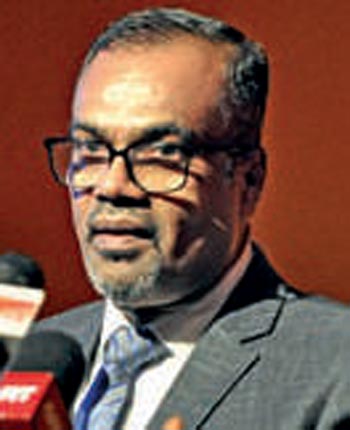
Deputy Finance and Planning Minister Dr. Anil Jayantha Fernando
|
|
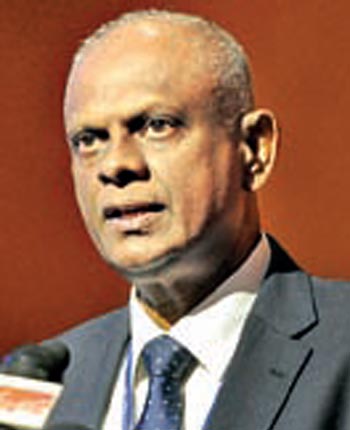
Sri Lanka Customs Director General Seevali Arukgoda
|
Deputy Finance and Planning Minister Dr. Anil Jayantha Fernando yesterday underscored the transformative role of technology and process innovation in strengthening the performance of Sri Lanka Customs, noting that ongoing digital initiatives could enhance operational efficiency, curb corruption and support trade facilitation.
Addressing the launch of new technology-driven initiatives at Sri Lanka Customs, Dr. Fernando said that while traditional performance indicators such as revenue collection remain strong with the agency exceeding targets in recent times and the next phase of institutional improvement must be driven by process innovation rather than tangible outputs.
He stressed that in a rapidly evolving global environment, even monopoly public institutions must innovate to remain effective and responsive to policy objectives.
The Deputy Minister highlighted that many of the improvements in Customs processes remain unrecognised, calling for greater public awareness of reforms being implemented to facilitate trade and improve service delivery. According to him, incremental enhancements in operational processes, supported by technology, can significantly raise institutional performance over time.
Dr. Fernando noted that digitalisation offers a “major leverage point,” particularly in automating workflows and enabling real-time systems, which can reduce human intervention and minimise opportunities for corrupt practices. He said corruption often arises from discretionary power and opportunity, adding that well-designed automated systems can help eliminate such gaps while reinforcing transparency and accountability.
He pointed to the wider economic benefits of Customs modernisation, particularly in reducing the operating cycle for importers, exporters and manufacturers. “Shorter processing times, would lower transaction costs across supply chains, ultimately benefiting consumers and improving overall market efficiency,” he said.
The Deputy Minister also acknowledged the constraints under which Customs officials operate, commending their efforts in developing and implementing new systems despite limited resources. He stressed the need to improve working conditions, including ensuring safe and supportive environments, in line with broader labour priorities such as those highlighted during International May Day.
From a policy standpoint, Dr. Fernando reaffirmed the Government’s commitment to strengthening institutional capacity, improving inter-agency collaboration and fostering a culture of innovation within the public sector. He insisted that sustained progress would depend not only on legal frameworks and technological upgrades but also on cooperation among Government bodies, the private sector and the public.
He acknowledged that resistance to change is inevitable, particularly during early stages of reform, but urged stakeholders to remain committed to long-term objectives. “Initial transitions are always the most difficult,” he said, adding that persistence and collective focus on national goals would be key to achieving sustainable improvements.
Fernando expressed confidence that continued reforms at Customs would contribute to economic growth, enhance public service delivery and support Sri Lanka’s broader goal of shared prosperity.
Customs on a roll
Sri Lanka Customs exceeded its April revenue target for a fourth consecutive month, collecting Rs. 186.5 billion within the first 27 days of the month against a target of Rs. 181.3 billion, according to official data.
The performance continues a run of monthly overachievement, with the revenue agency reaching its target ahead of month-end despite expectations of softer inflows this year.
Customs has set a revenue target of Rs. 2,207 billion for 2026, 13.5% lower than last year, reflecting an anticipated decline in vehicle imports. Data showed that 39.4% of the annual target had been achieved within the first 117 days of the year.
Revenue collection has been supported by accelerated container clearance since January, following disruptions to normal operations caused by the November devastation.
In 2025, Customs reported a record Rs. 2,551 billion in revenue, exceeding a revised target of Rs. 2.24 trillion and marking a 64.2% increase compared to the previous year’s Rs. 1.55 trillion.
Enhancing revenue, trade and border control
Sri Lanka Customs Director General Seevali Arukgoda yesterday outlined an ambitious push towards full digitalisation, stressing that modernising systems is critical to sustaining revenue growth, facilitating trade and strengthening border protection.
Speaking at the launch of new technology initiatives, Arukgoda said Customs has consistently exceeded Government revenue expectations over the past three years, with last year’s collections surpassing targets by Rs. 441 billion.
He noted that performance this year is also ahead of projections, attributing the outcome in part to the support of the trading community, including importers, exporters and clearing agents.
However, he stressed that revenue collection is only one of four core institutional objectives, alongside trade facilitation, social protection and organisational development. “Customs must strike a balance between enabling seamless trade flows and enforcing regulatory controls to safeguard national borders through restrictions and prohibitions,” he added.
Arukgoda noted that efficient trade facilitation is essential to ensuring Sri Lankan exporters remain competitive in global markets, noting that delays in clearance processes can erode cost advantages and disrupt supply chains. “Therefore, transition from manual to digital systems is no longer optional but necessary to align with evolving global standards,” he said.
He revealed that Customs’ digitalisation drive is being implemented in line with the Government’s broader policy agenda and the agency’s strategic plan for 2024–2028. Having initiated automation efforts as early as the mid-1990s, Arukgoda said Sri Lanka Customs is now positioning itself ahead of many other public institutions in delivering digital services to stakeholders.
The Director General also highlighted the establishment of a dedicated digital transformation unit and acknowledged the role of the ICT division and industry stakeholders in advancing reforms. He said newly launched initiatives, including system upgrades and interface improvements, demonstrate Customs’ commitment to enhancing service delivery for the trading community.
Arukgoda also credited pressure and engagement from trade bodies, including Ceylon Association of Shipping Agents (CASA), Customs House Agents and other stakeholders, for accelerating reform momentum. “The collaboration between Customs and private sector partners remains vital to ensuring that systems evolve in line with user needs and international best practices,” he added.
Reaffirming the agency’s long-term vision, Arukgoda said, “Customs will continue to expand its digital capabilities with the aim of becoming a world-class service provider, capable of delivering efficient, transparent and secure operations that support Sri Lanka’s broader economic development.”
- Pix by Lasantha Kumara