Sunday Oct 04, 2026
Sunday Oct 04, 2026
Thursday, 28 May 2026 06:09 - - {{hitsCtrl.values.hits}}
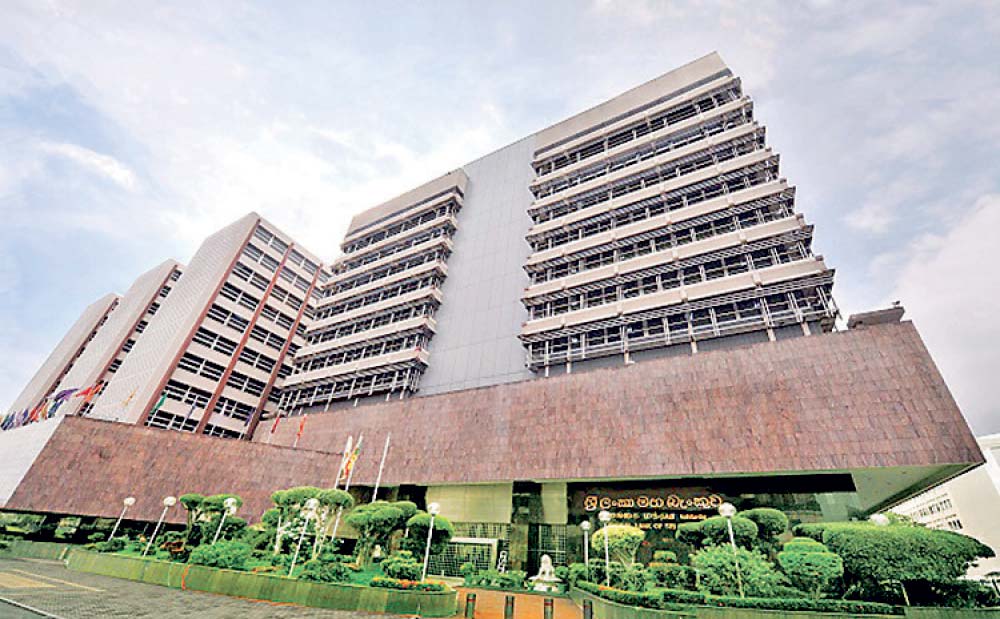
The Free Lawyers Organisation yesterday alleged that liquidity expansion by the Central Bank of Sri Lanka (CBSL) during 2025 and early 2026 contributed to current foreign exchange pressures and rupee volatility.
Free Lawyers CEO and former Provincial Governor Keerthi Tennakoon claimed that the CBSL had ‘printed’ Rs. 1,653 billion, referring to the expansion in M2b monetary supply, during 2025 and a further Rs. 610.7 billion between January and March 2026 by purchasing dollars to build reserves. He said the country’s total money supply (M2b) had expanded to Rs. 16,585.7 billion as at March 2026.
Tennakoon claimed that the CBSL had purchased US dollars from commercial banks using rupee liquidity, alleging that such operations contributed to excess money supply growth and pressure on the exchange rate.
Free...
M2b comprises currency held by the public, including notes and coins outside banks, demand deposits, savings deposits, time deposits, and foreign currency deposits held by residents in domestic banking units. As such, growth in M2b may reflect several factors beyond liquidity injected through CBSL foreign exchange purchases.
According to the CBSL’s Monetary Operations Report 2025, surplus liquidity conditions during the year were mainly supported by the CBSL’s net foreign exchange operations with banks. The CBSL stated that foreign exchange purchases and swap transactions injected approximately Rs. 788.9 billion in rupee liquidity on a net basis, rather than the full Rs. 1,653 billion expansion in M2b cited by Tennakoon.
However, the CBSL said domestic liquidity was partially absorbed through factors including net foreign loan repayments by the Government using foreign exchange obtained from the CBSL amounting to Rs. 356.1 billion, net currency withdrawals of around Rs. 210.2 billion, and coupon payments of around Rs. 189.5 billion on Treasury Bond holdings of the CBSL.
Tennakoon further claimed that outstanding Government debt had increased to Rs. 29,994.69 billion in 2025 from Rs. 28,240.22 billion as at November 2024, while interest rates had also risen in recent weeks.
He alleged that recent economic developments had also contributed to disruptions in the vehicle market and fuel price increases.
“The CBSL should provide answers to these allegations without coming up with short media releases,” Tennakoon said.
The CBSL has recently cautioned the public against what it described as misleading and oversimplified narratives surrounding monetary policy, money printing, and exchange rate determination, stating that such matters involve complex technical and economic considerations.
At Tuesday’s Monetary Policy Review No. 03/2026 media briefing, CBSL Governor Dr. Nandalal Weerasinghe dismissed claims that recent exchange rate pressures were primarily the result of money printing.
“I don’t think the CBSL should answer such, I shouldn’t say it, stupid arguments,” he said.
Economists note that when a central bank purchases dollars from the domestic market to build foreign reserves, the resulting rupee liquidity may require adjustment through higher interest rates, greater exchange rate flexibility, or higher domestic prices for imported commodities such as fuel in order to contain import demand and external pressures.
However, analysts also caution that attributing recent rupee volatility primarily to liquidity expansion presents an incomplete picture, as the currency has also come under pressure from the economic fallout of the Middle East conflict, higher global oil prices, stronger demand for US dollars, delayed exporter conversions, regional currency weakness, and sentiment-driven behaviour in the domestic foreign exchange market.
They note that panic importer demand for dollars and broader global uncertainty have also contributed to recent pressure on the rupee alongside domestic liquidity conditions.



