Export earnings to exceed $ 17 b for first time in 2025: EDB Chief

Tuesday, 23 December 2025 03:49 -     - {{hitsCtrl.values.hits}}
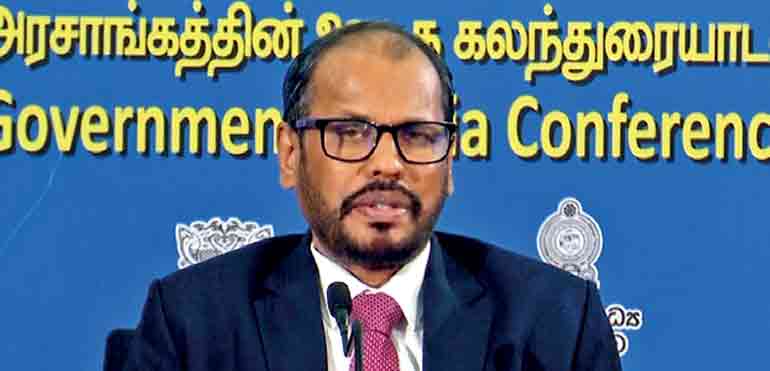
EDB Chairman Mangala Wijesinghe


  • Jan.-Nov. exports exceed $ 15.7 b 
  • First 11 months merchandise exports up 5.6% YoY to $ 1 b, services up 4.3% YoY to $ 311 m
  • Performance in Nov. reaches over $ 1.3 b, up 5.6% YoY 
  • US remains single largest market with Jan.-Nov. exports up 2.8% to over $ 2.7 b

By Charumini de Silva 

Export Development Board (EDB) Chairman Mangala Wijesinghe yesterday said Sri Lanka is on track to surpass $ 17 billion in export revenue for the first time in its history in 2025, with earnings from goods and services reaching $ 15.77 billion during the first 11 months of the year, reflecting a 5.8% year-on-year (YoY) growth.

Addressing the media at a special briefing organised by the Government Information Department, Wijesinghe said 87% of the country’s annual export target of $ 18.2 billion has already been achieved, underscoring a steady upward trajectory in export performance.

“The latest data shows consistent growth in both merchandise and services exports, despite increasing global competition and uncertainties,” he said.

In November 2025 alone, total exports including merchandise and services, reached over $ 1.36 billion, marking a 5.56% YoY increase.

Merchandise exports during the month grew by 5.59% to exceed $ 1.05 billion, supported by higher earnings from gems and jewellery, coconut and coconut-based products, electrical and electronics, as well as food and beverages.

During the period from January to November 2025, total merchandise exports amounted to $ 12.41 billion, reflecting a robust 6.41% YoY growth.

Services exports continued to emerge as a key driver of overall export expansion. In November 2025, services export earnings were estimated at $ 311.28 million, up 4.27% from a year earlier. Cumulatively, services exports during the first 11 months of the year grew by 3.62% YoY to reach $ 3.35 billion.

Wijesinghe said this trend highlights the growing importance of Sri Lanka’s knowledge-based economy, with sectors such as ICT/BPM, construction, financial services, and transport and logistics playing an increasingly significant role in national export earnings, whilst creating high-value employment across the country.

According to EDB data, apparel and textile exports, the country’s single largest export sector, recorded a 4.9% YoY increase between January and November 2025, reaching over $ 4.82 billion. Apparel exports accounted for 32% of total export earnings during the period.

Agriculture exports also posted strong gains. Tea exports, which made up 12% of total merchandise exports, rose by 7.44% YoY to exceed $ 1.4 billion, while coconut-based exports surged by 44.13% to over $ 1.13 billion.

On the services side, transport and logistics exports grew by 7.54% YoY to $ 1.76 billion during the first 11 months, while ICT/BPM exports increased by 6.86% YoY to over $ 1.45 billion.

“With sustained efforts to enhance competitiveness and expand market opportunities, we are confident of reaching record-breaking export targets in 2025,” Wijesinghe said.

The EDB Chief said Sri Lanka is targeting total export earnings of $ 20 billion in 2026, with a 10% YoY growth, as merchandise exports are projected to exceed $ 15.7 billion and services exports expected to rise to $ 4.3 billion. 

“These targets align with a broader five-year strategy to increase total export earnings to $ 36 billion by 2030, comprising $ 25 billion from goods and $ 11 billion from services,” he added.

Among the top 10 export destinations, US, India, Italy, Germany, United Arab Emirates, the Netherlands, France and China recorded YoY growth in November 2025 as well as during the cumulative period from January to November 2025. 

The US, Sri Lanka’s largest single export market, accounting for 23% of the country’s merchandise exports, registered a 3.97% YoY increase to $ 236.2 million in November 2025. However, exports to the US increased by 2.79 % during the first 11 months of 2025 to over $ 2.73 billion.

India has continued as Sri Lanka’s second-largest export destination, surpassing the UK. Exports to India increased by 25.77% to $ 88.43 million in November 2025, while cumulative exports in 2025 increased by 19.88%, reaching $ 955.32 million compared to the same period in 2024.

Exports to the UK decreased by 8.28% YoY to $ 62.92 million in November 2025. During the cumulative period from January to November 2025, exports to the UK recorded a growth of 2.49% YoY, reaching $ 855.01 million.

In terms of exports to Free Trade Agreement (FTA) partners, in November 2025, exports to India and Pakistan accounted for 7.86% of total merchandise exports, registering an increase of 25.06% YoY and a decrease to $ 94.23 million. 

Exports to India increased mainly driven by higher shipments of animal feed, while exports to Pakistan increased by 15.08%, supported primarily by stronger desiccated coconut exports.

During the period from January to November 2025, exports to India and Pakistan accounted for 8.2% of Sri Lanka’s total merchandise exports, recording a substantial increase of 18.21% to reach over $ 1.02 billion compared to the same period in the previous year.

Exports to India increased significantly by 19.88%, driven mainly by higher shipments of petroleum oil, animal feed and animal or vegetable fats and oils and their products. In contrast, exports to Pakistan decreased slightly by 0.83%, reflecting a decrease in desiccated coconut shipments.

Regionally, exports to the European Union (EU), which account for 24% of Sri Lanka’s merchandise exports, increased during both November 2025 and the cumulative period of January to November 2025 respectively by 10.08% and 14.06%.


Four-year export development plan ready in January: EDB

  • EDB Chief says Ministerial Committee evaluating current FTAs to release findings by Feb.  
  • Reveals 573 export companies affected by Ditwah
  • Aims for 3,000 new exporters via ‘Expo Scale Up’

Sri Lanka will launch its new National Export Development Plan (NEDP) for the 2026–2030 period in January 2026, Export Development Board (EDB) Chairman Mangala Wijesinghe said yesterday, outlining an ambitious roadmap to reposition the country as a stronger player in global trade.

He said the forthcoming plan builds on lessons from the National Export Strategy (NES) implemented between 2018 and 2022, while responding to changing global trade dynamics and the country’s post-crisis economic priorities.

“This initiative is central to positioning Sri Lanka as a competitive player in international markets,” he said.

According to Wijesinghe, the Government’s export strategy, embodied in the soon-to-be-published NEDP targets total export receipts of about $ 36 billion by the end of the four-year period, driven by accelerated growth in both merchandise and services exports.

“The finalised NEDP will be presented in January 2026 and will provide the roadmap for translating targets into investment, skills development, and new-market penetration. Once implemented, the combination of tariff reform, digital trade facilitation, renewed trade diplomacy, and focused sector development could substantially de-risk the economy and put exports on a higher-growth trajectory,” he explained. 

The plan has been prepared by the EDB in partnership with the Asian Development Bank (ADB) following months of stakeholder consultations. 

Wijesinghe said NEDP rests on three key pillars: Boosting trade competitiveness, expanding regional and global market linkages and promoting sustainable, trade-led growth.

“To capitalise on this momentum, the EDB plans to strengthen economic diplomacy and has set performance targets for Sri Lanka’s foreign missions,” he said, adding that a formal review of existing free trade agreements (FTAs) and preferential trade arrangements (PTAs) is underway, alongside proposals for negotiating new agreements to support the $ 36 billion export objective.

He noted that a Ministerial Committee chaired by Trade, Commerce, and Food Security Ministry Secretary K.A. Vimalenthirarajah has been constituted to evaluate current trade agreements and is expected to unveil its report by February 2026.

Wijesinghe said the EDB is also seeking to change the composition of Sri Lanka’s export basket by prioritising sectors beyond apparel, coconut, rubber, and tea, which together still account for around 60% of export value.

Market diversification will be another key focus of the strategy. While the United States remains Sri Lanka’s single largest export market, accounting for nearly 25% of export earnings, and Europe contributes about 22%, Wijesinghe said the EDB is pushing for deeper penetration into African, Asian, and Middle Eastern markets.

“Exports to these regions have grown by over 25% during the January–November period, underscoring their potential,” he said.

He also highlighted strengthened economic diplomacy efforts, with Sri Lanka’s foreign missions now assigned export performance targets.

Wijesinghe drew attention to significant policy reforms in the 2026 Budget, including an allocation of Rs. 80 billion to modernise Sri Lanka’s outdated tariff structure and create a more transparent, investor-friendly trade environment. He said long-delayed progress has also been made on the National Single Window.

“The long-discussed National Single Window has finally secured Rs. 2.5 billion in funding to move forward, enabling full online integration of key agencies including the Board of Investment, EDB, Customs, and the Land Ministry to streamline trade processes and shift to e-invoicing,” he said.

He added that the implementation of the National Tariff Policy will help streamline and reduce para-tariffs.

Wijesinghe also described the reactivation of the Export Development Council of Ministers (EDCM), chaired by the President and revived after nearly two decades, as a major governance milestone.

“The EDCM will play a key role in policy coordination, especially in light of the reconstruction needs following recent disasters. The Council, exporter forums, and sectoral task forces will be responsible for monitoring the implementation of the NEDP and ensuring that reforms remain aligned with national priorities,” he added.

He said 90% of the EDB’s planned activities for 2025 have already been achieved, largely due to direct policy intervention through the EDCM.

Wijesinghe also revealed 573 export companies were affected by Cyclone Ditwah, particularly in Colombo, Gampaha, Kurunegala, and Kandy districts. Of these, 362 were small factories, 113 medium-sized, and 98 large enterprises. The main challenges faced were disruptions to connectivity, transportation, and electricity supply.

“We have discussed these issues with all stakeholders and, together with the Industry and Entrepreneurship Development Ministry, have gathered information and are taking next steps to provide concessionary loans through banks and other trade facilitation measures,” he said.

Wijesinghe also said the EDB plans to expand exposure for new exporters through international trade fairs next year. Citing Gulfood 2026 in January, he said 61 exporters have already registered, with the majority being first-time participants.

He also highlighted an EDB initiative titled ‘Expo Scale Up’, a six-month handholding programme aimed at nurturing new exporters. “Through this initiative, we aim to build 3,000 new exporters,” he said.

Wijesinghe said the new strategy reflects a decisive shift in Sri Lanka’s export ambitions. “The goal is not only to boost revenue, but to transform the export sector into a more resilient and technologically advanced engine of the economy,” he added.

(CdeS)


COMMENTS
