Tuesday Oct 13, 2026
Tuesday Oct 13, 2026
Monday, 23 March 2026 04:15 - - {{hitsCtrl.values.hits}}
|
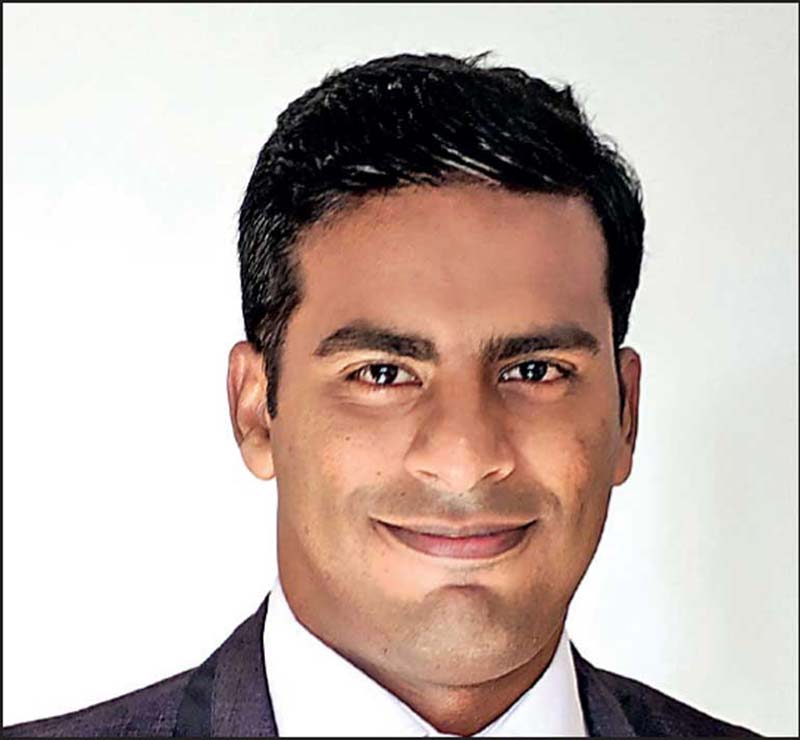
Economist Talal Rafi |
Economist Talal Rafi has said the Middle East crisis could complicate Sri Lanka’s debt sustainability path, as the country faces a sharp increase in external buffer targets under the International Monetary Fund (IMF) program.
Speaking at a CMA Sri Lanka forum on the Middle East war, Rafi said external reserves are projected to rise from around $ 8.9 billion this year to $ 13.4 billion by end-2027.
He said the program also envisages a return to international capital markets, including the issuance of a $ 1.5 billion International Sovereign Bond (ISB) in 2027, followed by another issuance in 2028.
“These hits will make this very, very complicated if it lasts longer,” he said, referring to the impact of prolonged geopolitical disruptions.
Rafi said Sri Lanka’s external debt servicing burden is expected to increase from around $ 2 billion annually at present to about $ 3 billion, as bilateral debt repayments resume from 2028.
He said the crisis also presents opportunities if reforms are accelerated, pointing to sectors such as ports, renewable energy, and data centres.
Rafi said around 20% of global investment is now directed towards data centres as demand for digital infrastructure expands. He said recent attacks on data infrastructure in parts of the Middle East have heightened concerns about concentration risks, creating opportunities for alternative locations.
However, he said Sri Lanka is not yet positioned to benefit immediately, citing regulatory gaps and the need for a stable and reliable electricity supply. He said that with the right policy framework and investments over a five- to six-year horizon, the country could position itself as a regional hub.
Rafi also stressed the need for long-term energy independence, noting that Sri Lanka spends around $ 4.5 billion annually on oil imports.
“From all these sectors, what we earn as dollars is just going for oil imports,” he said.
He said strengthening fiscal buffers and institutions would be critical, while pointing to recent reforms such as Central Bank independence as positive steps.