Sunday Sep 27, 2026
Sunday Sep 27, 2026
Monday, 15 June 2026 06:26 - - {{hitsCtrl.values.hits}}
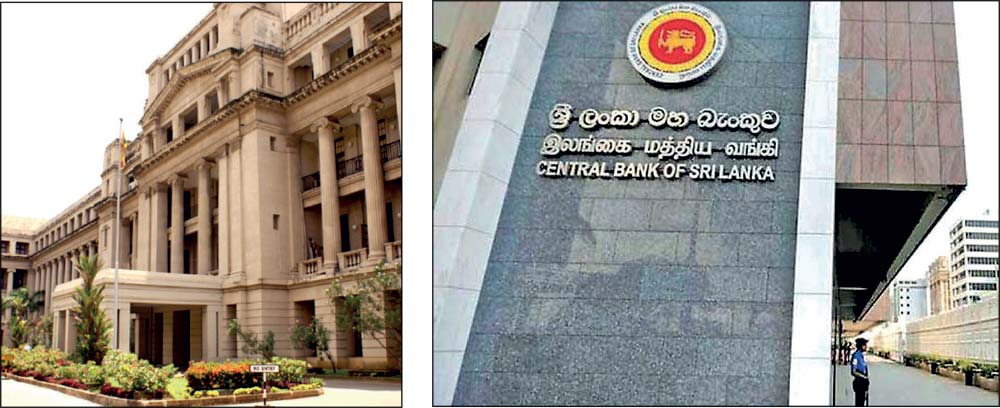
Parliament’s Committee on Public Finance (CoPF) has raised concerns over gaps in the availability and accessibility of public debt and Government securities market data following the transfer of debt management responsibilities from the Central Bank of Sri Lanka (CBSL) to the Public Debt Management Office (PDMO), warning that reduced transparency could contribute to speculation and market distortions.
The issue was discussed during a CoPF meeting attended by CBSL Governor Dr. Nandalal Weerasinghe and senior officials, with Committee Chairman Dr. Harsha de Silva questioning the disappearance of detailed debt tables that had historically been available through the CBSL’s statistical publications.
Debt data...
Dr. de Silva pointed out that investors, researchers, and market participants had previously relied on detailed breakdowns of Government debt by instrument, debt service obligations, Treasury Bills, Treasury Bonds, Sri Lanka Development Bonds, and foreign borrowings to conduct time-series analyses and assess fiscal developments.
While acknowledging that responsibility for debt management had shifted to the PDMO under the Public Debt Management Act, he argued that the transfer should not result in a reduction in the quality or accessibility of information available to the public.
The Committee also highlighted concerns over the apparent interruption in publication of detailed secondary market Government securities transaction summaries, which previously disclosed opening and closing yields, volumes, transaction counts, and price movements across individual securities.
Dr. de Silva warned that timely access to such information was essential for market participants and said information gaps could create an uneven playing field.
He further cautioned that shortcomings in public disclosures could lead to broader risks.
“I think we have identified gaps here, and those gaps may create market distortions, and they also may create opportunities for crooks, and also it will have volatility that you don’t want to see and none of us want to see,” he said.
Responding, Dr. Weerasinghe said the PDMO now held statutory responsibility for publishing public debt data and noted that the CBSL itself no longer received privileged access to fiscal information before public release.
He said the CBSL continued to maintain extensive databases containing downloadable time-series data and remained willing to provide additional granularity where required.
“What has happened is the way we are presenting has changed with the changing structure, but all the data are available in our website and can be downloaded,” the Governor said.
However, lawmakers stressed that accessibility remained a concern, arguing that information which was technically available often remained difficult to locate, interpret, and use effectively.
MP Ravi Karunanayake also called for greater access to fiscal and debt data in user-friendly formats, noting that Parliamentarians often struggled to obtain information needed to respond authoritatively to public debate and market commentary.
The Committee proposed a further engagement involving CBSL and PDMO officials to examine how debt and market information could be made more transparent, comprehensive, and accessible to investors, researchers, and the public.




