Sunday Sep 27, 2026
Sunday Sep 27, 2026
Monday, 16 March 2026 05:35 - - {{hitsCtrl.values.hits}}
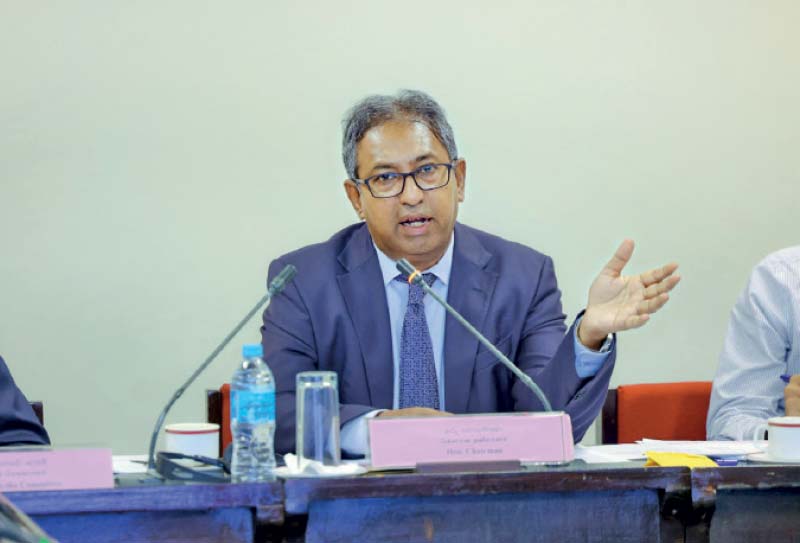
CoPF Chairman MP Dr. Harsha de Silva
The Committee on Public Finance (CoPF) has approved a notification published in Extraordinary Gazette No. 2469/02 under the Colombo Port City Economic Commission Act, No. 11 of 2021, paving the way for amendments to development control regulations governing Colombo Port City.
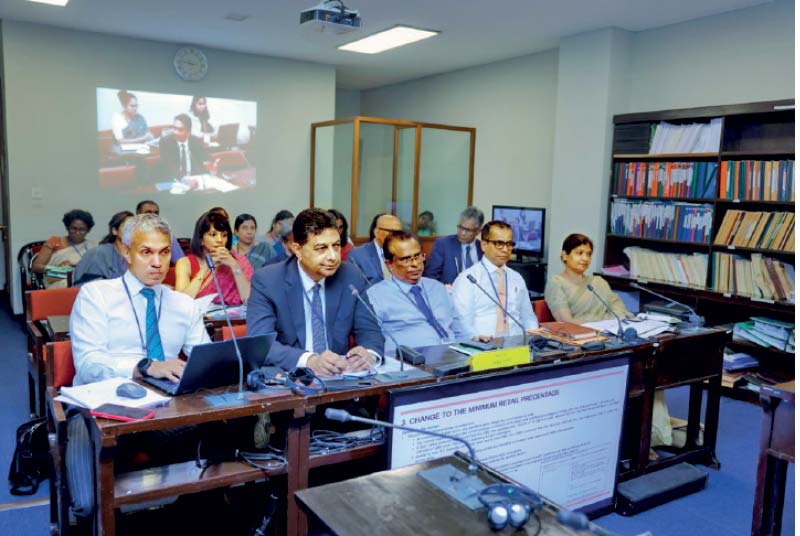
The approval was granted following a lengthy discussion at a CoPF meeting held in Parliament last week (10) under the Chairmanship of MP Dr. Harsha de Silva.
Deputy Ministers Nishantha Jayaweera and Chathuranga Abeysinghe, along with MPs Ravi Karunanayake, Wijesiri Basnayake, and Nimal Palihena, were also present at the meeting.
The Gazette seeks to amend the Colombo Port City (Development Control) Regulations No. 1 of 2023, originally issued in June 2023, by introducing revisions related mainly to land use and building parameters within the project area.
Officials explained that the changes include technical adjustments such as expanding the land area allocated for electrical operations and setting revised limits on the maximum height of buildings within Port City.
According to officials from the Colombo Port City Economic Commission, the building regulations have been relaxed and revised after considering feedback and suggestions from prospective investors.
However, the existing planning principle of gradually increasing the height of buildings as development moves inland from the coastline will remain unchanged.
During the discussion, CoPF members stressed the importance of simplifying the approval process for investors.
The CoPF noted that investors should ideally be able to obtain all necessary approvals through a single point rather than approaching multiple agencies separately. The Committee emphasised the need for a “single window” or “one-stop shop” system that would coordinate approvals currently handled by several institutions, including the Civil Aviation Authority of Sri Lanka (CAASL), Ceylon Electricity Board (CEB), and National Water Supply and Drainage Board (NWSDB).
They also highlighted the importance of stronger coordination between the Board of Investment of Sri Lanka (BOI) and the Port City Economic Commission in order to attract foreign direct investment (FDI).
The Committee recommended the establishment of a formal coordination mechanism between the two institutions to enhance investment promotion and streamline engagement with potential investors.
Officials from the Finance Ministry informed the Committee that the Government has already spent around Rs. 9.9 billion on infrastructure and utilities for the Port City project, including water supply facilities.
The total cost is expected to reach Rs. 10.5 billion by next year, they said.
To recover these expenses, the Government plans to collect 100% of the rent received from State-owned lands within the project area, along with 1% of the rent generated from lands owned by the developer, CHEC Port City Colombo Ltd.
The Committee also discussed how the ongoing military tensions in the Middle East could potentially create opportunities for Sri Lanka to attract new investments.
Officials from the Port City Commission said efforts are underway to capitalise on the changing global investment climate and position Port City as a competitive destination for international investors.
During the meeting, the CoPF also raised concerns over advertisements by local property developers promoting the sale of apartments in Port City projects to Sri Lankan buyers.
Commission officials clarified that two Sri Lankan companies, which are not authorised developers, had advertised such projects after making an initial payment. Dr. de Silva said these companies had been issued written notices instructing them to cease and desist from promoting such developments, as they had not yet received approval from the Commission.
He further explained that while Sri Lankan rupees can be used to pay the land tax, the entire construction cost must be financed through foreign exchange sources. This could be achieved either through foreign loans or through sale transactions involving foreign buyers, he said.
The Chairman also noted that Sri Lankan citizens who are not restricted under the Land (Restriction on Transfer of Possession) Act would still be permitted to sell apartments in rupees under the existing legal framework.




