Sunday Oct 04, 2026
Sunday Oct 04, 2026
Monday, 22 June 2026 00:27 - - {{hitsCtrl.values.hits}}
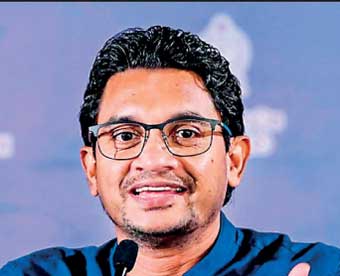 |
| Deputy Minister Chathuranga Abeysinghe |
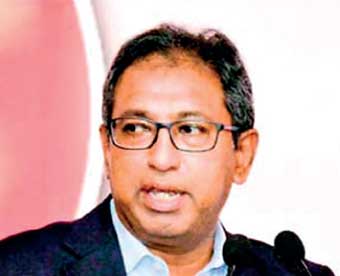 |
| Opposition MP Dr. Harsha de Silva |
Industry and Entrepreneurship Development Deputy Minister Chathuranga Abeysinghe has defended the Government’s tax and economic reform agenda, pushing back against criticism from Opposition MP Dr. Harsha de Silva and arguing that efforts to formalise the economy are critical to improving Sri Lanka’s fiscal position.
In a statement, Abeysinghe accused Dr. de Silva of taking a political stance against measures introduced by the Finance Ministry to expand the tax base and reduce the economy’s dependence on informal activity.
“It is very sad and unprofessional for him to take a political stance against the progress made by the Finance Ministry to expand the tax base and move away from an informal economy,” Abeysinghe said.
The Deputy Minister said Sri Lanka had operated with a largely informal economy for decades, limiting the Government’s ability to collect revenue and contributing to a fiscal environment where a substantial share of tax income was directed towards servicing debt obligations.
Highlighting recent revenue performance, Abeysinghe claimed that Government revenue reached 16.7% of Gross Domestic Product (GDP) in 2025, while revenue collection during the first quarter of 2026 had exceeded official targets by a significant margin.
He argued that improving compliance and broadening the tax net would eventually allow authorities to lower tax rates while maintaining revenue levels.
“When we have a systematic method of collecting taxes, we can gradually bring down tax rates. For example, Value Added Tax (VAT) could eventually be reduced to around 10% to 12%, in line with global norms,” he said.
Abeysinghe said the Government remained committed to strengthening the formal economy as part of a broader effort to create fiscal resilience and improve the country’s ability to withstand economic shocks.
“There is no turning back. We will create a strong fiscal space that can withstand both internal and external shocks,” he said.
The remarks come amid an ongoing public debate over tax policy, revenue mobilisation, and fiscal reforms under Sri Lanka’s economic recovery program.
Abeysinghe also urged Dr. de Silva to focus on economic analysis rather than political criticism.
“I invite Harsha to be the economist he used to be and not another version of Sajith Premadasa,” he said.
In a series of posts on ‘X,’ Dr. de Silva outlined several concerns regarding recent tax and trade policy measures, arguing that some of the Government’s revenue initiatives could have unintended consequences for consumers, businesses, and exporters.
He contended that while the VAT rate stands at 18%, the effective tax burden borne by consumers is higher due to the cascading impact of the Social Security Contribution Levy (SSCL) across multiple stages of the supply chain.
Dr. de Silva also questioned the pace of efforts to bring online casinos and betting platforms into the tax net, noting that the deadline set for the sector’s inclusion was 30 June and stating that he would closely monitor progress on implementation.
On the export front, he warned that a proposed duty on coconut oil imports could undermine Sri Lanka’s coconut-based export industry. Citing concerns raised by industry stakeholders, he said higher import costs could divert local coconuts from value-added export production towards domestic oil manufacturing, potentially affecting export contracts, reducing foreign exchange earnings, and ultimately yielding little or no additional duty revenue if imports cease.
Dr. de Silva said he had raised the matter at the Committee on Public Finance (CoPF), cautioning that poorly designed tax measures could adversely affect both exporters and agricultural producers.
He also criticised policies affecting the agriculture sector, arguing that higher taxes on maize imports could increase chicken and egg prices, placing additional pressure on household food costs. At the same time, he questioned the rationale behind plans to import 150,000 metric tons of rice, warning that such imports could weaken farm-gate prices and affect paddy farmers’ incomes.
According to Dr. de Silva, officials from the Agriculture Ministry acknowledged some of these concerns during CoPF deliberations. He further noted that the Paddy Marketing Board’s market intervention capacity remained limited and called for the revival of the Shakthi Rice Cooperative, which he said had previously helped support small-scale millers and paddy farmers.
The exchange reflects broader debate over the Government’s efforts to expand the tax base and strengthen revenue collection while balancing the impact of policy measures on consumers, businesses, and key export sectors.



