Saturday Jul 04, 2026
Saturday Jul 04, 2026
Monday, 4 May 2026 00:24 - - {{hitsCtrl.values.hits}}
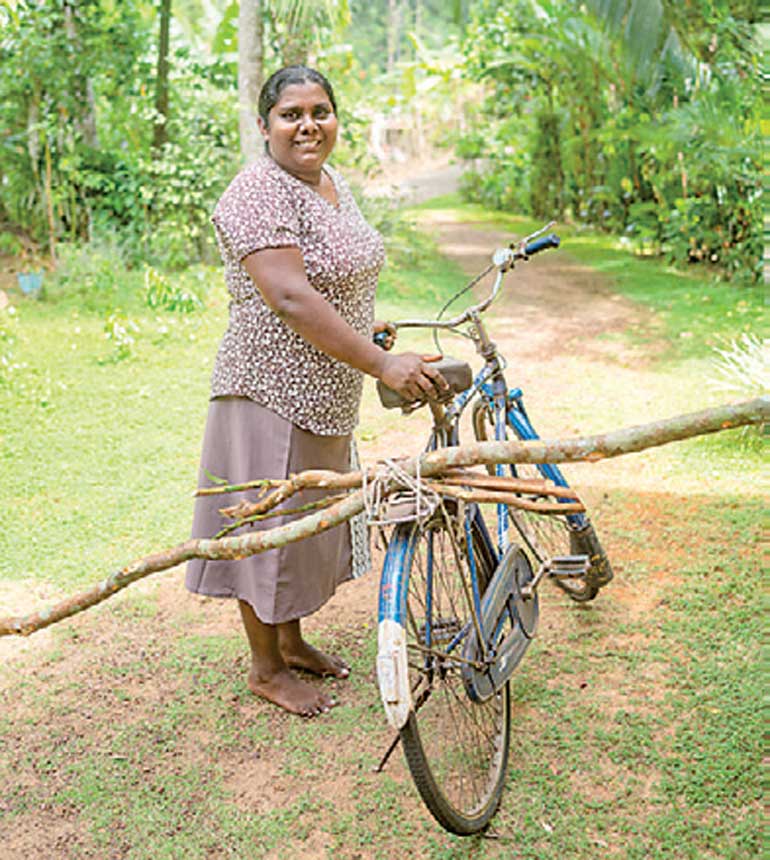
Pavithra Madushani on her way to work as a cinnamon peeler
By Savani Jayasooriya
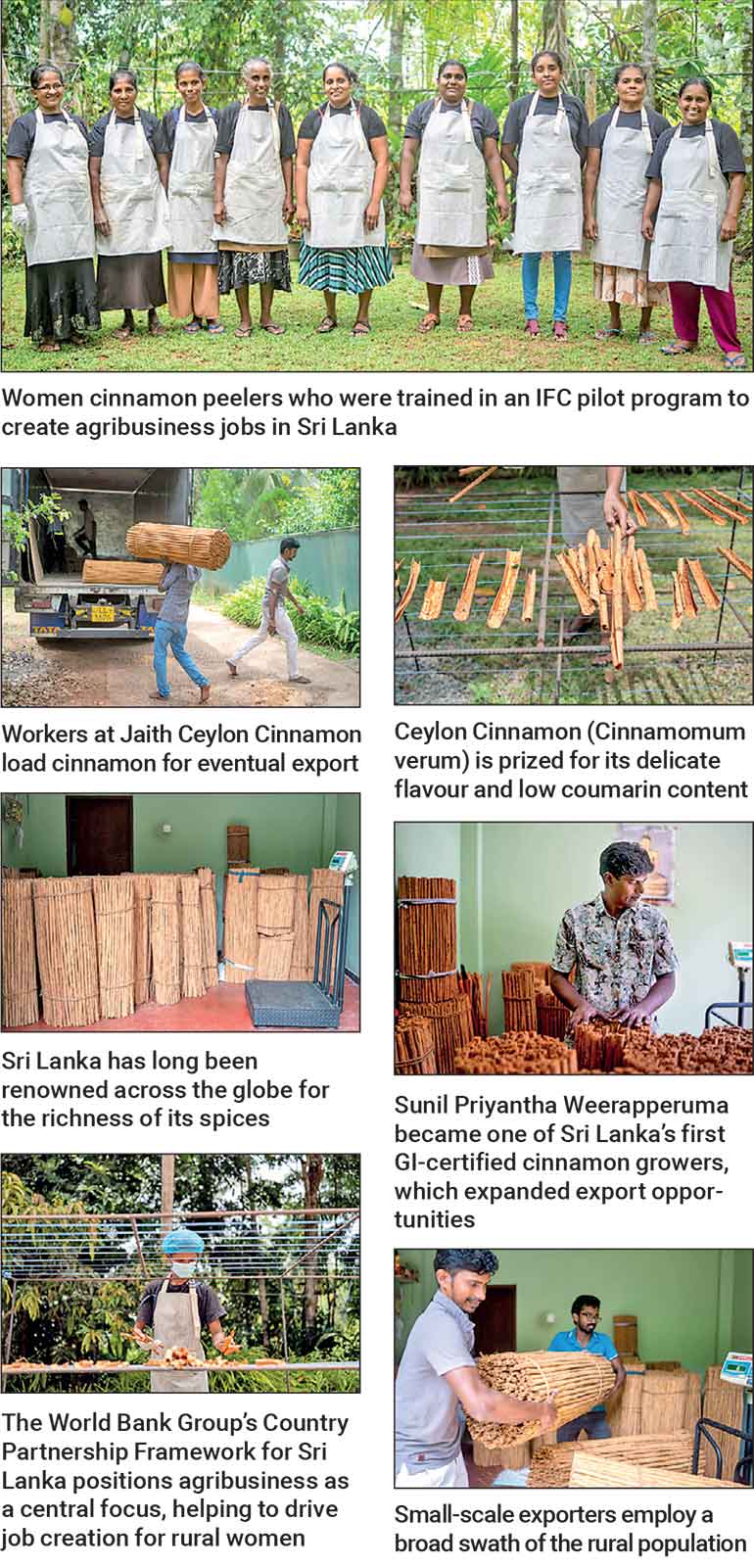
The morning sun casts a golden hue over the village of Meetiyagoda, nestled a few kilometers inland from Sri Lanka’s southern coast. Pavithra Madushani hops on her bicycle for a quick ride to her job at Jaith Ceylon Cinnamon, a home-based factory where women like her peel cinnamon–a centuries-old occupation that used to be open only to men.
Nearing the gates of the company–a small-scale exporter of this local spice–she sees her colleagues already engaged in what many consider an art rather than a job. One cluster of women deftly peel the bark from the golden spice while others carefully slit the inner bark and carve out long, thin pieces, their hands moving with practiced precision. In another corner, some women are seated together, rolling with graceful gestures the slender cinnamon quills treasured by connoisseurs worldwide.
For these women workers, most of whom live in rural areas where there are few options to earn an income, cinnamon-peeling offers economic empowerment.
“When I began harvesting the cinnamon plants from my home garden, several villagers frowned upon my efforts,” Madushani recalls. “Traditionally, women do not work in the cinnamon fields, let alone touch the trees. But today, we have an opportunity to learn this unique skill” of cinnamon peeling, she says, proudly.
Madushani is one of over 350,000 Sri Lankans whose livelihoods depend on Ceylon Cinnamon, a spice indigenous to the region and renowned worldwide. As the world’s largest producer and exporter of Ceylon Cinnamon, Sri Lanka accounts for 80% of global market share. The industry supports the livelihoods of over 100,000 smallholder growers, in addition to workers like her and her colleagues.
An in-demand export
Sunil Priyantha Weerapperuma owns Jaith Ceylon Cinnamon Ltd., where Madushani works. In the last two decades, Weerapperuma has transformed this modest venture into a thriving export business, directly and indirectly employing around 200 people.
Having lived his entire life surrounded by cinnamon groves, Werapperuma knows the industry’s potential and believes it is a gateway to prosperity for his community. He is equally aware of the significant challenges.
Global competition is one of those challenges. With the worldwide spices market expected to reach a value of $34 billion by 2030, the demand for quality spices–especially those like Ceylon Cinnamon, with a centuries-old reputation for excellence–is on the rise.
But Ceylon Cinnamon faces strong competition from a more widely available (though less refined) variety, known as cassia. The industry is further squeezed by labour shortages, high production costs, and limited technical skills among smallholder farmers. These factors make it difficult to offer products to premium export markets. Delays in obtaining Geographical Indication (GI) certification have also limited the industry’s ability to maximise market awareness of its unique status.
While various initiatives have taken off over the years, reorienting the industry requires more strategic, concerted efforts to ensure long-term growth.
Expanding market access
Weerapperuma, the factory owner, is taking significant steps to expand the company’s reach. “Ever since I started my venture in 2004, I have always looked out for the necessary skills and training to grow and sustain my business,” he says.
That’s why he joined a specialised program to help cinnamon growers and exporters produce quality products to access international, high-value markets. Launched in 2022, the program is a strategic collaboration among IFC, the Export Development Board, the Industrial Technology Institute, and the Sri Lanka Standards Institute. Initial oversight was provided by the Department of Export Agriculture until the Department of Cinnamon Development was established.
Supported by the European Union’s Accelerating Climate-Smart and Inclusive Infrastructure in South Asia program, this partnership focused on enhancing quality standards, building capacity, and streamlining processes to enhance global competitiveness.
Two years since the initiative’s launch, Sri Lanka certified its first group of GI-labeled Ceylon Cinnamon growers. By June 2025, the program expanded to support over 80 farmers. The initiative also resulted in a sustainable and efficient cinnamon oil extraction method.
To encourage women’s participation in the cinnamon value chain, IFC piloted a unique training program for women peelers, addressing barriers like time, poverty, and the women’s lack of access to skills training. For rural women like Madushani, this opened the door to new jobs and opportunities for self-employment.
The project also introduced a sustainable and efficient cinnamon oil extraction method–a result that highlights the way focused support can drive potential, promote inclusion, and deliver lasting benefits for communities.
Driving growth
Agriculture contributes 8.4% to Sri Lanka’s GDP and sustains a quarter of all jobs. It is a key part of the country’s heritage and its strategic future.
Sri Lanka’s untapped export potential– estimated at $10 billion annually–could create over 140,000 jobs with targeted reforms. By enhancing productivity, liberalising trade, and modernising the investment climate, Sri Lanka can boost its competitive advantage and raise incomes across manufacturing, services, and agribusiness.
Aligned with the national strategic priorities, the World Bank Group is playing a pivotal role in building a resilient ecosystem to modernise agriculture, create jobs, empower smallholder farmers, and enhance Sri Lanka’s global competitiveness. Sri Lanka is a pilot country for AgriConnect, a World Bank Group initiative to transform smallholder farming, create jobs, and strengthen global food security. In addition, the World Bank Group’s new Country Partnership Framework for Sri Lanka positions agribusiness as a key strategic focus–driving rural job creation for women and opening new business opportunities for exporters such as Weerapperuma.
Progress in this area is already underway. IFC’s insights have highlighted the need for investing in quality infrastructure to strengthen services for exporters. These findings have informed the World Bank Group’s Integrated “Rurban” (Rural and Urban) Development and Climate Resilience Project, which aims to create new rural jobs, particularly for youth and women, by strengthening agribusiness value chains, expanding market access, and catalysing $17 million in private investment by linking farmers to finance.
For Madushani, who stresses that the job is about more than the wages she earns, the impact of these initiatives is personal. “We broke the norm that the cinnamon industry is only for males,” she says, beaming. “Today, I have proved that this is possible and I am really happy about it.”
–Pix by Mehedi Rahman