Tuesday Jul 21, 2026
Tuesday Jul 21, 2026
Tuesday, 21 July 2026 05:32 - - {{hitsCtrl.values.hits}}
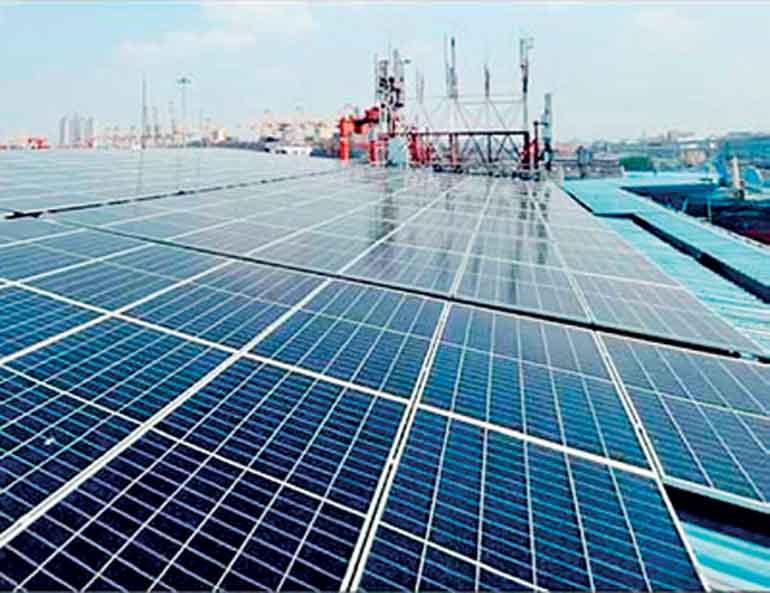
The Ceylon Chamber of Commerce has called for policy consistency, streamlined approvals, and stronger investment frameworks to accelerate Sri Lanka’s transition towards renewable energy, as rising electricity demand increases the need for a more secure and sustainable power system.
In a statement yesterday following a forum titled ‘Energy Transition in Sri Lanka: Strategic Insights from Global Markets,’ The Ceylon Chamber said stakeholders from the Government, industry, academia, and the energy sector had identified renewable energy expansion, particularly solar power, as a priority area requiring coordinated reforms.
The discussion highlighted the need to strengthen purchase tariffs, procurement mechanisms, and distributed renewable energy development to encourage private investment, improve grid stability, and reduce transmission losses, according to The Chamber.
Participants identified policy uncertainty, lengthy approval processes, land acquisition difficulties, grid constraints, and project implementation delays as key barriers slowing renewable energy deployment.
The Chamber said stakeholders emphasised the importance of a stable and predictable policy environment, efficient regulatory processes, and improved institutional coordination to enhance investor confidence and accelerate project delivery.
The forum also examined financing mechanisms and electricity sector reforms required to support future investment, with net metering and feed-in arrangements recognised as important tools to encourage commercial and industrial users to adopt solar power by allowing surplus electricity to be supplied back to the grid.
Participants also highlighted the need to improve access to financing, develop bankable project structures, and address financial sustainability concerns, including timely payments to renewable energy developers.
Energy storage systems were identified as a critical component in integrating higher levels of renewable energy into the national grid, with stakeholders pointing to the need for technical standards, safety frameworks, financing mechanisms, and market structures to support adoption.
The Chamber said the discussion also focused on the broader economic implications of the energy transition, noting that electricity demand is expected to increase with the expansion of digitalisation, artificial intelligence (AI), electric vehicles (EVs), and data centres.
Stakeholders stressed the need to modernise energy infrastructure through intelligent grids and emerging technologies to support long-term economic competitiveness.
The forum also highlighted the importance of developing human capital through stronger collaboration between industry and academia, expanded technical training, and greater local expertise in renewable energy and storage technologies.
The Ceylon Chamber said achieving Sri Lanka’s renewable energy ambitions would require coordinated action across policy, regulation, financing, and infrastructure development.



