Wednesday Sep 30, 2026
Wednesday Sep 30, 2026
Wednesday, 30 September 2026 00:26 - - {{hitsCtrl.values.hits}}
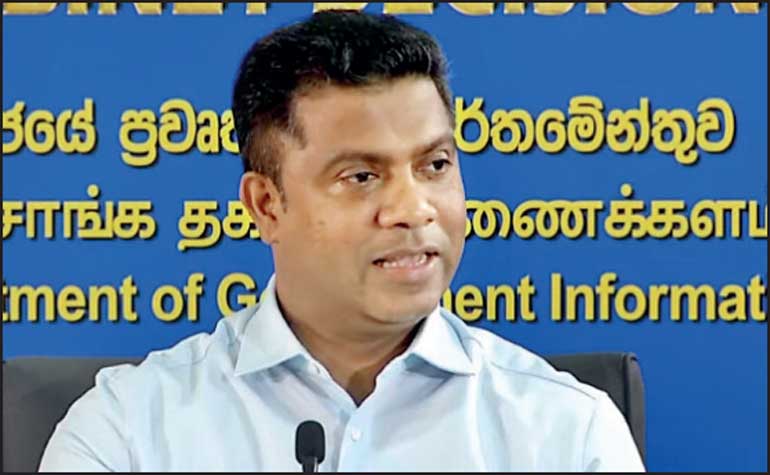
Cabinet Spokesperson and Minister Dr. Nalinda Jayatissa
The Cabinet has approved Gazetting amendments to the 109-year-old Trust Ordinance and submitting them to Parliament, in a move to make the ownership of trusts more transparent and bring the law in line with global anti-money laundering standards, Cabinet Spokesperson and Minister Dr. Nalinda Jayatissa said yesterday.
Briefing the media on decisions taken at the Cabinet meeting held on Monday, Dr. Jayatissa said the Attorney General had cleared the Trust (Amendment) Bill drafted by the Legal Draftsman. The Cabinet approved a resolution by the Minister of Justice and National Integration to publish the Bill in the Government Gazette and present it to Parliament.
The Cabinet had approved amending the Trust Ordinance No. 9 of 1917 on 18 December, 2024, based on observations by the Task Force on Prevention of Money Laundering and Financing for Terrorism. The amendments include changes proposed by the Financial Intelligence Unit (FIU) of the Central Bank of Sri Lanka.
The proposed changes would require the ultimate beneficial owners, settlors, trustees and beneficiaries of express trusts to be identified and registered. Ultimate beneficial owners are the individuals who ultimately own or control an asset, even when it is held in another name, while an express trust is one deliberately set up by a settlor, usually in writing.
Trustees would be obliged to obtain and hold accurate basic and beneficial ownership information, and to provide it to financial institutions when they carry out customer due diligence, the checks banks run to verify who their customers are. The amendments would also strengthen the legal registration of trusts and allow information-sharing among the FIU, law enforcement and tax authorities.
The Financial Action Task Force (FATF), the global anti-money laundering and counter-terrorism financing watchdog, has placed heavy emphasis on the transparency of legal arrangements such as trusts, which can be abused to hide illicit gains, conceal true ownership and facilitate tax evasion or money laundering. Sri Lanka has committed to the FATF to align its trust laws with international standards, so that authorities have timely access to accurate information on trust creators, trustees and beneficiaries.
The move comes as Sri Lanka undergoes a periodic mutual evaluation by the Asia Pacific Group on Money Laundering (APG), the FATF’s regional body. A poor outcome could lead to Sri Lanka being placed on the FATF’s grey list of jurisdictions under increased monitoring, which can hurt access to international banking, credit ratings and foreign trade.



