Thursday Oct 15, 2026
Thursday Oct 15, 2026
Wednesday, 18 March 2026 00:27 - - {{hitsCtrl.values.hits}}
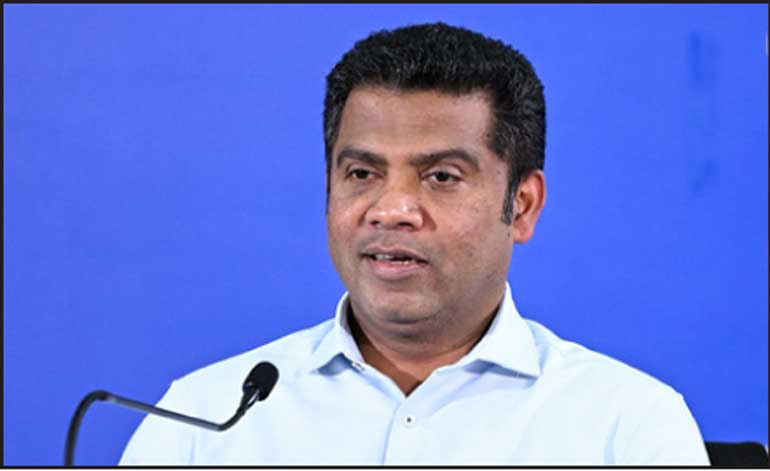
Cabinet Spokesman and Minister Dr. Nalinda Jayatissa
By Charumini de Silva
In a decisive move to safeguard national energy security, the Cabinet of Ministers on Monday approved an emergency coal procurement of 300,000 tons for the Lakvijaya Power Plant and authorised a temporary deviation from standard procurement procedures to secure fuel supplies over the next three months.
The decisions come against the backdrop of severe volatility in global energy markets triggered by escalating geopolitical unrest and armed conflicts in the Middle East, which have disrupted shipping, insurance and long-term supply contracts worldwide.
Cabinet approves...
On 26 January 2026, the Cabinet of Ministers approved the procurement of 300,000 tons (±10%) of coal in five shipments for the Norochcholai coal-fired power plant as an emergency measure.
“Bids were invited from suppliers registered with the Lanka Coal Company Limited, and six bids were received. Following evaluation, the Cabinet approved to award the contract to the lowest responsive bidder, Taranjot Resources Ltd., of India,” Cabinet Spokesman and Minister Dr. Nalinda Jayatissa said at the weekly post-Cabinet meeting media briefing yesterday.
He said this 300,000 tons is an emergency procurement addition to the Trident Chemphar’s 25 shipments.
Trident is contract-bound to provide 25 shipments of coal by 5 May 2026. The original deadline for the last shipment was 23 April 2026. The 12th shipment of coal was unloaded recently.
When asked if there will be any difficulty in unloading the emergency procurement of coal, Dr. Jayatissa said once the unloading of the other procurement finishes by 25 April, there will be sufficient time for it. “Most of the shipments are due in March. It can be unloaded within 4-5 days, but we have done it in three and a half days too,” he said, adding that some of the previous procurements have been unloaded in May and even extended till June.
The Lakvijaya plant, which accounts for a significant share of Sri Lanka’s base-load electricity generation, remains heavily reliant on imported coal. Any disruption to supply risks placing immediate strain on the national grid, particularly at a time when the country is already navigating fuel constraints and economic recovery challenges.
In a separate but related decision, the Cabinet of Ministers approved the Government to procure petroleum and petroleum-related products, liquefied petroleum gas (LP gas), and coal outside standard procurement guidelines for a period of three months.
“The move will be undertaken in consultation with the National Procurement Commission,” he said, citing extraordinary global conditions as justification for adopting a more flexible framework.
“Sri Lanka is entirely dependent on imports for petroleum, petroleum-based products, LP gas and coal. The ongoing Middle East conflict has led to shipment cancellations, reluctance among suppliers to enter long-term contracts, and refusals by insurance providers to extend coverage in high-risk zones. These developments have directly and immediately impacted the country’s energy security, necessitating urgent and adaptive measures to ensure uninterrupted supply,” Dr. Jayatissa explained.
The Cabinet Spokesman said both these decisions are aimed at stabilising supply chains and insulating the economy from further energy shocks as geopolitical tensions continue to roil global markets.




