Wednesday Oct 21, 2026
Wednesday Oct 21, 2026
Wednesday, 21 October 2026 00:00 - - {{hitsCtrl.values.hits}}

By Safna Malik
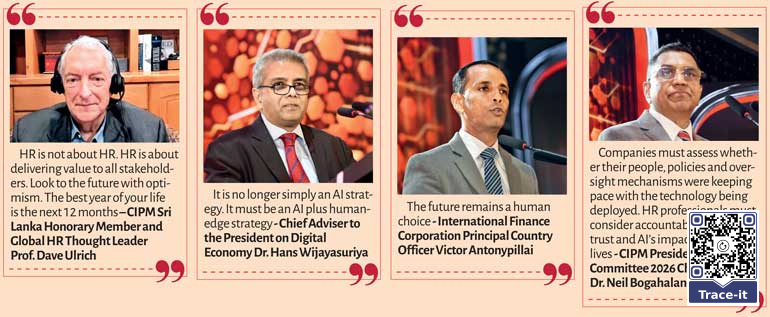
Businesses that adopt AI without developing their workforce risk losing a competitive edge, as organisations that effectively combine AI and human skills are likely to outperform those that do not, Chief Adviser to the President on Digital Economy Dr. Hans Wijayasuriya said.
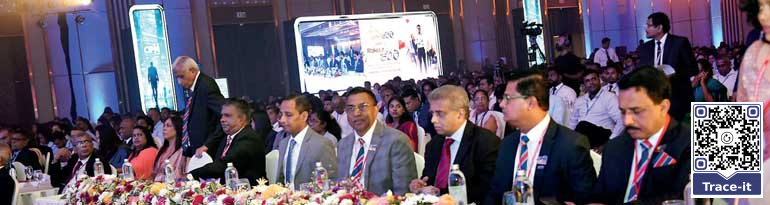
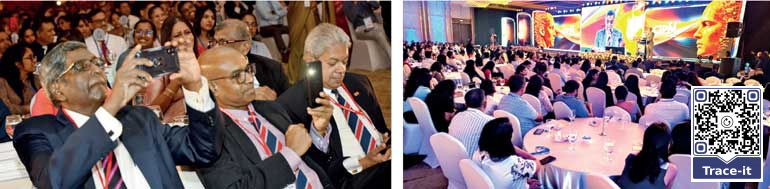
Delivering the keynote address at the Chartered Institute of Personnel Management (CIPM) Sri Lanka’s National HR Conference 2026, held at Monarch Imperial under the theme “The Human Edge in the Age of AI”, he said the growing role of AI in business required a fundamental rethink of how organisations structure work, develop talent and measure performance.
He called for a shift from technology transformation to human capital transformation, combining AI adoption with investment in human capabilities such as accountability, responsibility, empathy, resilience and the ability to manage uncertainty. HR professionals, he said, would need to take a more prominent role in shaping AI strategies that work in synergy with human capabilities.
Alongside the risks of an AI divide, Dr. Wijayasuriya highlighted an “AI dividend” through gains in productivity, efficiency and performance.
AI could also widen access to information and services by bridging language barriers. AI-powered voice assistants in local languages could help people in remote parts of Sri Lanka access digital services without navigating complex screens and workflows.
“We are dealing with a powerful technology that can divide and equalise at the same time,” he said. While AI could undertake more tasks associated with human cognition, people needed to retain control, exercise judgement and take responsibility for decisions. Managing uncertainty also required employees at every level to make decisions and take calculated risks.
As AI changed the tasks involved in individual jobs, organisations needed to rethink their structures, learning approaches and allocation of work. HR professionals would need to identify which tasks AI could perform, where human input remained essential and what new skills employees required.
Performance assessment would also need to change. “What needs to be measured is value and outcomes,” Dr. Wijayasuriya said. As AI increasingly assisted with tasks, the ability to execute them perfectly would become a less reliable measure of an employee’s contribution. Organisations needed to assess the additional value people brought beyond what the technology could deliver.
This shift would place HR professionals in a more strategic role in shaping organisational AI strategies. Their understanding of employees and responses to change could help businesses design more effective relationships between people and machines. “It is no longer simply an AI strategy. It must be an AI plus human-edge strategy,” he said.
Dr. Wijayasuriya also challenged employers to ensure that human-centric workplace policies were reflected in practice, rather than expecting employees to function like machines. “We must ensure that our people behave less like machines and more like human beings,” he said.
The two-day conference, held on 14 and 15 October, addressed issues including AI-driven leadership, talent transformation, human accountability, organisational trust, authentic leadership and future performance.
International Finance Corporation (IFC) Principal Country Officer Victor Antonypillai said AI will make human judgement, empathy, creativity and ethical reasoning more important, not less, as it reshapes work across industries.
Comparing the Industrial Revolution with today’s wave of automation, he said the steam engine amplified human muscle, while AI amplified the human brain, extending its reach to highly skilled professions as well as routine work. Although technology has replaced some jobs, it has also created new opportunities. The challenge, he said, was to ensure AI complemented human capabilities rather than reduced their value.
Describing HR professionals as “architects of workforce transformation”, Antonypillai called for greater investment in continuous learning, AI literacy and resilience to help people adapt as work evolves. He urged business leaders to look beyond efficiency and cost reduction to consider how AI would affect employees and organisations.
“Will AI free people from repetitive tasks so they can focus on creativity, innovation, and human connection? Or will it merely accelerate workflows and deepen inequalities?” he asked. Whether AI is used to develop people or simply reduce costs was a leadership question, he said, adding that the future would belong to organisations that combined machine efficiency with human wisdom and digital capability with human empathy. “The future remains a human choice,” he said, identifying the “human edge” as the greatest competitive advantage in the AI era.
CIPM President and NHRC Committee 2026 Chairman Dr. Neil Bogahalande said the conference had attracted the largest attendance in its history, with capacity constraints preventing hundreds of other interested participants from attending.
Bogahalande urged leaders to assess whether their people, policies and oversight mechanisms were keeping pace with the technology being deployed. He also called on HR professionals to consider accountability, fairness, trust and AI’s impact on people’s lives.
To help organisations respond to these challenges, he also presented practical corporate tools, including governance frameworks and reskilling playbooks, to support decision-making and workforce development in an increasingly automated world.
CIPM also announced its entry into a new era with ISO 30201:2026, Human Resources Management Systems — Requirements. CIPM as the certification body offers organisations an opportunity to strengthen their HR systems and productivity while gaining international recognition.
A special announcement was also made during the event that the Great HR Awards 2027 will take place on 12 March 2027 at Cinnamon Life. An awareness session for prospective participants will be held on 27 October 2026 at Cinnamon Grand to explain the application process, evaluation criteria and guidelines for the upcoming event. The awards will recognise organisational practices in areas including talent acquisition, performance management, diversity, digitalisation and employee wellbeing. Private- and public-sector organisations, including small and medium-sized enterprises (SMEs), are invited to participate.
Joining the inauguration virtually, Prof. Dave Ulrich, who was conferred honorary membership of CIPM, said HR was at an inflection point as artificial intelligence, geopolitical shifts, demographic changes and economic uncertainty reshaped the business environment.
He outlined three pivots for HR and business professionals: delivering value to stakeholders, developing human capability across organisations, and combining artificial intelligence with human ingenuity.
“HR is not about HR. HR is about delivering value to all stakeholders,” Ulrich said, introducing the first pivot.
He traced the HR evolution from administrative support and compliance to functional expertise, strategic alignment and, increasingly, stakeholder value. He stressed that this evolution was cumulative, with new responsibilities building on earlier ones rather than replacing them.
HR professionals therefore needed to connect their work not only to organisational strategy, but also to the value it created for employees, customers, investors and communities.
The second pivot, he said, was delivering that value through a broader understanding of human capability. This encompassed not only employees’ knowledge, skills and attitudes, but also organisational capability, leadership and the effectiveness of the HR function.
Ulrich identified talent, organisation, leadership and HR as four connected dimensions of human capability, urging the profession to look beyond individual employees to the systems and leadership through which people worked together.
The third pivot concerned the relationship between AI and human ingenuity. Describing the future through the formulation “AI times HI”, he argued that technology and human capabilities should reinforce one another rather than be treated as alternatives.
While AI could improve efficiency, synthesise information, produce reports and free up capacity, people needed to provide four contributions: a vision of the future, imagination and innovation in the present, emotion and empathy in relationships, and wisdom and judgement in decision-making.
Ulrich said the growing capabilities of AI made the human contribution more important, with HR professionals having a central role in helping organisations develop and apply those qualities.
He also announced that The Age of HR, a collaborative book on the future of HR in a changing world, is available through CIPM Sri Lanka. He said the book brought together 62 authors and 85 chapters, and encouraged readers to explore the chapters most relevant to their work.
Thanking CIPM for the honorary membership, he expressed appreciation for his continuing connection with Sri Lanka’s HR community. Ulrich encouraged people to look ahead with optimism, saying that whenever he was asked about the best year of his life, his answer was always “the next 12 months”.
The inauguration also featured the announcement of the Great HR Debate 2026 results, with Janashakthi Group JXG named winner and The Central Bank of Sri Lanka (CBSL) runner-up. Central Bank of Sri Lanka Staff Officer Mahesha Nirmal Perera won Best Debater.
The Pride of CIPM Award was presented to CIPM Sri Lanka Past President Dhammika Fernando, while Janashakthi Group (JXG) Group Chief HRO Wasanthi Stephen received the CIPM-BAURS Lifetime Gold Award 2026, recognised as the first female recipient of this prestigious award in the 22-year history of the CIPM awards.
The second day featured eight technical sessions covering AI adoption, leadership, organisational trust, human accountability and talent development. Sessions examined how HR could lead workplace AI adoption, the relationship between technology and human-centred leadership, and the role of trust in helping organisations navigate uncertainty.
The HR Leaders’ Forum explored human accountability in AI-driven people decisions, while the Business Leaders’ Forum examined how organisations could improve performance through AI without losing their human focus. Other sessions addressed strengthening human capabilities in an AI-driven world, global talent priorities and authentic leadership in the age of AI.
Running parallel to the core sessions, the National HR Exhibition 2026 served as a major commercial success with more than 1,300 participants. The exhibition floor was completely packed out, with 33 commercial stalls.
A key feature was a humanoid robot powered by SLT Mobitel. The exhibition floor was structured as a high-value B2B networking hub, successfully bringing together top corporate stakeholders, talent specialists and tech vendors to drive long-term business partnerships and digital HR transformations across the region.




