Saturday Jul 04, 2026
Saturday Jul 04, 2026
Monday, 11 May 2026 00:10 - - {{hitsCtrl.values.hits}}
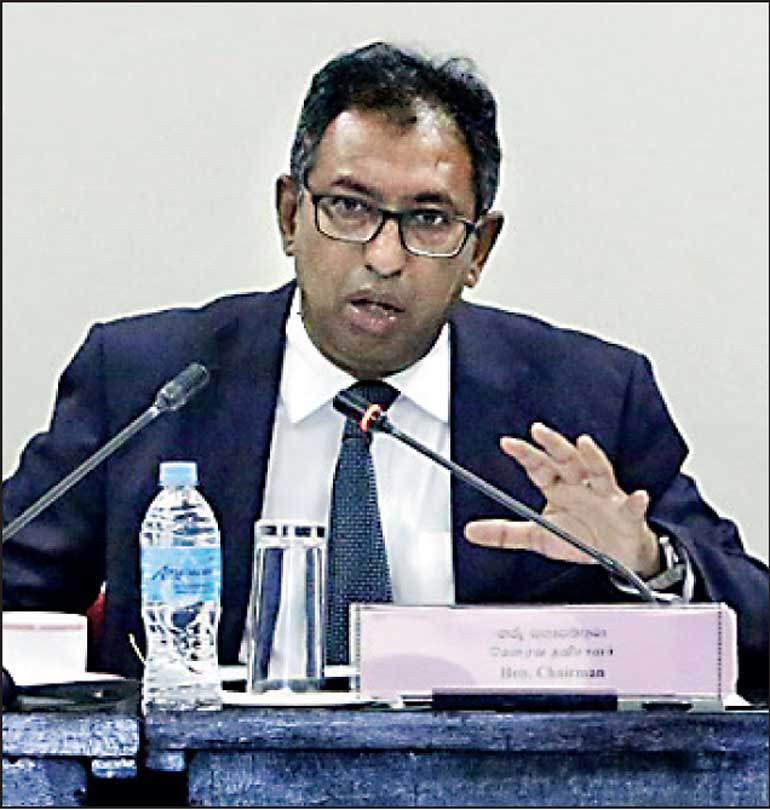
CoPF Chairman Dr. Harsha de Silva
The Central Bank of Sri Lanka (CBSL) has informed the Committee on Public Finance (CoPF) that no unusual activity had been reported during the period in which the Rs. 13.2 billion fraud at National Development Bank PLC (NDB) took place, with the Parliamentary oversight body questioning failures in audit, internal controls, and banking supervision linked to the incident.
According to a statement issued by the Parliament Secretariat, the matter was taken up at a CoPF meeting held on 5 May under the Chairmanship of MP Dr. Harsha de Silva.
The Parliament Secretariat said CBSL officials informed the Committee that the fraud had directly contributed to a decline in NDB’s share price and the downgrading of its credit ratings.
During the discussions, the CoPF examined weaknesses in banks’ internal control systems and questioned how the bank’s internal audit committee, external auditors, Board audit committee, and the CBSL’s Department of Supervision of Banks had failed to detect the fraud.
CBSL officials told the Committee that no unusual activity had been reported during the period in which the fraudulent transactions had taken place.
While the CBSL told the CoPF that no unusual activity had been detected during the period of the fraud, questions have intensified after NDB’s audited 2025 accounts showed a sharp rise in receivables linked to CEFT transactions to Rs. 12.2 billion from Rs. 3.1 billion a year earlier, with analysts arguing that the increase should have triggered scrutiny from management, auditors, and regulators (https://www.ft.lk/front-page/NDB-Board-gets-flack-for-ignoring-high-Rs-12-3-b-receivables-arising-from-CEFT-deals/44-790631).
The Committee also raised concerns over the same audit committee that functioned during the period of the fraud continuing to remain involved in related investigations, describing the arrangement as problematic.
The CoPF further stressed the need to improve transparency in external audit processes and strengthen oversight mechanisms within the banking sector.
The Committee also discussed what it described as ‘outdated security standards’ adopted by banks despite advances in technology, emphasising the importance of maintaining minimum common technological standards and a stronger regulatory framework across the sector.
According to the statement, the CoPF also underscored the need to introduce advanced technological systems incorporating artificial intelligence (AI) to prevent similar frauds in the future and strengthen the overall security of the banking system.
CBSL officials were also questioned on plans to introduce new technological regulations for fraud management. Officials informed the Committee that discussions are underway on issuing regulations aimed at strengthening fraud management systems across banks.




