Tuesday Oct 13, 2026
Tuesday Oct 13, 2026
Friday, 3 July 2026 00:28 - - {{hitsCtrl.values.hits}}
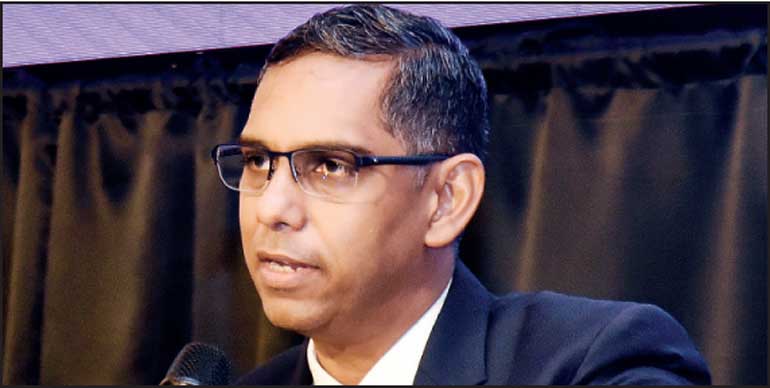
Economic Research Director Dr. Lasitha Pathberiya – Pic by Upul Abayasekara
After reaching a three-year high in June, inflation is expected to remain elevated over the coming months, but easing global oil prices have reduced the likelihood of a further monetary policy tightening if inflation expectations remain anchored, Central Bank of Sri Lanka (CBSL) Economic Research Director Dr. Lasitha Pathberiya said yesterday.
Addressing the CA Sri Lanka 5th Annual Economic and Tax Symposium, Dr. Pathberiya said the recent acceleration in inflation to 6.8% remained within the CBSL’s legal tolerance band around its 5% target and broadly reflected earlier projections, while lower global crude oil prices following the de-escalation of tensions in the Middle East had improved the inflation outlook.
“The target is 5%, with a margin of plus or minus 2%,” he said. “If we see inflation at 6.8%, for accountability purposes, we are still within that range. We expect inflation to remain around that level for a few months as well.”
Headline inflation, measured by the Colombo Consumer Price Index (CCPI), accelerated to a three-year high of 6.8% in June from 5.5% in May, driven largely by higher domestic energy costs following the Middle East conflict. The CBSL has projected inflation to remain above target in the near term before easing towards 5% over the medium term.
Dr. Pathberiya said the recent fall in international oil prices following the Middle East peace agreement had materially improved the outlook compared with conditions prevailing during the conflict.
“We see oil prices almost at the level observed before the Middle East crisis,” he said.
If sustained, lower oil prices would reduce pressure on Sri Lanka’s external sector while creating room for further reductions in domestic energy prices.
“We already observed some reduction in domestic energy prices, but there could be larger reductions going forward if these lower prices prevail,” he said.
Dr. Pathberiya said that, provided inflation expectations remain contained, the CBSL currently sees no immediate need for another increase in policy interest rates.
“If this is the case, and if we do not see further pressure on inflation expectations, there is no need for any policy interest rate increases,” he said.
He stressed, however, that any decision would ultimately rest with the Monetary Policy Board, which is scheduled to meet later this month under its regular bi-monthly policy cycle.
The CBSL raised its Overnight Policy Rate (OPR) by 100 basis points at the end of May, its first policy tightening since 2023, citing rising inflationary pressures and rapid private sector credit growth.
Dr. Pathberiya said that tightening had already begun transmitting through the financial system, with secondary market yields, the Average Weighted Call Money Rate, the Prime Lending Rate, and deposit rates all moving higher.
“That is monetary tightening,” he said.
Higher market interest rates are expected to moderate credit expansion, slow domestic demand, and ease pressure on both inflation and the external sector, supporting the CBSL’s objective of maintaining price stability.
“So that will help reduce credit disbursements from commercial banks and slow economic activity to a certain extent, which will help us control inflation and maintain price stability, while also easing pressure on the external sector,” Dr. Pathberiya said.




