Monday Aug 03, 2026
Monday Aug 03, 2026
Monday, 3 August 2026 00:25 - - {{hitsCtrl.values.hits}}
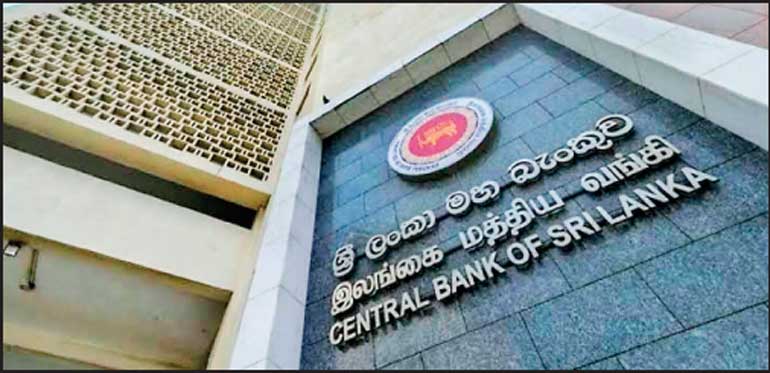
The Central Bank of Sri Lanka (CBSL) remained a net purchaser of foreign exchange during the first half of 2026, buying a net $ 556.3 million while injecting around Rs. 262.5 billion into the domestic money market through foreign exchange purchases and swap operations as it rebuilt reserves and sought to curb excessive exchange rate volatility.
According to the CBSL’s Market Operations Report published on 31 July, it purchased $ 982.2 million and sold $ 425.9 million in the domestic foreign exchange market during the first six months of the year, resulting in net foreign exchange purchases of $ 556.3 million.
It said these interventions were aimed at rebuilding foreign reserves in line with the International Monetary Fund (IMF)-supported Extended Fund Facility (EFF) program, strengthening external buffers, mitigating excessive exchange rate volatility, and facilitating the financing of essential energy-related imports despite elevated import-related demand and global uncertainties.
The report said foreign exchange purchases together with buy-sell swap operations injected around Rs. 262.5 billion into the domestic money market on a net basis, comprising Rs. 170 billion from net foreign exchange purchases and Rs. 92.5 billion from net foreign exchange swaps. Profit transfers by the CBSL to the Government added a further Rs. 41.9 billion to surplus liquidity.
These liquidity injections were partly offset by Government foreign loan repayments of Rs. 211.5 billion, coupon payments to the CBSL on its Treasury Bond holdings amounting to Rs. 94.4 billion, net currency withdrawals of Rs. 72.7 billion, Treasury Bond maturities of Rs. 10.8 billion, and other net liquidity absorptions related to the Statutory Reserve Requirement framework.
The domestic money market remained in a surplus liquidity position during the first half of the year, with average surplus liquidity of Rs. 199.5 billion. Surplus liquidity peaked at Rs. 403.8 billion in early March before moderating to Rs. 82.6 billion by end-June, with the report attributing the surplus primarily to the CBSL’s foreign exchange operations.
As surplus liquidity pushed the Average Weighted Call Money Rate below the Overnight Policy Rate, the CBSL resumed overnight and short-term repo auctions from mid-February to absorb excess liquidity and support orderly monetary conditions.
Although such operations were not conducted in April following a sharp decline in surplus liquidity caused by Government foreign loan repayments and coupon payments, they resumed from late April amid renewed pressures in the foreign exchange market and heightened market speculation. The report said these operations absorbed excess rupee liquidity, maintained tighter short-term monetary conditions, and helped mitigate pressures in the foreign exchange market.
The CBSL also entered into new buy-sell foreign exchange swap transactions amounting to $ 1.4 billion and rolled over a further $ 1.4 billion of existing swaps to preserve Gross Official Reserves (GOR). As swap maturities amounted to $ 1.2 billion, outstanding swaps increased from $ 1.9 billion at end-2025 to $ 2.2 billion by end-June 2026.
Supported by net foreign exchange purchases, GOR reached a post-crisis high of $ 7.3 billion at end-February before easing to $ 6.5 billion at end-June after foreign exchange sales were undertaken to contain exchange rate volatility and meet external obligations.
The report said the Sri Lankan rupee depreciated 7.9% against the US dollar during 1H 2026, with depreciation accelerating from 1.6% in the first quarter to 6.4% in the second quarter. It attributed the depreciation to heightened geopolitical tensions in the Middle East, increased import-related foreign exchange demand, capital and dividend outflows, and subdued conversion of export proceeds.
The exchange rate remained broadly stable during the first two months of the year before pressures intensified from late February as global energy prices rose and foreign exchange demand increased, although conditions showed signs of stabilising towards end-June.



