Sunday Sep 13, 2026
Sunday Sep 13, 2026
Thursday, 29 January 2026 05:34 - - {{hitsCtrl.values.hits}}
|
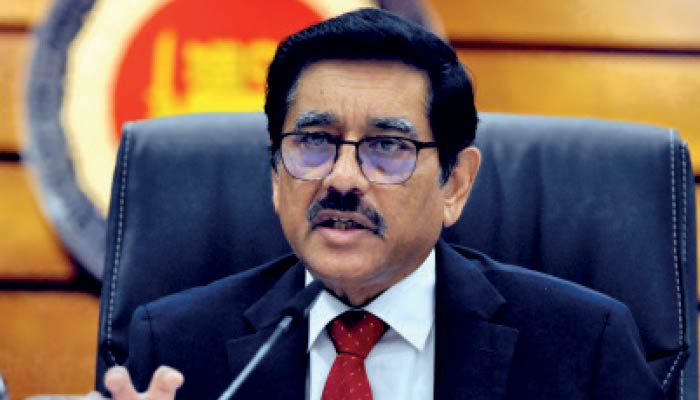
CBSL Governor Dr. Nandalal Weerasinghe - Pic by Lasantha Kumara
|
Central Bank Governor Dr. Nandalal Weerasinghe yesterday did not rule out any changes to the ongoing International Monetary Fund (IMF) Extended Fund Facility on account of emerging needs due to the post-Ditwah recovery.
Speaking at the post-Monetary Policy announcement press conference, Dr. Weerasinghe said IMF staff are currently assessing the economic impact of Cyclone Ditwah ahead of the postponed fifth review under the Extended Fund Facility. The fifth review, initially scheduled for mid-December, was deferred following the cyclone, with Sri Lanka instead receiving $ 206 million under the IMF’s Rapid Financing Instrument.
“The IMF team is here to assess the impact. After that, there will be a staff review mission to look at targets and see whether revisions are required,” he said, adding that discussions would continue until agreement is reached to complete the review.
The CBSL Governor noted that progress under the IMF-supported program and further sovereign ratings upgrades would be critical to strengthening investor confidence, particularly foreign investment inflows, as Sri Lanka continues its post-crisis recovery.
Speaking at the post-Monetary Policy announcement press conference, Weerasinghe said Sri Lanka is relying increasingly on foreign exchange earnings rather than external capital inflows, while acknowledging that ratings improvements remain essential to unlocking larger foreign investments.
“For that, there are certain things like ratings that will have to be improved. We are hoping that this year there will be another upgrade. That will certainly help improve the trust and confidence of investors,” he said, adding that a ratings upgrade would support foreign direct investment and other external financing.
He noted that domestic indicators already point to improving confidence, with credit expansion and stronger stock market activity. “It means there is evidence of domestic investment happening. Confidence is growing locally. For foreign investment, we need more stability, and that comes from steady improvements in macroeconomic conditions,” the Governor said.
Weerasinghe emphasised that building buffers remains central to macroeconomic resilience, pointing to higher foreign exchange reserves, fiscal cash buffers and monetary policy space as safeguards against shocks. He said Sri Lanka’s difficulties in 2022 were exacerbated by the absence of such buffers.
On the external sector, the Governor said Sri Lanka has recorded current account surpluses over the past two years, reflecting higher foreign exchange earnings from tourism, remittances and exports. “That is an important aspect, because it shows we are earning more foreign exchange than we are spending,” he said.
Turning to monetary conditions, Weerasinghe said recent short-term volatility in interbank rates reflected temporary liquidity shortages in parts of the banking system and had since corrected without Central Bank intervention. He said rates had realigned with the Overnight Policy Rate and that this correction would transmit to Treasury Bills, Bonds and prime lending rates.
He also said Cyclone Ditwah is expected to have only a short-term impact on growth, with some moderation likely in the fourth quarter of 2025, followed by a recovery supported by additional fiscal spending in 2026.