Friday May 29, 2026
Friday May 29, 2026
Tuesday, 24 February 2026 03:00 - - {{hitsCtrl.values.hits}}
|
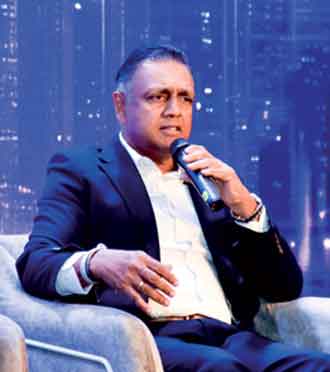
DFCC Bank CEO Thimal Perera |
Sri Lanka’s banking leaders said the country’s upcoming third Anti-Money Laundering and Countering the Financing of Terrorism (AML/CFT) mutual evaluation is a make-or-break moment for the financial system, warning that a negative outcome would severely damage credibility and access to global funding.
DFCC Bank PLC Chief Executive Officer Thimal Perera described failure as “not an option” for an economy still in the early stages of recovery.
“A negative result means your financial credibility is questioned and your ability to raise funds becomes extremely limited,” he said, noting that authorities from the Central Bank of Sri Lanka (CBSL) downwards are treating the evaluation with urgency.
At bank level, Perera said preparations are extensive. Institutions are revisiting previous national risk assessments, reviewing identified deficiencies from past years, and upgrading systems to strengthen risk identification.
“Artificial intelligence (AI) tools are increasingly being integrated into transaction monitoring to enhance early detection of suspicious patterns,” he added.
In addition, he said mock evaluations and external consultants have been engaged across the industry and individually.
Bank of Ceylon Chairman Kavinda de Zoysa said the Financial Intelligence Unit (FIU) of the CBSL has intensified oversight and engagement with banks in the run-up to the assessment.
“Investments have accelerated in basic transaction monitoring systems like Know-Your-Customer (KYC) processes and ultimate beneficial ownership (UBO) identification frameworks,” he pointed out.
He said AML compliance has shifted from being a technical compliance function to a Board-level priority. “Each Board meeting now devotes time to this,” he noted, underscoring the heightened governance focus.
People’s Bank General Manager and CEO Clive Fonseka echoed that sentiment, noting Boards and risk management committees now deliberate on AML matters monthly.
“Dedicated monitoring units have been strengthened to investigate alerts generated by upgraded systems,” he added.
However, Hatton National Bank Managing Director/CEO Damith Pallewatte cautioned that seriousness at the top levels must cascade to frontline staff, who deal directly with customers.
“Technology helps, and AI helps,” he said, but warned that real-time transaction monitoring capabilities are still evolving and require time to mature.
He also stressed that banks alone cannot carry the burden. “Non-bank financial institutions, money exchangers, and other financial intermediaries must raise standards in parallel to avoid systemic weak links,” Pallewatte stressed.
Industry leaders insisted that lessons from the 2022 crisis have sharpened awareness of systemic vulnerabilities. This time, they say, the approach is proactive rather than reactive, with compliance culture, technology investment, and Board oversight aligned behind a single objective—securing a clean pass. (CdeS)