Sunday Oct 04, 2026
Sunday Oct 04, 2026
Thursday, 21 May 2026 06:19 - - {{hitsCtrl.values.hits}}
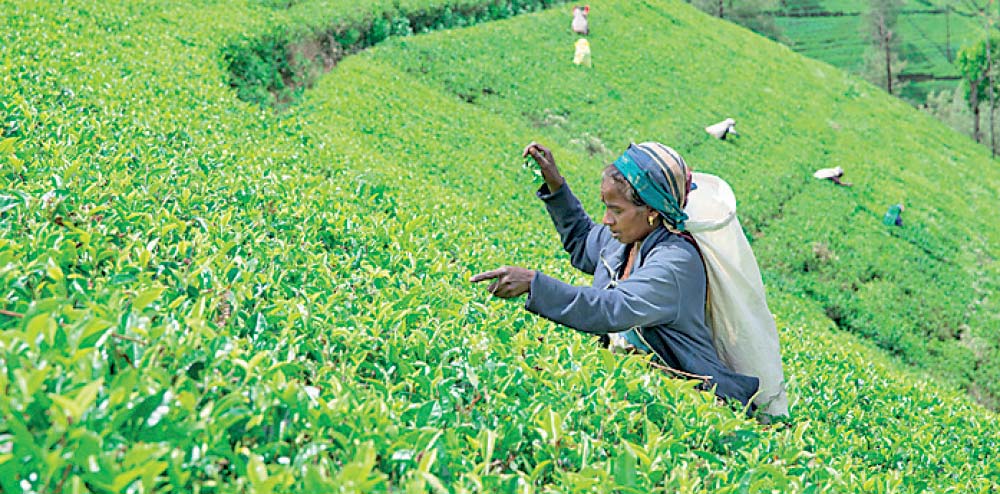
Sri Lanka’s tea exports declined during the first four months of 2026, as disruptions to global shipping routes following the escalation of the US-Iran conflict weighed on access to key export markets across the Middle East and North Africa.
According to an analysis of Sri Lanka Customs data by Siyaka Research, tea exports fell by 1.6% year-on-year (YoY) to 17.9 million kilograms (Mn/Kg) in April, compared with 18.2 Mn/Kg recorded in the same month last year.
The report attributed the decline largely to logistical disruptions and shipping delays triggered by heightened geopolitical tensions following the escalation of the US-Iran conflict in late February, which affected maritime access to several of Sri Lanka’s major tea-buying destinations.
For the January-April period, Sri Lanka exported 78.3 Mn/Kg of tea, representing a 4% YoY decline from the 81.3 Mn/Kg shipped during the corresponding period in 2025.
Export earnings during the first four months also weakened, falling by 5.64% YoY to $ 451 million from $ 478 million a year earlier. As a result, the average Free on Board (FOB) value per kilogram declined to $ 5.76 from $ 5.88 recorded in the same period last year.
Asia Siyaka Research noted the data highlight the vulnerability of Sri Lanka’s tea sector to geopolitical instability and disruptions in international shipping routes, particularly given the industry’s heavy reliance on markets in the Middle East, the Commonwealth of Independent States, and neighbouring regions.
Iraq remained Sri Lanka’s largest tea export destination during the January-April period, importing 10.2 Mn/Kg, although volumes were lower than the 11.5 Mn/Kg registered a year earlier.
Türkiye retained its position as the second-largest export market, with imports rising sharply to 9.7 Mn/Kg from 4.2 Mn/Kg during the same period in 2025. Analysts attributed the increase partly to the rerouting of shipments through alternative regional trade channels amid disruptions affecting traditional shipping routes.
Russia ranked third with imports of 7.3 Mn/Kg, broadly maintaining volumes comparable with last year despite continuing geopolitical and payment-related challenges affecting trade with the region.
Meanwhile, Azerbaijan recorded notable growth in tea imports from Sri Lanka, with volumes increasing to 4 Mn/Kg from 2.6 Mn/Kg in the corresponding period last year.
Tea remains one of Sri Lanka’s largest merchandise export earners and a key source of foreign exchange for the economy. However, the sector continues to face pressure from volatile global demand, rising shipping costs, currency fluctuations, and geopolitical instability affecting several of its traditional export markets.
In 2025, Sri Lanka’s tea exports registered 257.44 Mn/Kg, generating a revenue of over $ 1.5 billion.



