Monday Oct 12, 2026
Monday Oct 12, 2026
Saturday, 28 March 2026 00:45 - - {{hitsCtrl.values.hits}}
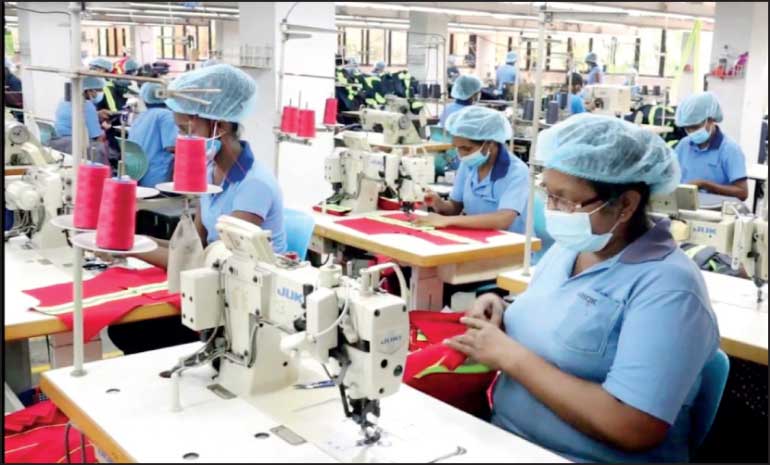
Sri Lanka’s apparel sector came under intensified pressure in February 2026, as exports fell by 11.46% year-on-year (YoY) to $ 361.2 million with broad-based contraction amid weakening global demand.
As per provisional data of the Joint Apparel Association Forum (JAAF), the steepest drop was registered in the European Union (EU), where exports declined by 19.48%, while shipments to the US fell by 3.53% and the UK by 5.67%. Other markets collectively saw an even sharper contraction of 18.54%, reflecting a widespread cooling in demand across destinations.
The downturn has extended into cumulative performance, with exports for the first two months of 2026 declining by 6.91% compared to the same period last year. While the US and UK markets showed relatively moderate dips, the pronounced slowdown in the EU, a critical destination for Sri Lankan apparel.
However, JAAF pointed out that this is not a Sri Lanka-specific phenomenon: “The current decline in exports reflects a broader softening in global demand, particularly in Europe, which is now evident across the region. Bangladesh’s apparel exports to the EU, for instance, fell by over 25% in January, indicating that this is not a Sri Lanka-specific issue but a wider market correction”.
It added: “That said, in a more competitive environment, domestic constraints become more critical. Improving logistics efficiency, ensuring cost competitiveness, and strengthening market access must now be treated as immediate priorities if Sri Lanka is to retain and grow its position in global apparel supply chains.”
Regional competitors are seeing similar pressures. Bangladesh, the world’s second-largest apparel exporter, registered a 25.25% decline in exports to the EU in January 2026, falling to € 1.43 billion from € 1.91 billion a year earlier. The scale of that contraction in Sri Lanka’s largest competing market suggests a broader demand correction in Europe, rather than a loss of country-specific competitiveness,” it added.
Taken together, the data indicates a global recalibration rather than an isolated downturn. For Sri Lanka, JAAF noted this provides context to the current export slowdown. External demand has softened, particularly in Europe, which remains a critical market for apparel exporters across the region.
However, while the demand-side pressure is shared, the ability to respond remains uneven. Sri Lanka’s operating environment continues to be shaped by structural cost pressures, logistics inefficiencies, and evolving sourcing expectations from global buyers. “In this context, competitiveness is determined not only by external market conditions, but by how effectively domestic constraints are addressed,” it added.




