Saturday Oct 17, 2026
Saturday Oct 17, 2026
Wednesday, 25 March 2026 00:00 - - {{hitsCtrl.values.hits}}

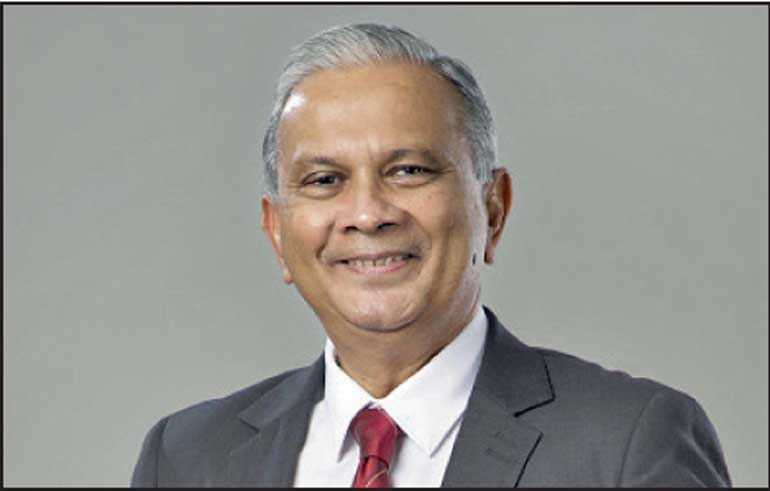
Managing Director and CEO
Thushara Ranasinghe
Sri Lanka is getting older, fast. By 2042, one in four Sri Lankans will be above the age of 60. That is not a distant projection. It is sixteen years away. And by most measures, this country is unprepared for what it means, not at a policy level, and certainly not at the level of the individual household.
“Sri Lanka’s demographic transformation is no longer a future concern. It is arriving on our doorstep. When one in four citizens will be above sixty by 2042, we face a social and economic reality that requires our attention now, not in the next planning cycle,” said Ceylinco Life Managing Director and CEO Thushara Ranasinghe.
Sri Lanka’s working population is remarkably good at planning for the near term. People plan for education, for housing, for the next car, for their children’s school fees. Very few are making plans for old age. That gap, between a life well managed today and a retirement poorly funded tomorrow, is quietly becoming one of the most serious financial challenges facing this country.
The numbers behind the crisis
Sri Lanka’s average life expectancy now stands at approximately 77 to 78 years. The standard retirement age for private sector workers is 60. That arithmetic alone should give pause: the typical retiree must fund fifteen or more years of post-work life from whatever they have managed to accumulate during their earning years.
For most private‑sector employees, the Employees’ Provident Fund (EPF) remains the primary source of retirement income. According to the EPF Annual Report 2024, the Fund paid out Rs. 188 billion in final retirement and death benefits to members and their legal heirs during the year. These payments represent workers exiting the system at retirement or upon death, often after decades of contributions.
In addition to these final settlements, EPF also disbursed a further Rs. 40–45 billion through authorised pre‑retirement withdrawals, including housing‑related and medical withdrawals permitted under the Act. Taken together, total EPF benefit payments for the year amounted to approximately Rs. 230 billion, highlighting both the scale of retirements taking place and the extent to which savings are being drawn down before retirement.
When the retirement‑specific payouts are considered against the number of members exiting the Fund, the average EPF balance available at retirement remains modest. Spread across an expected retirement period of fifteen or more years, the typical EPF settlement translates into only a few thousand rupees per month, underscoring the growing gap between longevity and financial preparedness in Sri Lanka.
The EPF figure, sobering as it is, only tells part of the story. A significant portion of Sri Lanka’s workforce such as the self-employed, informal sector workers, gig economy participants, and many small business owners have no EPF coverage at all. For them, retirement planning is entirely discretionary, and in the daily pressure of running a livelihood, it is almost always deferred.
Even among those who do contribute to EPF, awareness of what they will actually receive is remarkably low. Few people know their current balance. Fewer still have projected what that balance will be worth at retirement, or what it will actually buy in twenty years’ time. The fund exists, the contributions are made, and the rest is left to assumption.
“The retirement challenge in Sri Lanka is not confined to those at the lower end of the income spectrum. A significant portion of our workforce has no structured retirement vehicle at all. And even among those who do, the assumption that their contributions will be sufficient is rarely tested against reality,” says Ranasinghe.
There is also the erosion of the informal safety net. Previous generations could rely, to some extent, on family structures, with children who stayed nearby, extended households that absorbed elderly parents. Urbanisation, migration, and the shift toward nuclear family models have progressively dismantled that system. For many people retiring today, or planning to retire in the next decade, that cushion no longer exists in the way it once did.
Who is most at risk
Retirement vulnerability in Sri Lanka does not follow a simple income line. The obvious candidates are low-income workers with minimal savings, but the professional class carries its own version of this risk, and in some ways a more insidious one. Professionals tend to have higher lifestyle costs, larger financial commitments, and an assumption of security that is rarely tested against actual numbers until it is too late to act.
Women in the workforce face additional exposure. Career breaks for caregiving, lower average lifetime earnings, and longer life expectancy combine to create a retirement gap that is structurally wider than that faced by their male counterparts.
Late starters, those who begin thinking seriously about retirement in their mid-forties, are working with a compressed runway and, crucially, less time for compounding to work in their favour. And then there is what demographers call the sandwich generation: people in their forties simultaneously funding their children’s education and supporting ageing parents, while their own retirement savings sit at the bottom of the priority list. This group is arguably the most financially stretched in Sri Lanka today, and the least likely to have had a serious conversation about what their own retirement will look like.
The conversation that cannot wait
Ceylinco Life is launching Retirement Ready, a year-long national awareness campaign running throughout 2026 across print, digital, broadcast, and podcast formats in Sinhala, Tamil, and English. It is not designed to sell. It is designed to inform, to put the numbers in front of people clearly enough that they cannot be ignored.
“After three decades of working with Sri Lankan families at some of the most important financial moments of their lives, we have seen what deferred planning costs. Retirement Ready is our commitment to changing that conversation, not by waiting for people to come to us, but by bringing the facts to them,” says Ranasinghe.
The campaign draws on three decades of insight into how Sri Lankans save, spend, and plan, and what happens when they do not. It will address the professional class, women in the workforce, late starters, and the sandwich generation in turn, giving each group a clear-eyed picture of where they stand and what options remain available to them.
The conversation around retirement in Sri Lanka tends to happen too late, in the final years of a career, when the window for meaningful action has largely closed. Ceylinco Life believes that needs to change. The retirement crisis unfolding in this country is not inevitable. It is the product of deferred decisions and unanswered questions. The best time to ask those questions was twenty years ago. The second-best time is now.
“This is not a campaign about products. It is a campaign about informed choices. We believe every Sri Lankan, regardless of income or profession, deserves to understand what their retirement will actually look like and to have the opportunity to do something about it while there is still time,” Ranasinghe added.




