Thursday Sep 03, 2026
Thursday Sep 03, 2026
Thursday, 3 September 2026 00:01 - - {{hitsCtrl.values.hits}}
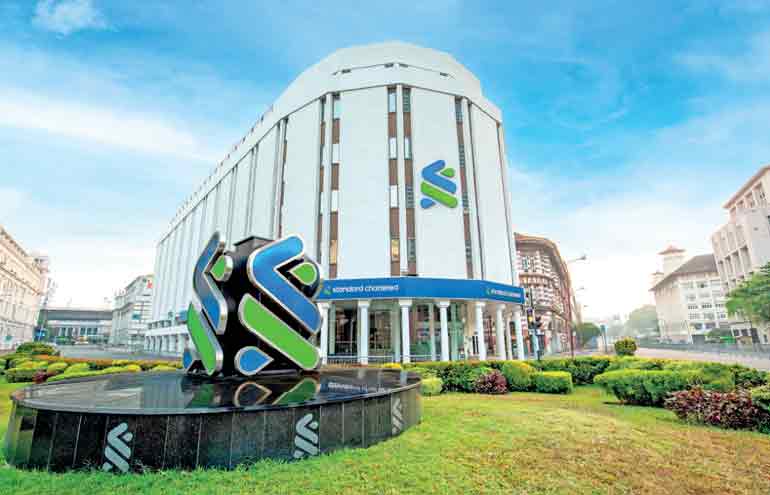
Standard Chartered Sri Lanka hosted “A Test of Resilience: Global Research Briefing Webinar on Global & Sri Lanka Economic Outlook for 2H 2026”, bringing together corporate and financial institutions clients for an expert discussion on the prospects for the global economy, Sri Lanka and financial markets in the second half of the year.
The webinar examined how the global economy and financial markets demonstrated unexpected resilience during the first half of 2026 despite one of the largest energy-supply-chain shocks in history. While global growth is expected to remain on a stable footing, the discussion highlighted the need for caution as geopolitical conditions remain fragile, financial-market valuations are stretched and the sources of growth remain narrow.
The event commenced with an address by Standard Chartered Sri Lanka CEO Bingumal Thewarathanthri who welcomed participants and underscored the importance of timely, research-led perspectives as businesses and investors navigate an increasingly complex operating environment.
Expert insights were presented by Standard Chartered ASEAN & South Asia Chief Economist and Head of FX Edward Lee; South Asia Economist Saurav Anand; and ASEAN and South Asia Co-Head of FX Research, Divya Devesh. The speakers assessed the forces likely to shape 2H 2026, including the outlook for inflation, currencies, energy markets and growth, together with the implications for global and Sri Lankan markets.
The briefing also outlined the key risks investors should monitor in the months ahead, with particular attention to persistent geopolitical uncertainty, the durability of global growth, elevated market valuations and potential spillovers from energy and financial-market developments. The speakers considered how these dynamics could affect Sri Lanka’s economic trajectory and the decisions facing businesses and investors.
The Sri Lanka discussion also considered the policy framework beyond the country’s current International Monetary Fund Extended Fund Facility, which is due to conclude in 2027.
Thewarathanthri noted that the program had supported stronger fiscal discipline, cost-reflective energy pricing, more efficient delivery of cash transfers and greater Central Bank independence. While recognising that challenges remain, including poverty, support for small and medium enterprises and the pace of foreign direct investment, he suggested that a subsequent Stand-By Arrangement could help preserve reform momentum, strengthen investor and rating-agency confidence, and support Sri Lanka’s eventual return to international capital markets, while allowing greater flexibility in setting economic policy.
The program concluded with a moderated panel discussion led by Standard Chartered Sri Lanka Executive Director and Head, Local Corporates and Global Subsidiaries Tamani Dias. The panellists responded to questions from participants and offered further perspectives on the 2H 2026 outlook for the global economy, Sri Lanka and financial markets.



