Saturday Sep 26, 2026
Saturday Sep 26, 2026
Friday, 25 September 2026 00:10 - - {{hitsCtrl.values.hits}}
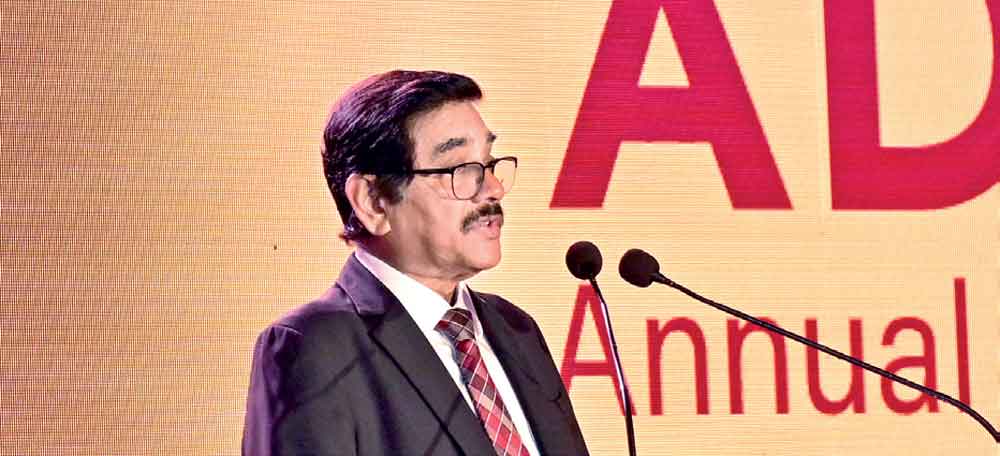
CBSL Governor Dr. Nandalal Weerasinghe

ADFIAP Chair Dr. Kao Thach
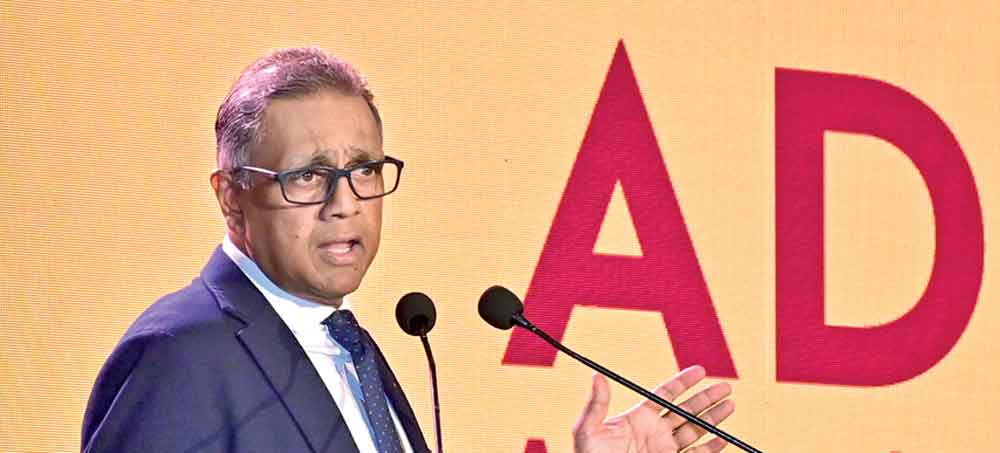
DFCC Bank CEO Thimal Perera
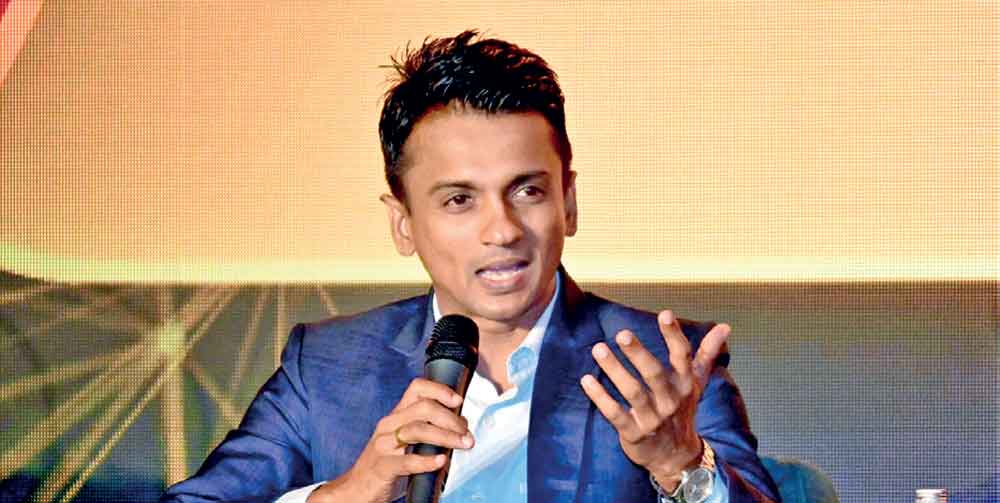
Advocata Institute CEO Dhananath Fernando
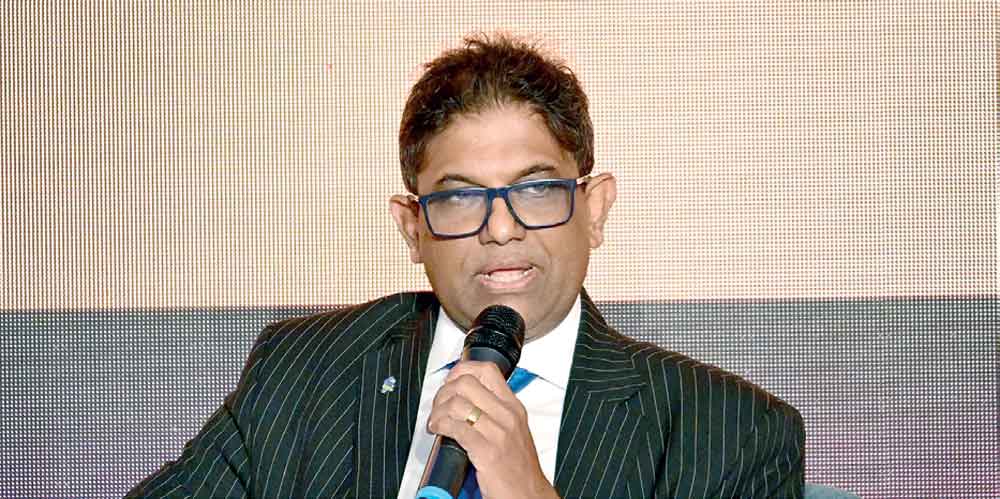
Standard Chartered Sri Lanka CEO Bingumal Thewarathanthri
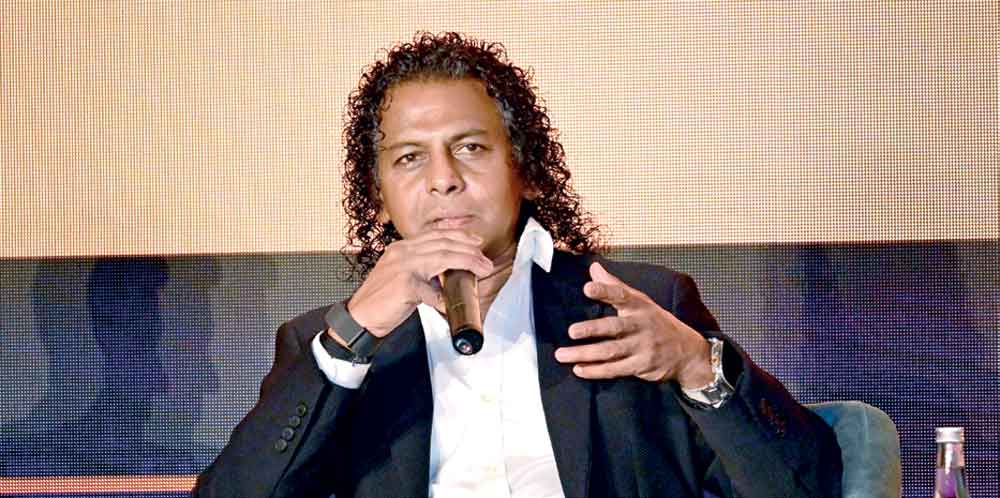
John Keells Holdings Executive Vice President and Group Chief Information Officer Dr. Ramesh Shanmuganathan
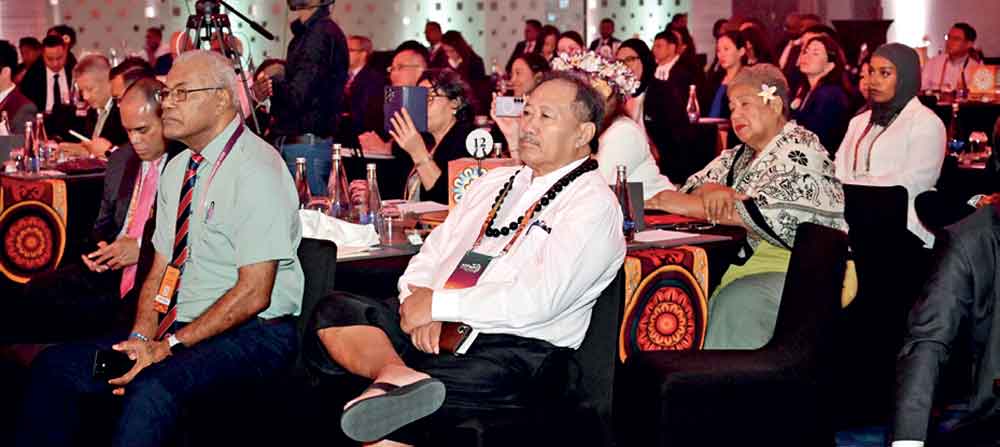
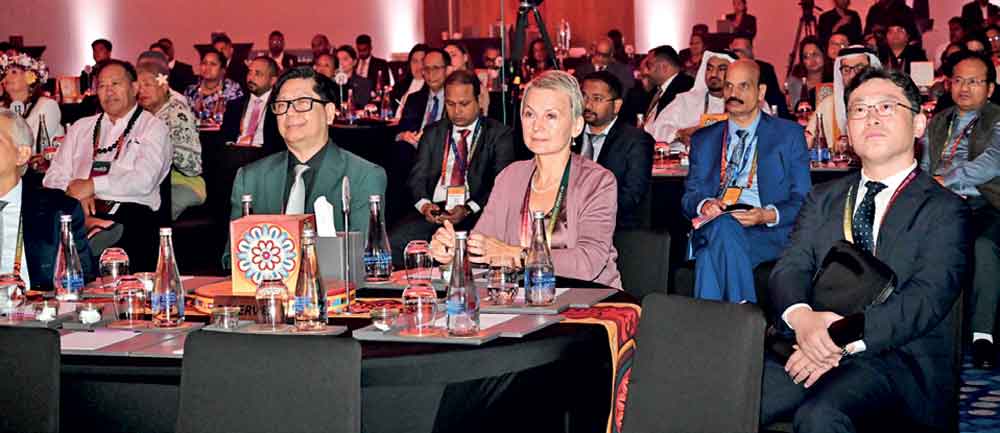
 DFCC Bank-hosted ADFIAP’s 49th Annual Meetings draw over 300 development finance leaders, policymakers and professionals from over 40 countries to Colombo
CBSL Governor Dr. Nandalal Weerasinghe says DFIs must use guarantees, blended finance and risk-sharing to draw in private capital as regional financial integration lags
ADFIAP Chair Dr. Kao Thach says DFIs should be judged by the private capital they unlock, not by what they lend from their own balance sheets
Standard Chartered Sri Lanka CEO Bingumal Thewarathanthri says development banks need tax incentives to offset levies of up to 60% of profits
DFCC CEO Thimal Perera makes case for development banking, but warns loss-making lenders burden taxpayers
Advocata CEO Dhananath Fernando calls for land and labour reforms and RCEP, CPTPP entry with deeper India ties
John Keells Holdings Executive Vice President and Group Chief Information Officer Dr. Ramesh Shanmuganathan says Sri Lanka’s constraint is access to markets large enough to scale, not talent, and urges common regional digital infrastructure on par with airports and seaports
Development finance institutions (DFIs) must shift from lending to mobilising private capital if Sri Lanka and its Asia-Pacific neighbours are to convert stability into growth, policymakers and bankers told the 49th Annual Meetings of the Association of Development Financing Institutions in Asia and the Pacific (ADFIAP) in Colombo this week.
The meetings, held from 23 to 25 September, 2026 under the theme “Partnerships for Prosperity: Unlocking Regional Potential”, are hosted by DFCC Bank, a founding and charter member of ADFIAP since its establishment in 1976. The association comprises 97 member institutions from 42 countries, and the Colombo meetings drew over 300 development finance leaders, policymakers and professionals from 45 countries.
Catalysing private capital
Central Bank Governor Dr. Nandalal Weerasinghe, delivering the keynote address, said the role of DFIs is evolving beyond traditional lending towards connecting development priorities with investment and available sources of capital.
Economic integration, he argued, cannot advance without the financial capacity to support it, particularly in infrastructure and other areas where projects require long-term financing or carry higher risks. Citing the Asian Development Bank’s (ADB) Asian Economic Integration Report 2026, he noted that intraregional investment has remained resilient, but financial integration in the region remains relatively underdeveloped.
DFIs, he said, can close financing and risk gaps through risk-sharing arrangements, guarantees, blended finance and project development, while partnering with public and private institutions to draw in diverse sources of capital and expertise.
“By strategically deploying development finance, DFIs can act as a catalyst for a wider pool of private capital to participate in productive and development-oriented investments, particularly where risks or long investment horizons may otherwise limit private participation,” Dr. Weerasinghe said.
That role, he stressed, matters most for SMEs, which face greater constraints in accessing finance. By facilitating appropriate financing and stronger financial ecosystems, DFIs can help SMEs expand into regional markets and create jobs.
Dr. Weerasinghe said Sri Lanka’s restored macroeconomic stability now provides a foundation for this next phase. The National Climate Finance Strategy 2025–2030 and the Central Bank’s Sustainable Finance Roadmap 2.0 for 2025–2029 aim to channel greater financing towards climate action and sustainability, which he said creates room for DFIs to play a catalytic role through longer-term financing, risk-sharing and the mobilisation of private capital.
He also saw considerable scope for cooperation among DFIs themselves, through joint financing, shared knowledge and financing models, and collaboration on emerging risks.
“The objective should be to move from partnerships as a means of discussion to partnerships as a means of delivery, from exchanging ideas to developing projects, mobilising investment and creating tangible opportunities across the region,” he said.
Capital that unlocks capital
ADFIAP Chairperson Dr. Kao Thach, declaring the meetings open, said the role of development finance institutions is becoming indispensable to inclusive and sustainable growth in the region, as climate change reshapes agriculture and infrastructure, financing constraints hold back SMEs and rural communities, and digital transformation demands new investment.
“No single institution, regardless of the strength of its balance sheet, its mandate or its expertise, can respond to challenges of this scale alone,” he said.
Dr. Thach called for a fundamental rethink of how DFIs deploy their own capital, arguing that the region’s financing needs far exceed what individual institutions can supply.
“The measure of a development finance institution should no longer be only how much it can lend from its own balance sheet. The more strategic question is how much additional capital it can unlock, mobilise and direct towards development priorities,” he said.
DFIs, in his view, must position themselves as capital mobilisers, risk-sharers and market builders, using guarantees to lower barriers to private investment, concessional resources to make high-impact projects viable and technical assistance to turn ideas into bankable projects. “A single DFI may finance a project. A strong network of DFIs can build an investment ecosystem,” he said, urging ADFIAP to evolve from a knowledge-sharing network into a regional platform for co-financing, pipeline development and resource mobilisation.
Reforms to unlock growth
The first Special Interest Session, “Sri Lanka’s Financial Landscape: Transforming Challenges into Regional Opportunities”, moderated by The Ceylon Chamber of Commerce Chief Economist Arani Rodrigo, examined what it will take to move from recovery to growth.
Advocata Institute Chief Executive Officer Dhananath Fernando said the macroeconomic indicators pointed to one of the fastest recoveries from a crisis of the magnitude Sri Lanka faced in 2022, with the fiscal accounts performing well and the economy growing 5.1% in the first quarter and 4.2% in the second. Inflation had picked up, he noted, mainly because of geopolitical tensions beyond the country’s control.
“In simple terms, the economy is stable and has recovered. The challenge is on the growth side,” Fernando said.
He warned that recovery and growth demand different policies, and that lingering in stabilisation carries its own risk. “If we stop at the same place, we will slowly shift towards destabilisation again. We have to shift gears from stabilisation to growth,” he said.
Fernando identified land as the first constraint, noting that about 82% of land in Sri Lanka is owned by the Government and that land titling is progressing very slowly. Labour laws, he argued, are equally restrictive, citing limits on women working after 8 p.m. or 9 p.m. and on part-time and flexible work arrangements. He also called for reforms that open sheltered sectors to genuine competition.
The pressure on the labour market is set to intensify. Fernando said about 1.8 million young people would join the workforce in the next few years, more than the number currently employed by the Government, even as the child population and the number of marriages decline.
Taxes deter development banking capital
Standard Chartered Bank Sri Lanka Chief Executive Officer Bingumal Thewarathanthri, who is also Vice Chairperson of The Ceylon Chamber of Commerce, said the country would struggle to draw fresh capital into development banking unless the State offered fiscal incentives to offset taxes that absorb as much as 60% of bank profits.
“The reality is, why should anybody put money into a market where the banking tax is something like 50 to 60% of your profits?” he asked.
At that rate, an investor keeps between Rs. 40 and Rs. 50 of every Rs. 100 earned before tax. Thewarathanthri contended that such a return would struggle to attract foreign capital, whether into a new development bank, a public-private partnership or a dedicated development-banking subsidiary of an existing lender. He acknowledged that his prescription sits uneasily with the country’s International Monetary Fund (IMF) program.
“This is completely against the IMF thinking, but the reality is that a lot of countries, when they started some of these, have given those,” he said, adding that tax rates are typically raised to normal banking levels as institutions and markets mature.
Sri Lanka’s SME base, by his count, stretches to more than 160,000 registered companies and upwards of half a million informal enterprises, together employing an estimated 3.5 to 4 million people.
Capital alone, however, would not fix a model whose past lending, in his view, followed the priorities of funders rather than those of the economy. “Our business strategy was always driven by the DFIs’ objectives. We have not looked at what the country needs, what the country’s economic pillars are,” he said.
Where the State backs such institutions, he stressed, taxpayers’ money must be steered into the right sectors, segments, demographics and geographies on the strength of data. “It can’t be based on gut feeling; it can’t be based on someone’s thinking,” he said. He cited portfolio-based lending, digital platforms, the Internet of Things (IoT) and blockchain as means of monitoring borrowers without constant physical visits.
Pointing out that several banks and non-bank financial institutions already extend collateral-free credit through program-based loans and community cross-guarantees, he said the State-backed credit guarantee scheme appeared to be gaining traction, although he conceded he had no data on its take-up. The National Credit Guarantee Institution, which commenced operations in January 2025, had issued 2,000 guarantees by July this year, facilitating over Rs. 14 billion in SME loans, an average of roughly Rs. 7 million per loan. It expects to double its beneficiaries to 4,000 by end-2026.
Directing credit to the farm
Thewarathanthri called for financing for specialised crops to be tied to specific regions, so that warehousing, collection and transport networks can be built around them. Loosely directed credit, he cautioned, floods local markets with the same produce.
“When there is funding available, people just get into it and grow mangoes or something like that. Then suddenly you realise you have no market for it,” he said, recalling watermelons and mangoes sold at depressed prices in markets around Kurunegala and Bibile.
He urged the Central Bank to take a firmer hand in directing credit, setting Sri Lanka’s 10% priority sector requirement against the Reserve Bank of India’s (RBI) target of around 40%. The two figures are not strictly comparable. The RBI’s target spans all priority sectors, whereas Sri Lanka’s 10% is a mandatory allocation to agriculture dating back to 2008. Even on a like-for-like basis, however, India’s agriculture sub-target of 18% is close to double Sri Lanka’s. Banks in India that miss their targets, which he noted include global lenders such as Standard Chartered, must place the shortfall in designated funds such as the Rural Infrastructure Development Fund managed by the National Bank for Agriculture and Rural Development (NABARD).
Agriculture, he argued, is where directed finance could do the most good. He put the sector’s share of GDP at 6 to 7% and its share of the labour force at 27%. Official data point to a narrower, though still stark, gap. According to the Department of Census and Statistics (DCS), agriculture accounted for 8.4% of GDP at current prices in the second quarter of 2026 and employed 23.7% of the workforce, or about 1.9 million people, in the first quarter. On those numbers, each farm worker produces only about a third of the output of the average worker. The sector also shrank 2.3% in the second quarter, even as the wider economy expanded 4.2%.
Raising agriculture’s contribution to 12 to 13% of GDP would, in his reckoning, lift much of the farming population out of poverty. Many farmers, he noted, live on less than Rs. 17,000 to Rs. 18,000 a month per person, a range that brackets the DCS official poverty line of Rs. 17,679 per person per month in July 2026, or about Rs. 590 a day. He added that a quarter of Sri Lankans live in poverty and a further quarter are vulnerable.
He also cast the sector as a question of food security in a world unsettled by the Middle East crisis, recalling wheat export curbs during the Russia-Ukraine war and India’s periodic bans on crop exports. Productivity gains, he insisted, can come only through technology, from geo-fencing and climate projections to crop monitoring, tailored to farms that typically span one to two acres and support several families. He saw room for banks to go well beyond the 10% now directed to agriculture, pointing to export potential for coconut, cinnamon, fruit and organic produce in markets such as the UAE and Singapore.
Independence and viability
DFCC Bank Director and Chief Executive Officer Thimal Perera tempered the call for State support, arguing that any development bank must be run independently, free of political interference and able to stand on its own feet.
“Otherwise, it becomes a burden on the taxpayer at the end of the day, if the development banks are loss-making,” he said.
Perera said the need for development finance remains clear in infrastructure, renewable energy and rural development, and that DFCC continues to carry a large project financing book. Yet customers approaching a development bank expect subsidised rates, while the bank must raise funds at market rates and finds low-cost overseas funding hard to secure. Development banks, he added, are at a disadvantage to commercial banks because of restrictions on opening zero-cost current accounts. DFCC itself, Sri Lanka’s first development bank, pivoted to commercial banking after 60 years, largely because it could not secure long-term, low-cost funding.
On SMEs, he drew a distinction the inclusion debate often blurs. “If you look at Sri Lanka and we talk about financial inclusion, I don’t think we have an inclusion issue. The issue we have is access to finance,” he said. “A lot of small entrepreneurs, small businesses and start-ups find it impossible to access bank funds.”
Start-ups, he said, are forced to rely on venture capital and other sources, and banks must find ways to share risk and lend at a reasonable price. “We can’t always do collateralised lending,” he said, adding that a change in mindset is required. He pointed to Germany’s start-up accelerators and financial support as a model for the ecosystem Sri Lanka needs to build.
Digital rails and regional markets
John Keells Holdings PLC Executive Vice President and Group Chief Information Officer Dr. Ramesh Shanmuganathan urged Sri Lanka to take its cue from Singapore and Dubai by investing in common digital infrastructure across the region, in the way countries once built airports and seaports. He pointed to digital identity and digital currencies as priorities, noting that Sri Lanka remains a largely cash-based society, and argued that reducing friction in payments would speed the circulation of money through the economy.
The bigger constraint, he said, is not talent or ideas but access to markets large enough to scale. With a home market too small, he argued, a regional platform, including a sandbox for new technology, is essential for Sri Lankan firms to reach customers abroad.
Fernando set out the trade route to those markets. He urged Sri Lanka to join the Regional Comprehensive Economic Partnership (RCEP) and the Comprehensive and Progressive Agreement for Trans-Pacific Partnership (CPTPP), while securing a separate trade agreement with India, which remains outside RCEP. That combination, he argued, would give Sri Lanka a unique position with access to both the RCEP region and India.
He conceded it was a long shot, requiring extensive domestic changes before accession. “It will take time, but I think it’s a worthy effort, because that’s where regional integration comes in and that’s where development financing and everything can come together,” he said.
Fernando also argued that the country has yet to capitalise on its strategic location through the port sector, and that its strategy should be to integrate into the supply chains of large regional players, starting with India, where some southern states are growing at 9 to 11%.
- Pix by Sameera Wijesinghe