Saturday Jul 04, 2026
Saturday Jul 04, 2026
Wednesday, 8 April 2026 03:51 - - {{hitsCtrl.values.hits}}
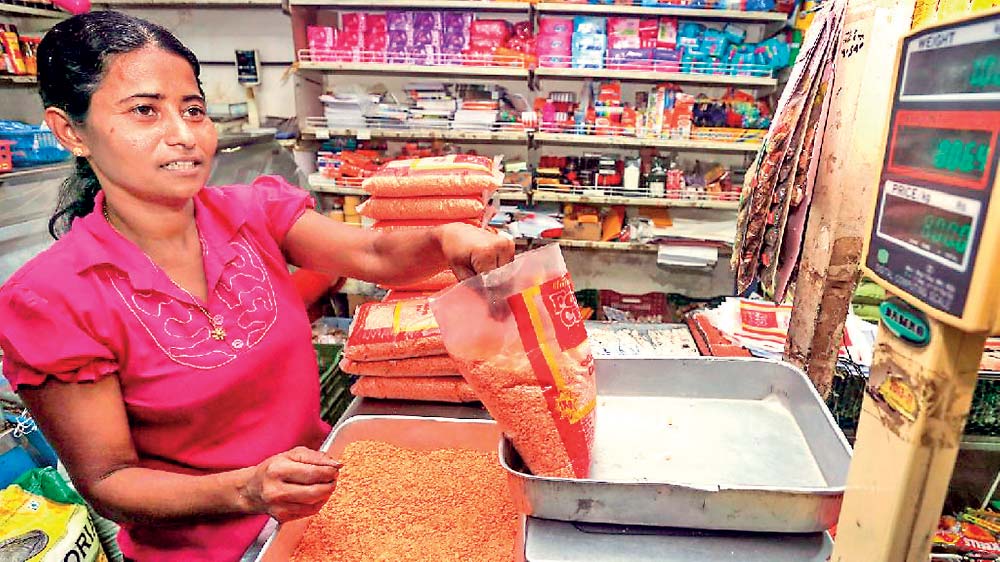
 With the introduction of the MCRA Act, the earlier Microfinance Act No. 6 of 2016, which struggled to regulate a large number of informal lenders, was repealed. The MCRA Act has cleared the way for setting up an authority that will regulate all lending activities and will be capable of penalising institutions for coercive loan recovery practices
 Microfinance has played a critical role in poverty alleviation across developing economies. It has been an enabler for micro-entrepreneurs and the underserved population at the bottom of the pyramid. It helps them to grow businesses or access credit for livelihoods. Sri Lanka, recently took a critical step towards institutionalising the microfinance ecosystem.
The Microfinance and Credit Regulatory Authority Act, No. 9 of 2026 (MCRA Act, 2026) came into force on 20 March 2026 after Sri Lanka’s Parliament passed the Bill on 4 March 2026. The Act provides for the establishment of an authority to regulate and formalise microfinance businesses in the country.
With the introduction of the MCRA Act, the earlier Microfinance Act No. 6 of 2016, which struggled to regulate a large number of informal lenders, was repealed. The MCRA Act has cleared the way for setting up an authority that will regulate all lending activities and will be capable of penalising institutions for coercive loan recovery practices. The Act and the powers entrusted to the MCRA may seem transformational; however, the existing challenges within the sector and the economy as a whole may turn this journey into an uphill climb.
Microfinance ecosystem
The widespread prevalence of informal lending and rising over-indebtedness has contributed to a growing share of the population facing vulnerability in the country.
According to the UNDP’s 2024 report, “Addressing Household Debt-Induced Vulnerability in Sri Lanka,” 38.5% of households reported accumulated debt from diverse sources. Of these households, 19.3% have accessed debt to meet basic needs such as food, healthcare, and education. The main sources of credit for such households were pawning (31.1%), moneylenders (24%), and banks (23.5%), highlighting a significant dependence on informal sources of credit for consumption purposes. This further leads to a higher chance of borrowers being exposed to exploitative lending practices.
The microfinance ecosystem in the country is diverse and fragmented, with weak consumer protection. The number of unregulated microfinance institutions is estimated at around 15,000 . The absence of stringent regulations has forced many borrowers to pay exorbitant interest rates, even exceeding 100%. It also exposes the borrowers to humiliation and unfair collection practices. The MCRA appears as a silver line with hopes of institutionalising the sector. The sector is counting on MCRA to ensure that the flow of credit is transparent and does not lead to a debt trap for borrowers.
Further, client protection will require local level enforcement of the Fair Practices Code (FPC) and Grievance Redressal Mechanism (GRM), not just law. The GRM will need to be multilayered with a defined turnaround time at each level and a clear escalation matrix. Further, the presence of Self Regulatory Organisations (SROs) may be critical in formalising industry codes of conduct and protecting clients’ rights.
Sustainable business model
Trust and transparency form the basis of a sustainable business model, creating value for the customer as well as the institution. There should be proper dissemination of information to the borrowers, verbally as well as through documents in the vernacular language, including clear disclosures of interest rates, processing fees, and the Annual Percentage Rate (APR).
Financial literacy is another aspect that MCRA will need to focus on. A responsible microfinance ecosystem can be ensured through financially aware borrowers with loan literacy. They shall have knowledge of various credit options (banks, NBFCs, informal lenders) and associated interest rates, repayment schedules, penalties, and total costs of borrowing to prevent over-indebtedness. In the long run, financial literacy will help in preventing over-indebtedness, enhancing repayment discipline, and reducing dependence on informal sources of finance.
In its current form, the Act seems to focus primarily on regulatory tightening of the microfinance institutions.
In its current form, the Act seems to focus primarily on regulatory tightening of the microfinance institutions. Going forward, a borrower-centric approach may be more effective. This includes measures of borrowers’ repayment capacity, over-indebtedness, and the suitability of loan products given the frequency of income flows
Borrower-centric approach
Going forward, a borrower-centric approach may be more effective. This includes measures of borrowers’ repayment capacity, over-indebtedness, and the suitability of loan products given the frequency of income flows. This will also ensure organic growth in the loan portfolio, where an increase in loan ticket size is accompanied by a proportionate increment in the income level of the borrower. However, for borrower-centricity, household and borrower-level data are a must. The success of the microfinance sector in India can be attributed to data visibility, including real-time credit bureau checks. Replicating it for Sri Lanka will require integrating credit bureau data with loan application systems to check for over-indebtedness, earlier defaults, and monitoring multiple borrowings. Without this, MCRA’s initiatives will look more reactive than preventive.
MCRA is expected to bring in transparency within the sector to drive mutual trust between the borrowers and the lending institutions. However, its success will rely on the effectiveness of its implementation. The Act shall equally focus on institutionalising borrowers’ voices as well as regulating lenders’ conduct. By laying the foundation of a responsible lending and borrowing culture, MCRA can revolutionise the microfinance sector in the country.
(The author is currently working as AVP – Inclusive Finance at M-CRIL and has over nine years of experience in the consulting and development sector in India, South Asia, and Southeast Asia. He could be reached via email at [email protected].)
References
Addressing Household Debt Induced Vulnerability In Sri Lanka, September 2024, UNDP




