Thursday Oct 22, 2026
Thursday Oct 22, 2026
Thursday, 22 October 2026 00:00 - - {{hitsCtrl.values.hits}}

By Amira Cader
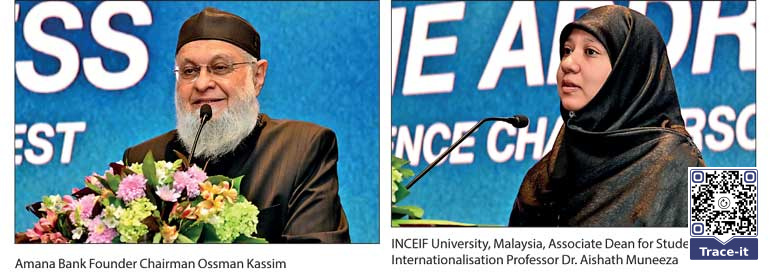
Islamic finance must focus on the impact it creates for people and communities rather than measuring success solely through financial growth, Amana Bank Founder Chairman Ossman Kassim said at the 11th Islamic Finance Forum of South Asia (IFFSA) 2026, held at Shangri-La Colombo yesterday.
Addressing the forum under the theme “Building Legacies,” Kassim reflected on the development of Islamic finance in Sri Lanka and called on industry leaders to look beyond balance sheets and institutional expansion towards the difference their work makes to ordinary people, households and businesses.
“Legacy is what continues to work after you have stopped it,” he said, arguing that a lasting legacy was not defined by buildings, balance sheets or names displayed on office walls, but by institutions and systems that continued to serve people long after their founders had stepped aside.
Recalling the beginnings of Islamic finance in Sri Lanka, Kassim said the journey started at a time when the country had no licensed Islamic commercial bank and the concept was unfamiliar too much of the banking sector.
Having started his business career in 1978 in the fresh produce export sector, Kassim had seen how commerce could improve the lives of farmers, workers and families. He wanted to bring the energy of enterprise together with the stability of ethical principles.
For Kassim, Islamic finance was not simply a business opportunity but an effort to establish a financial system based on fairness, shared risk and real economic activity. He also spoke of his conviction that money should not generate returns simply because it had been lent, without being connected to productive enterprise.
He acknowledged the contribution of the former Cabinet Secretary late M. S. Alif, whose encouragement helped him pursue the initiative. He also recognised the early professionals, bankers and Shariah scholars who supported the development of the sector.
The journey began with the establishment of an Islamic investment business in 1997, followed by the introduction of Takaful insurance in 1998. Kassim said insurance was an essential part of the Islamic financial system because risk protection needed to develop alongside banking.
A major milestone came in 2005, when amendments to the Banking Act recognised Islamic banking and finance. In 2011, the Central Bank granted Amana Bank a commercial banking license, enabling it to operate as Sri Lanka’s first licensed commercial bank based fully on Islamic banking principles.
Kassim said the progress had required years of work, discussions with regulators and the commitment of people who believed in the concept despite the difficulties. He also emphasised the importance of Shariah guidance in ensuring that commercial decisions remained consistent with the institution’s principles.
Reflecting on his experience, Kassim outlined five lessons for the industry.
First, he said patience should be treated as a strategy. Building an institution required years of consistent effort, and patience should not be confused with waiting for opportunities to arrive.
Second, he called on institutions to build the system rather than focus only on their brands. Products could be copied, he said, but an ethical culture, a skilled workforce, credible Shariah guidance and a sound regulatory framework could not be developed overnight.
Third, he urged professionals to continue explaining Islamic finance to the wider public. Its principles of fairness and responsible financing, he said, could benefit farmers, traders and entrepreneurs regardless of their religious background.
His fourth lesson was that ethics should be considered an investment rather than a cost. Responsible financing and the avoidance of activities that cause social harm should carry as much importance as profitability.
Finally, he called for greater international cooperation, recalling the support Sri Lanka received from institutions in Malaysia and other markets during the early stages of development.
“Islamic finance does not belong to one country. It grows when we share knowledge freely,” he said.
Kassim urged the industry to invest in talent, maintain high standards and expand access to financing beyond large corporate clients.
He said Islamic finance needed professionals who understood both financial analysis and Shariah principles and could explain financial products to customers in clear, accessible language.
He also called for greater support for small traders, lower-income families and young entrepreneurs, arguing that the industry’s success should be judged by its ability to meet real needs.
Kassim encouraged younger professionals to question existing practices, learn continuously and protect the trust placed in financial institutions. He said institutions needed to work together on research, standards, reputation and communication without compromising their values.
The need to direct more financing towards young entrepreneurs and venture capital also emerged during the regional discussion, with participants highlighting the potential for Islamic finance to support productive businesses, innovation and employment.
The focus on impact was also raised by INCEIF University, Malaysia, Associate Dean for Students and Internationalisation Professor Dr. Aishath Muneeza, who questioned whether growth in global Islamic finance assets was translating into meaningful benefits for customers and communities.
Referring to the industry's estimated $4.4 trillion global value, Muneeza stressed that growth in numbers alone did not necessarily mean the industry was creating the impact it was expected to deliver.
She pointed to the need for better financial products for households and more accessible microfinance for people whose needs remain unmet, raising questions about the legacy the sector was building and whether its growth was improving lives.
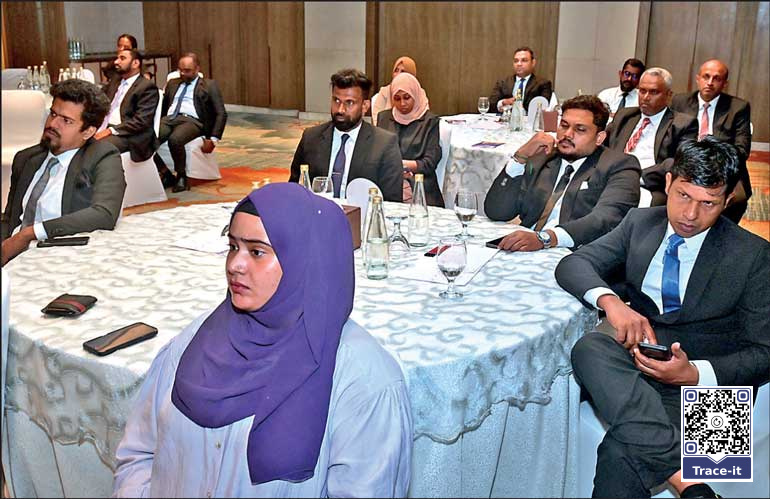
The forum brought together industry professionals and regional experts to discuss the development of Islamic finance across Sri Lanka, Pakistan, Bangladesh, the Maldives and India, including opportunities to strengthen regulation, widen access to finance and support entrepreneurs.
KPMG Sri Lanka Principal and Head of Tax and Regulatory Suresh Pereira outlined key milestones in the local industry, including the 2005 amendments recognising Islamic banking, subsequent tax changes and developments in capital market listing and Shariah governance frameworks.
He said Sri Lanka’s Islamic finance sector had expanded to include a range of institutions and products. However, measuring its long-term financial growth remained difficult because comparable financial information was not available for all institutions, particularly those not subject to mandatory public disclosure.
Pereira identified the lack of comprehensive legal, regulatory and governance arrangements covering all types of Islamic financial service providers as a major challenge. Greater regulatory certainty would help institutions operate more effectively and support confidence in the sector.
The regional panel, moderated by Future Labs Sri Lanka CEO Mahesh Ishaq, brought together perspectives from across South Asia, highlighting the need for knowledge-sharing, stronger professional expertise and more effective regulatory frameworks.
Ultimately, the forum returned to the question raised by Kassim: what will remain after the current generation of Islamic finance leaders has stepped aside?
For an industry founded on ethical responsibility, its legacy will depend not only on how much it grows but on whether that growth improves access to finance, supports enterprise and creates lasting value for society.
– Pix by Lasantha Kumara



