Wednesday Oct 07, 2026
Wednesday Oct 07, 2026
Wednesday, 29 April 2026 00:05 - - {{hitsCtrl.values.hits}}
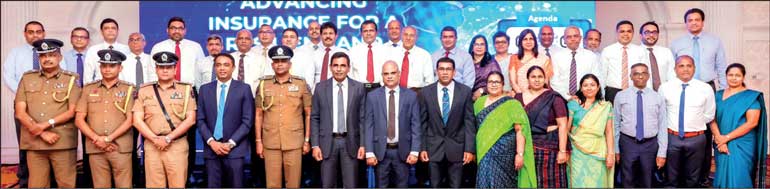
The Insurance Regulatory Commission of Sri Lanka (IRCSL), in collaboration with the Insurance Association of Sri Lanka (IASL), has announced landmark initiatives, with the support of key industry stakeholders including Sri Lanka Insurance Brokers Association (SLIBA), Sri Lanka Insurance Institute (SLII), and Actuarial Association of Sri Lanka (AASL). This announcement coincides with the launch of Sri Lanka’s Insurance Vision 2030 & 2035, which aims at strengthening financial security, resilience, and public trust across the nation. Notably, this milestone is further underscored as IRCSL celebrates its 25th anniversary this year.
Key initiatives launched at the event:
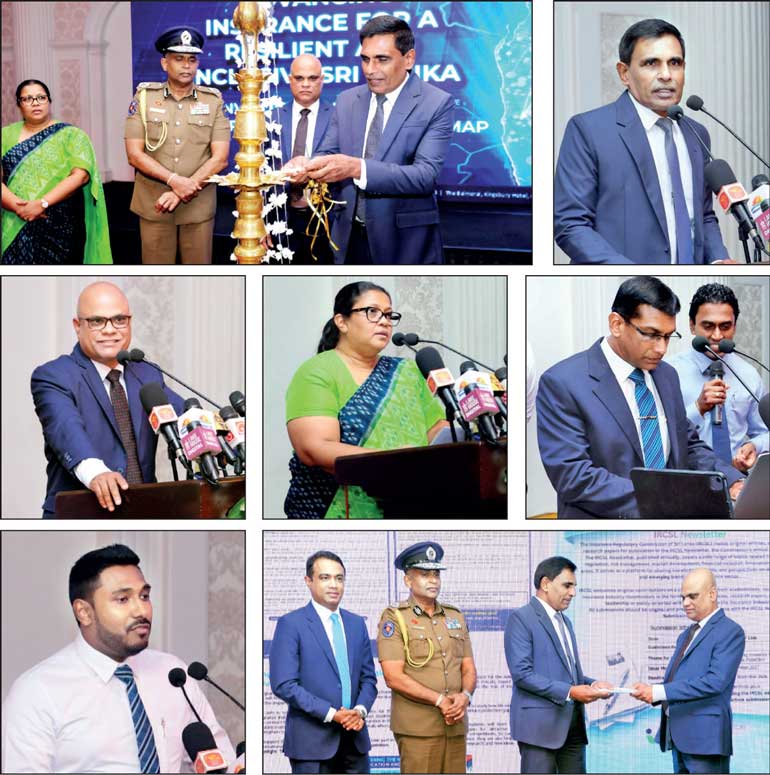
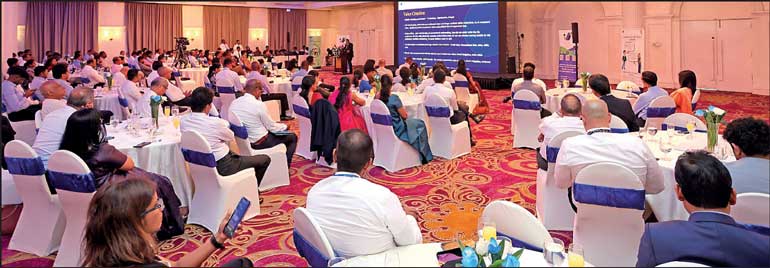
The official launch event was held on 21 April at The Kingsbury Hotel, Colombo. The event was graced by Public Security and Parliamentary Affairs Minister Ananda Wijepala, as the Chief Guest.
Distinguished representatives from the Sri Lanka Police were also in attendance, including Inspector General of Police Priyantha Weerasuriya, Senior Deputy Inspector General in-charge-of Crime and Traffic Ranmal Kodithuwakku, Senior Deputy Inspector General in-charge-of the Western Province Sajeewa Medawaththa, and Deputy Inspector General in-charge-of Traffic Control and Road Safety W.P.J. Senadheera.
Key representatives from partner institutions included Credit Information Bureau (CRIB) Director/GM Pushpika Jayasundara along with its representatives. The event was also attended by IRCSL Chairman Dr. Ajith Raveendra De Mel, Director General Dhamayanthi Fernando, and representatives of the Commission. Representing the Insurance Association of Sri Lanka, IASL President Lasitha Wimalarathne was present along with its members. The occasion further witnessed the participation of key industry stakeholders, including representatives from SLIBA, SLII, and AASL, as well as CEOs and representatives of both life and general insurance companies.
Public Security and Parliamentary Affairs Minister Anandha Wijepala addressed the gathering, underscoring the critical role of the insurance sector in nation-building, economic stability, and financial resilience. In his remarks, the Minister highlighted the invaluable contribution of the insurance industry in supporting the country during times of adversity, including natural disasters and other unforeseen events. He commended the sector for its steadfast commitment to safeguarding policyholders and acknowledged its continued dedication to delivering reliable, timely, and efficient services.
He further encouraged the industry to continue building public trust by providing transparent, accessible, and efficient services. The Minister noted that a strong insurance sector is important for economic growth, community development, and national progress. He also highlighted the importance of the newly launched initiatives, especially their alignment with the Government’s vision for digitalisation and the development of a strong digital economy.
IRSCL Chairman Dr. Ajith Raveendra De Mel addressed the gathering and expressed his sincere appreciation to all stakeholders for their valuable contribution towards the successful launch of these important initiatives. He emphasised the strategic importance of the initiatives in transforming the Sri Lankan insurance industry and highlighted their alignment with the broader national objective of expanding the insurance market. The Chairman noted that these reforms are designed to support the ambition of doubling the size of the insurance market in the next five (05) years and increasing insurance penetration from the current 1.1% to 3% by 2035. He further stated that these developments represent a significant step forward in strengthening the industry’s resilience, improving efficiency, and enhancing public confidence in the insurance sector.
IRCSL Director General Damayanthi Fernando presented the Strategic Vision 2030 and 2035, outlining a bold and forward-looking roadmap for the development of Sri Lanka’s insurance sector. She emphasised that the vision is anchored in a comprehensive seven-pillar strategy, with each pillar representing a targeted action plans that collectively forms a strong and sustainable foundation for growth of the Insurance Industry.
Elaborating further, she highlighted the critical importance of each pillar in achieving the overall vision:
CRIB Director/GM Pushpika Jayasundara outlined the development process and implementation pathway of the Centralised Insurance Data Repository. He provided valuable insights into how it was established in collaboration with industry stakeholders. During the event, a live demonstration was conducted to showcase the practical process of data transmission from insurance companies to CRIB, illustrating the functionality and integration of the system in real time.
The Digital Motor Insurance Card and the National Motor Insurance Verification System emerged as one of the most attractive and widely discussed initiatives under the industry’s digital transformation agenda. This initiative marks the introduction of Sri Lanka’s first Digital Motor Insurance Card, replacing the traditional plastic insurance card. The new system enables policyholders and law enforcement officers to verify insurance details in real time, ensuring faster, more accurate, and more efficient checks.
IASL General Insurance Forum Chair Dinusha Thilanka explained the process of this initiative and conducted a live demonstration. Insurance verification can be carried out through multiple channels, including contacting insurance company call centres via the Insurance Verification Centre, sending an SMS to 1338, or using the USSD service *1338# for instant, real-time validation.
The IRCSL also introduced a new system to streamline access to regulatory by-laws across all subject areas. Titled as the “Master Circular Compiling By-Laws”, the initiative enhances regulatory clarity, accessibility, and compliance within the industry. An electronic document compiling all relevant by-laws is now available on the official IRCSL website, allowing stakeholders to easily reference and study regulatory requirements. Legal and Enforcement Division Director Rajan Nirubasingham explained the structure and purpose of the initiative, highlighting its role in strengthening regulatory transparency and simplifying access for industry stakeholders.
The IRCSL launched its official E-Newsletter, now repositioned as a broader knowledge-sharing platform for the insurance ecosystem. This initiative was developed through a collaborative effort with key industry stakeholders, including IASL, SLIBA, SLII, and AASL, as well as contributions from the academic community of universities. The E-Newsletter marks an important shift towards a more inclusive and collaborative platform, bringing together regulatory perspectives, industry expertise, and academic insights. As a symbolic gesture, the IRCSL Chairman presented printed copies of the inaugural E-Newsletter to Public Security and Parliamentary Affairs Minister Anandha Wijepala, Inspector General of Police Priyantha Weerasuriya, and Insurance Association of Sri Lanka President Lasitha Wimalarathne.
The event marked a significant milestone in the transformation of Sri Lanka’s insurance industry, signalling the beginning of a new era of growth, innovation, and collaboration. With the introduction of these landmark digital and regulatory initiatives, the sector has set a clear direction towards enhancing efficiency, transparency, and public trust. Together, these efforts are expected to strengthen the industry and support the long-term goal of expanding the insurance market, positioning it as an important contributor to the country’s economic growth.



