Wednesday Oct 07, 2026
Wednesday Oct 07, 2026
Wednesday, 17 June 2026 07:47 - - {{hitsCtrl.values.hits}}
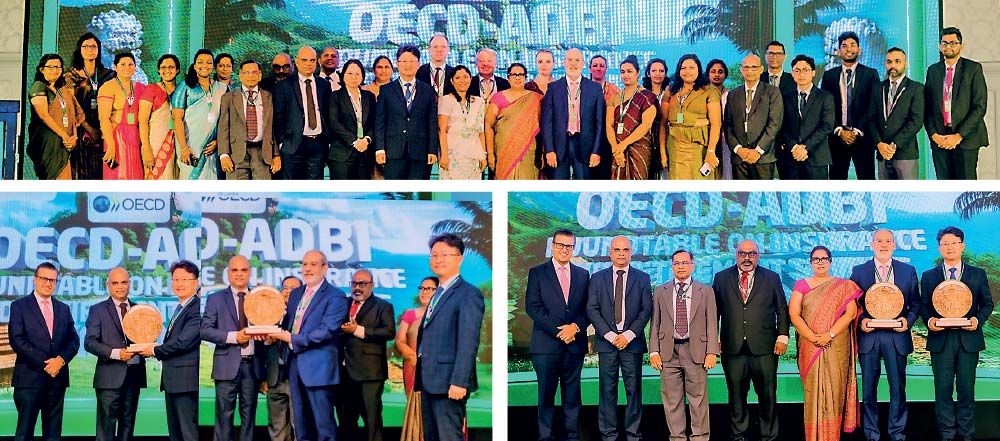
 The Insurance Regulatory Commission of Sri Lanka (IRCSL) successfully hosted the OECD-ADBI Roundtable on Insurance and Retirement Savings in Asia, held on 2–3 June 2026 at The Kingsbury Hotel, Colombo, marking a significant milestone for Sri Lanka’s insurance sector and regulatory landscape.
For the first time in its history, Sri Lanka hosted the prestigious OECD-ADBI Roundtable on Insurance and Retirement Savings in Asia, jointly organised by the Organisation for Economic Co-operation and Development (OECD) and the Asian Development Bank Institute (ADBI).
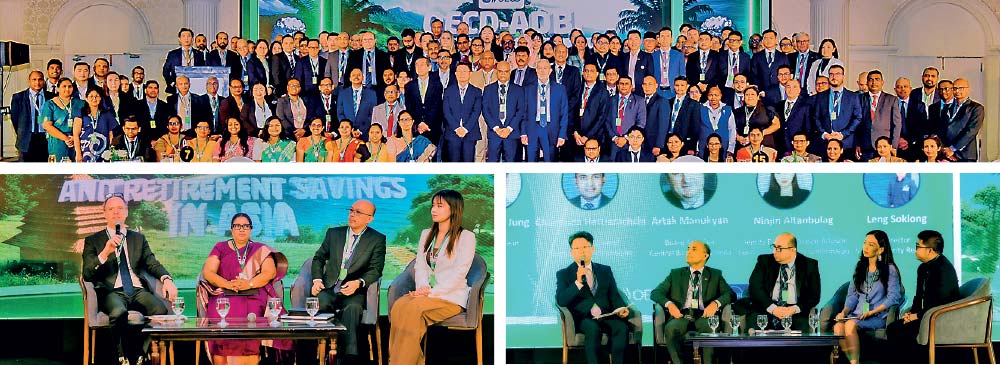
The event attracted around 75 international delegates representing 26 countries, including policymakers, insurance and pension regulators, industry leaders, academics, private sector experts and development partners. The roundtable provided a unique platform for regional and global stakeholders to exchange insights, share best practices, and discuss policy approaches to enhancing financial resilience, strengthening social protection systems, and supporting sustainable economic growth.
The successful hosting of the Roundtable coincided with the Silver Jubilee celebrations of the IRCSL, underscoring the Commission’s growing role as a trusted and proactive insurance regulator in the region. The event provided an important platform to showcase Sri Lanka’s commitment to advancing financial inclusion, strengthening consumer protection, and promoting sustainable growth within the insurance sector.
The event commenced with opening remarks delivered by IRCSL Chairman Dr. Ajith Raveendra De Mel, ADBI Deputy Dean Byungsik Jung and OECD Head of Insurance and Pensions Pablo Antolin.
Dr. Ajith Raveendra De Mel underscored the importance of international collaboration in strengthening resilient financial systems and highlighted the vital role of insurance and pension sectors in promoting economic stability and long-term financial security. He also outlined the IRCSL’s strategic vision for the insurance industry, including plans to increase insurance penetration to 3% of GDP by 2035 through targeted reforms, innovation, enhanced transparency, and greater public trust in the sector.
Byungsik Jung highlighted the growing importance of strong insurance and retirement savings systems in responding to Asia’s evolving demographic, economic, and environmental challenges. He noted that ageing populations, climate-related risks, health crises, and rapid technological advancements underscore the need for resilient financial protection mechanisms.
Pablo Antolin emphasised the value of international collaboration and knowledge sharing in developing effective policies. He noted that the Roundtable provided a valuable platform for countries to exchange experiences, identify common challenges, and promote evidence-based solutions that will contribute to future policy development.
Over the two-day program, participants engaged in a series of high-level discussions on key issues shaping insurance and retirement savings markets across Asia. The sessions covered a wide range of topics, including insurance market and regulatory developments, pension reforms, financial protection against catastrophic risks, climate risk management, disaster risk financing, the role of capital markets in enhancing resilience, and the emerging opportunities and challenges presented by digitalisation and data-driven innovation.
Eight roundtable discussions were conducted, providing participants with a platform to exchange insights, share experiences, and discuss the following key focus areas.
1. Insurance market and regulatory developments in Asia
The session highlighted rapid growth in Asia’s insurance market through product innovation and new technologies. Authorities are introducing policies and regulations to support growth and address emerging challenges. Regulators shared jurisdictional developments and discussed responses to evolve risks and opportunities.
2. pension market and regulatory developments in Asia
Panelists noted the rapid growth of Asia’s asset-backed pensions market, driven by expanded coverage and new technologies. Discussions highlighted authorities’ efforts to introduce policies, regulations, and measures to support market needs while addressing key challenges. Policy and regulatory authorities also shared major pension market and regulatory developments in their jurisdictions and discussed responses to emerging risks and opportunities.
3. Innovative approaches to addressing evolving climate risks (focus on cyclone risk)
During the session, speakers discussed how changing weather patterns are increasing the frequency and severity of natural hazards, exposing some regions to previously insignificant risks. The discussion focused on innovative approaches to assessing, mitigating, and managing risks, particularly from wind, flood, and cyclone-related damage. Participants also exchanged views on strengthening resilience and enhancing protection against the growing impact of these hazards.
4. Leveraging capital market appetite for natural hazard risks
The session highlighted that rising natural hazard losses are straining traditional insurance and reinsurance capacity. It noted that capital markets can expand risk-bearing capacity through insurance-linked securities, including catastrophe bonds, which transfer risks to institutional investors. The discussion also examined key elements of effective risk transfer frameworks and the benefits and risks of insurer risk transfer and institutional investor participation in insurance-linked securities.
5. Balancing the opportunities and challenges linked to the increased use of data and individualisation of insurance and pensions
The discussion highlighted how digital trends and growing consumer data availability enable more personalised pricing and design of insurance and pension products, as well as more targeted advice and improved consumer outcomes. Concerns were also raised about fair consumer treatment, data privacy, and the potential weakening of insurance risk pooling. Participants exchanged views on regulatory approaches to balancing innovation with effective consumer protection.
6. Building trust in insurance and pensions
During the session, it was explained that many individuals lack adequate insurance coverage and retirement savings, largely due to limited trust in insurance and pension institutions. The discussion focused on strengthening confidence in these systems through enhanced financial consumer protection measures and governance frameworks.
7. Protecting against longevity in ageing societies
The session highlighted the growing role of asset-backed pensions alongside pay-as-you-go systems in supporting retirement security in ageing societies. It noted that limited options for converting savings into lifetime income weaken longevity protection for retirees. The discussion emphasised strengthening longevity protection in Asia and addressing challenges in expanding lifetime income products.
8. Capital market development and balance of payments: the role of insurance and pensions
The session highlighted the need for pension funds and insurers to balance their fiduciary duty to members with support for domestic capital market development. It noted tensions between domestic and foreign investment arising from restrictions intended to manage macroeconomic risks and promote local markets. The discussion emphasised the role of regulatory frameworks in guiding investment decisions and achieving this balance.
On the evening of the first day, a cultural event was held to showcase Sri Lanka’s rich cultural heritage and traditions to international participants. The program featured a vibrant array of traditional dance performances representing the diverse dance forms of the country. The event was one of the highlights of the program, offering an engaging and memorable experience that reflected Sri Lanka’s proud cultural identity.
The successful conclusion of the OECD-ADBI Roundtable reinforces Sri Lanka’s growing recognition as a regional hub for policy dialogue and regulatory cooperation. It also reflects the IRCSL’s continued commitment to fostering a resilient, inclusive, and future-ready insurance sector that contributes meaningfully to national economic development and financial well-being.
As the Commission celebrates 25 years of regulatory service, the insights and partnerships generated through this landmark event will support ongoing efforts to strengthen Sri Lanka’s insurance ecosystem, enhance consumer protection, and advance the country’s long-term financial resilience agenda.