Sunday Sep 27, 2026
Sunday Sep 27, 2026
Friday, 6 March 2026 00:03 - - {{hitsCtrl.values.hits}}
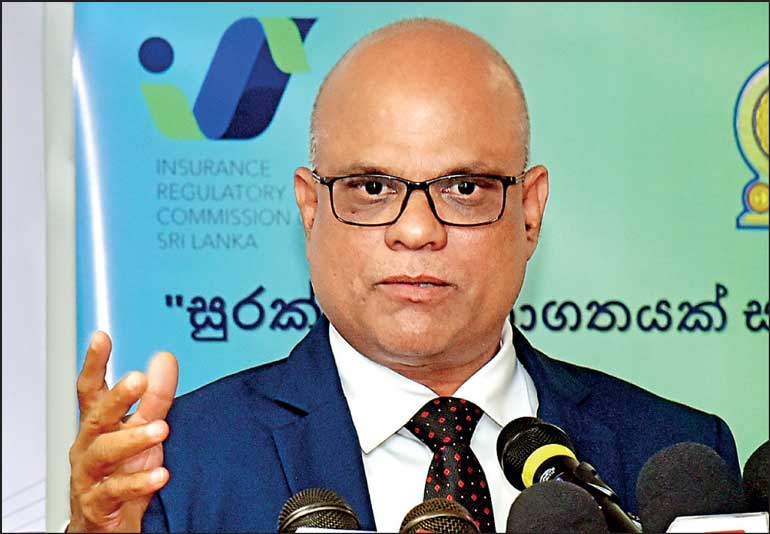
Chairman Dr. Ajith Raveendra De Mel
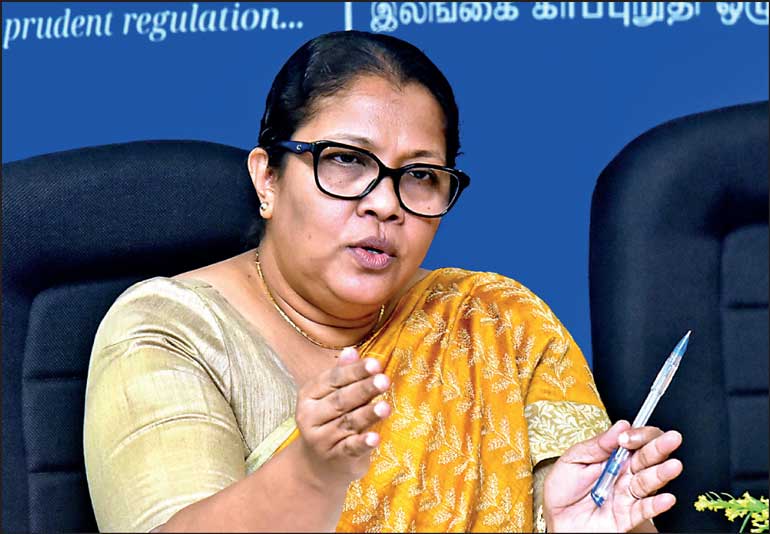
Director General Damayanthi Fernando
Sri Lanka’s insurance regulator has unveiled an ambitious roadmap to significantly expand insurance coverage across the country, targeting a doubling of insurance penetration by 2030 and tripling it by 2035.
The plan was outlined yesterday as the Insurance Regulatory Commission of Sri Lanka (IRCSL) marked 25 years since the establishment of the country’s modern insurance regulatory framework.
Established under the Regulation of Insurance Industry Act No. 43 of 2000 and operational since 2001, the IRCSL has been responsible for regulating, supervising and facilitating the development of Sri Lanka’s insurance sector, which today forms a key component of the country’s financial system.
Speaking at the press conference, IRCSL Chairman Dr. Ajith Raveendra De Mel said the anniversary provided an opportunity not only to reflect on the sector’s development but also to outline the reforms needed to strengthen the regulator and expand insurance coverage.
“As the Insurance Regulatory Commission of Sri Lanka celebrates its 25th anniversary, it is a timely moment to reflect on our achievements and prepare for the challenges ahead,” he said.
“Strengthening our staff and enhancing capacity is essential for the IRCSL to continue functioning as a modern, effective regulatory body. Ongoing professional development, knowledge sharing, and strategic reforms are required to ensure that our team performs at the highest professional standards.”
Officials said expanding insurance coverage remains a key priority, with insurance penetration in Sri Lanka currently estimated at around 0.5% of GDP for general insurance and about 0.6% for life insurance.
The regulator said improving financial literacy, strengthening trust in insurance products and introducing new regulatory and technological frameworks will be critical to achieving the penetration targets.
Digital transformation and data systems
A key focus of the regulator’s strategy is the use of digital systems to improve compliance, transparency and regulatory oversight.
The IRCSL announced the launch of Sri Lanka’s Digital Motor Insurance Card in collaboration with the Insurance Association of Sri Lanka (IASL) and the Public Security Ministry.
The system will allow authorities to verify motor insurance coverage electronically and improve enforcement against uninsured vehicles.
Alongside the digital motor insurance system, the regulator is establishing a Centralised Motor Insurance Data Repository that will enable real-time sharing of insurance data across the industry.
Officials said the repository will strengthen regulatory supervision and help prevent insurance fraud while improving the efficiency of the sector.
The IRCSL also plans to expand the use of industry data by introducing a standard mortality table reflecting the experience of insured lives in Sri Lanka.
Officials said this will support actuarial valuation, product pricing and risk management within the life insurance industry.
Strengthening regulation and industry oversight
IRCSL Director General Damayanthi Fernando said the regulator has undergone significant transformation over the past two and a half decades.
She said the commission has gradually moved from a rule-based supervisory framework to a modern risk-based regulatory system aimed at strengthening the stability of the sector.
“Through pivotal actions, from implementing Risk-Based Capital models to driving recent digital transformations, the Commission has balanced its dual role as a strict enforcer of policyholder protection and a facilitator of industry growth,” she said.
The regulator said several structural reforms were introduced during 2025 to strengthen supervision and governance.
These included the establishment of a Market Intermediary Licensing and Supervision Division and a dedicated Market Conduct Unit aimed at strengthening regulatory oversight and consumer protection.
Internally, the separation of administration and finance functions into two divisions was also introduced to improve governance, accountability and operational efficiency within the regulator.
Expanding insurance awareness
Officials said improving insurance literacy and public awareness will also form an important component of the regulator’s development strategy.
The IRCSL said nationwide insurance awareness programmes were conducted in Matara, Jaffna and Kilinochchi in collaboration with the insurance industry to promote understanding of insurance products and risk protection.
The regulator also launched “InsureChamp 2025”, the inaugural inter-university insurance quiz competition under the theme “Empowering the Future Insurance Leaders”, aimed at promoting interest in the insurance sector among young professionals.
Further initiatives planned for this year include a national insurance awareness essay competition organised in collaboration with the Foundation for the Advancement of Life and Insurance Around the World (FALIA) of Japan.
The IRCSL will also host the OECD/Asian Development Bank Institute (ADBI) Roundtable on Insurance and Retirement Savings in June.
The forum is expected to focus on issues including natural hazard protection gaps and retirement savings frameworks, areas increasingly relevant for Sri Lanka as climate-related risks and demographic changes place greater pressure on financial protection systems.
Officials said the upcoming Insurance Development Roadmap will outline policy reforms and regulatory measures required to expand coverage, strengthen the sector and enhance its contribution to financial stability.
Sri Lanka’s insurance industry currently comprises 29 insurers, including 15 companies operating in the long-term insurance segment and 14 in general insurance, along with 82 insurance broking companies and 29 licensed loss adjusters.
Industry data shows the sector has continued to expand steadily.
Gross Written Premium reached Rs. 283.6 billion by the third quarter of 2025, an increase of 19.48% compared with the same period of 2024, driven mainly by growth in long-term insurance.
Total assets of the insurance sector rose to Rs. 1.35 trillion by the third quarter of 2025, reflecting continued strengthening of the sector’s financial base.
Officials said a resilient and well-functioning insurance sector remains critical for Sri Lanka’s economic recovery, helping households and businesses manage financial shocks, protect livelihoods and support long-term economic stability.
- Pix by Ruwan Walpola




