Tuesday Jun 16, 2026
Tuesday Jun 16, 2026
Friday, 13 February 2026 00:02 - - {{hitsCtrl.values.hits}}
|
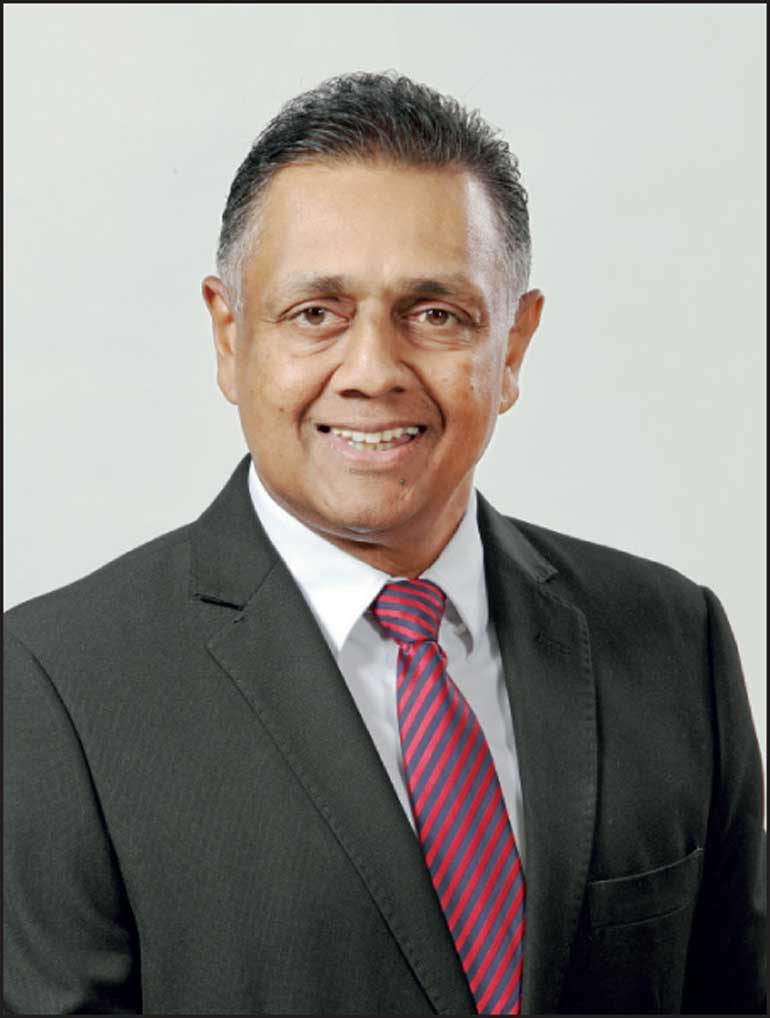
CEO Thimal Perera |
When economies recover, attention often gravitates towards growth figures, balance sheets, and market sentiment. Yet beneath these indicators emerges a more fundamental question: what structures are being put in place to ensure that growth is resilient, inclusive, and durable?
For Sri Lanka, this question carries particular weight. Recovery cannot be episodic. It must reinforce the social, environmental, and economic foundations that allow a country to withstand future shocks while enabling opportunity to spread more evenly across society.
It is within this context that DFCC Bank has introduced its Basel III-compliant GSS+ Bond – an instrument designed to channel long-term capital into projects that address environmental priorities, social needs, and sustainable development outcomes, while simultaneously strengthening the resilience of the financial system itself.
“This bond reflects how we see the role of finance in Sri Lanka,” says DFCC Bank CEO Thimal Perera. “Finance must do more than move capital. It must help build systems that support people, enterprise, and the economy over time.”
What GSS+ means in practical terms
GSS+ refers to Green, Social, Sustainability, and Sustainability-Linked finance. While the terminology is technical, the purpose is grounded in real economic and social outcomes.
The GSS+ Bond enables DFCC Bank to direct capital across all four pillars through a single, coherent framework. This ensures that development is approached holistically, rather than in isolated segments.
“Development does not happen in compartments,” Thimal Perera explains. “Economic growth, social stability, and environmental protection are interconnected. Finance has to recognise that interdependence and respond accordingly.”
A continuum, not a one-off
The GSS+ Bond is not a departure for DFCC Bank. It builds on a sustained and deliberate progression in sustainable finance.
In 2024, DFCC Bank issued Sri Lanka’s first Green Bond, which was listed on the Colombo Stock Exchange, the Luxembourg Green Exchange, NSE International Exchange, and the India International Exchange at GIFT City in India. The multiple listings demonstrated the Bank’s ability to meet international disclosure, reporting, and governance standards while attracting global sustainability-focused investors.
This was followed by the country’s first Blue Bond, directing capital towards clean water infrastructure, coastal resilience, marine livelihoods, and ocean-based economic activity – areas critical to Sri Lanka’s future as an island nation.
The GSS+ Bond extends this trajectory. Where the Green Bond concentrated on environmental transition and the Blue Bond on ocean ecosystems, the GSS+ Bond provides a broader platform to support social inclusion, enterprise development, and sustainability-linked outcomes at scale.
“These instruments are connected,” says Perera. “They reflect a consistent effort to align capital markets with national priorities and long-term development needs.”
Why Basel III matters
The Basel III compliance of the GSS+ Bond adds a further layer of significance. Strengthening regulatory capital while directing funds toward impact-driven lending reinforces stability at both the institutional and systemic level.
A strong capital base allows banks to lend consistently through economic cycles, support long-term projects, and maintain confidence during periods of uncertainty. This matters not only for financial institutions, but for businesses, infrastructure developers, and communities that depend on stable access to credit.
“Sustainable finance must also be resilient finance,” Thimal Perera notes. “Without strong capital foundations, even well-designed development initiatives struggle to endure.”
From capital to community
The impact of the GSS+ Bond will ultimately be measured beyond balance sheets.
It will be seen in enterprises that grow responsibly, in infrastructure that improves access to essential services, in projects that reduce environmental strain, and in livelihoods that are strengthened rather than displaced. By integrating environmental and social objectives within disciplined financial structures, the bond ensures that sustainability is embedded into core banking activity, not treated as an adjunct.
For investors and stakeholders, this approach provides clarity and confidence: defined use of proceeds, alignment with internationally recognised frameworks, and transparent reporting mechanisms that link capital to outcomes.
“For us, this is about stewardship,” Thimal Perera reflects. “Stewardship of capital, of trust, and of the broader system in which finance operates.”
Financing the long view
As Sri Lanka continues its recovery, the challenge is not merely to restore growth, but to shape its direction. Instruments such as the GSS+ Bond demonstrate how finance can support that effort, by strengthening institutions, guiding capital toward priority areas, and reinforcing the social compact between markets and society.
The bond represents a form of institutional leadership that is expressed through structure rather than proclamation: capital deployed with discipline, impact governed by standards, and growth pursued with intent.
“What ultimately matters is how capital is used. When finance is aligned with national priorities and long-term outcomes, it becomes a force that helps shape the future and make it work,” added Thimal Perera.