Friday Oct 16, 2026
Friday Oct 16, 2026
Tuesday, 3 March 2026 05:26 - - {{hitsCtrl.values.hits}}
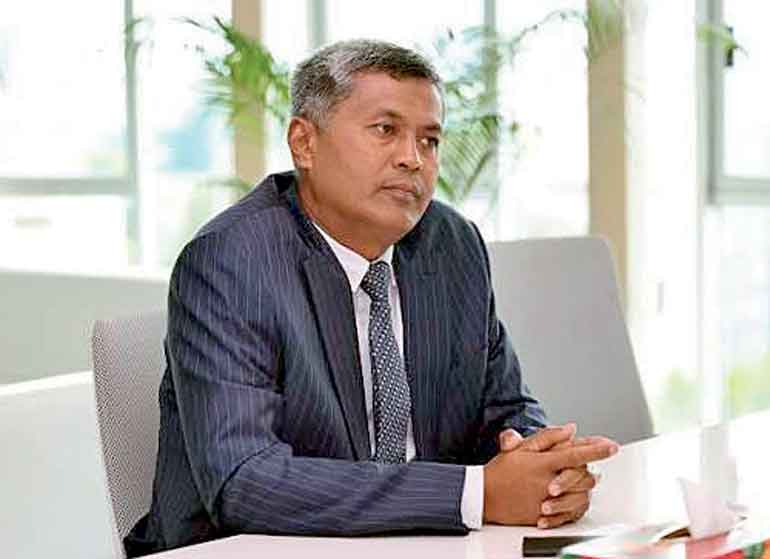
High Commissioner of Sri Lanka to the Maldives M. Rizvi Hassen
When M. Rizvi Hassen assumed duties as Sri Lanka’s High Commissioner to the Maldives, he stepped into a role shaped by deep historical ties and growing economic engagement. From centuries of trade and cultural exchange to today’s cooperation in finance, tourism, and investment, the Sri Lanka–Maldives relationship continues to evolve within a dynamic regional environment.
In this interview, High Commissioner Hassen shares his vision for strengthening bilateral relations, rebuilding momentum in key sectors, and restoring the confidence and goodwill that have long defined ties between the two nations.
Q: As you begin your tenure in Malé, which areas hold the greatest potential for strengthening Sri Lanka–Maldives relations in the years ahead?
A: It is important to first view our relationship in its proper context. Sri Lanka and the Maldives share links that go back centuries. As I mentioned when presenting my credentials, our two countries are separated only by a narrow stretch of ocean. For generations, Maldivians have travelled to Sri Lanka for education, healthcare, and trade, while Sri Lankans have contributed to the Maldives’ institutional and economic development.
Even today, despite the region’s evolving geopolitical landscape, Sri Lanka and the Maldives have consistently stood by each other. Our relationship goes beyond formal diplomacy; it carries cultural familiarity and mutual understanding.
My immediate priority is to restore and further strengthen this relationship. After the easter Sunday incident in 2019, certain misunderstandings affected perceptions and slowed the momentum of trade, tourism, and business exchanges. If we look back at 2018, between 20,000 and 30,000 Maldivians visited or resided in Sri Lanka annually, benefiting from our medical, educational, and professional services. That level of engagement reflected strong confidence.
My objective is to restore bilateral engagement to at least that level across all sectors particularly trade, investment, tourism, education, and people-to-people contact and then build beyond it in a more forward-looking manner.
Q: The Maldives has long been a destination for Sri Lankan businesses and professionals. What has contributed to this strong connection?
A: The foundation is trust built over decades. Our cultural and economic links have created a sense of confidence among Maldivians regarding Sri Lanka and its people.
Sri Lankans were involved in the Maldives’ early economic development, particularly in tourism during the 1970s. Several initial resort investments included Sri Lankan companies, including well-established firms. That early participation helped establish a positive and enduring partnership.
Importantly, Sri Lankan entrepreneurs never viewed the Maldives as “small”. Instead, they recognised the advantages of proximity and shared interests. Over time, this practical approach has strengthened commercial ties.
During my recent meetings with Government and private-sector representatives, many have described Sri Lanka as their “second home.” Whether for medical treatment, education, or leisure, there is strong goodwill toward Sri Lanka. That goodwill remains one of our greatest strengths.
Institutions such as the Bank of Ceylon (BOC) reflect this trust. It was the second bank to operate in the Maldives. That fact alone illustrates the confidence Maldivians have placed in Sri Lanka over many years.
Q: The Bank of Ceylon marks 44 years of presence in the Maldives. How do such long-term financial partnerships contribute to trade and investment?
A: In my discussions with business leaders here, many have spoken highly of the Bank of Ceylon’s professionalism and reliability. Its continued success over four decades demonstrates the depth of trust it has earned.
BOC’s presence is not limited to serving Sri Lankans abroad. It has become part of the Maldivian financial landscape and contributes meaningfully to the local economy. In that sense, it serves both countries.
The Maldivian government is also exploring economic diversification beyond tourism and strengthening regulatory frameworks to attract investment, particularly in financial services. This creates opportunities for deeper regional collaboration.
With careful planning and sound governance, the Maldives has the potential to develop as a specialised financial centre in the region. Sri Lanka, given its experience and proximity, can be a supportive partner in that journey. Institutions like the Bank of Ceylon can continue to serve as practical bridges between our two economies.
Q: How have your early engagements shaped your outlook on bilateral cooperation?
A: My initial meetings with Maldivian officials have been encouraging. Sri Lanka’s image here remains positive, and there is clear interest in strengthening institutional cooperation.
Recent high-level exchanges between our two countries have also generated renewed momentum. Both governments share similar priorities, including transparency and good governance, which provide common ground for collaboration.
Several sectors stand out for further cooperation i.e. hospitality, financial services, agriculture, construction, and trade. Maldivian officials have expressed interest in working more closely with Sri Lankan institutions, particularly in areas such as agricultural expertise, tourism training, and financial services.
Our task now is to convert goodwill into sustained engagement. We must encourage our private sector to once again view the Maldives as a strategic opportunity rather than simply a small market. With the right approach, the Maldives can serve as a valuable gateway for Sri Lankan businesses within the region.
Q: What message would you like to convey to Sri Lankan businesses and the public?
A: My message is straightforward: do not measure opportunity by geographic size. The Maldives may be small in land area, but its economic potential is significant.
Historically, Sri Lanka’s trade thrived through strong maritime connections across the Indian Ocean. Over time, some of those natural linkages weakened, and others stepped in. We must now think strategically and rebuild those regional connections using modern methods.
Proximity brings clear advantages i.e. lower costs, faster access, and cultural familiarity. The Maldives presents opportunities in tourism, construction, logistics, education, healthcare, and financial services.
I encourage Sri Lankan businesses to follow the example of institutions that have already established a respected presence here. The Bank of Ceylon is one such example. Others can explore similar pathways.
The High Commission in Malé stands ready to facilitate partnerships, provide guidance, and connect investors with relevant stakeholders.
The Maldives is not simply a neighbour; it is a trusted partner. If we approach this relationship with consistency and long-term vision, both countries will benefit. As I often say, before looking far afield, we should first recognise the opportunities that lie just across the water.




