Tuesday Oct 13, 2026
Tuesday Oct 13, 2026
Thursday, 12 February 2026 01:50 - - {{hitsCtrl.values.hits}}
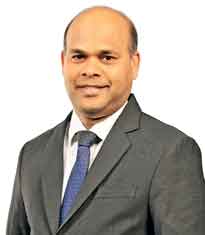 |
| Bank of Ceylon Deputy General Manager (Business Revival Division) Rohana Kumara |
Entrepreneurs are the driving force of Sri Lanka’s private sector. In recent years, however, small and medium-sized enterprises (SMEs) have been shaken by multiple crises, from the Easter Sunday attacks in 2019 to the COVID-19 pandemic and the prolonged economic downturn. Many businesses closed their doors, while others struggled to remain afloat.
The Bank of Ceylon (BOC), Sri Lanka’s largest bank, responded to this crisis through its Business Revival Division. Having revived hundreds of distressed businesses, the bank identified the need to go beyond financial support and focus on building the knowledge base of entrepreneurs. This thinking gave rise to the Entrepreneur Development Program, a series of sessions aimed at equipping SMEs with the tools to survive, sustain, and grow.
In this interview, DGM Rohana Kumara who heads the unit outlines the vision behind the program (EDP), the entrepreneurs it targets, the knowledge-sharing model it employs, and the bank’s plans to scale up in the coming years.
Q: What is the main vision behind the entrepreneur development programs at BOC, and how does it align with BOC’s role in supporting Sri Lanka’s economic growth?
A: Bank of Ceylon is the premier bank in the country and the largest in terms of asset base and business volumes. We have a wide customer base, particularly business customers, and I represent the Business Revival Division.
In the last four to five years, businesses in Sri Lanka, especially SMEs, have suffered greatly due to the Easter Sunday attacks, the COVID-19 pandemic, and then the economic downturn. Under the Business Revival Division, we have revived close to 700 businesses. Out of this number, around 97 percent were SMEs.
Through this process, we came to understand that many businesses fail not only because of external crises but also due to internal weaknesses. Some collapsed entirely because of poor financial management or other structural problems within the business. This made us realise that if we could educate entrepreneurs on how to address their internal issues, they would be better equipped to sustain themselves in the long run.
That was the starting point for our Entrepreneur Development Program. We used the lessons we had learned from reviving those 700 businesses to create a structured knowledge-sharing platform. The purpose is not simply to fix businesses after they fall into crisis but to prevent failure in the first place by equipping entrepreneurs with the right skills and awareness.
We also see this as a national duty. Sri Lanka is a small economy. If we protect and strengthen SMEs now, they can grow into much larger businesses over time, and some may even become multinational companies. By supporting them at an early stage, we are ultimately contributing to the growth of the entire economy. That is our motive in launching and sustaining these entrepreneur development efforts.
Q: Which types of entrepreneurs or business sectors do these programs primarily focus on, and how do you identify participants who would benefit the most?
A: We follow a clear evaluation process when selecting participants. The focus is on SME entrepreneurs between 18 and 45 years of age. In terms of financial criteria, we look at businesses with annual turnovers between Rs. 5 million and Rs. 50 million rupees. That range allows us to identify enterprises that are neither too small to sustain nor too large to be outside the SME category.
The entrepreneurs we have selected come from several key sectors. Some are in the export sector, while others are engaged in manufacturing. We also have participants from the IT services industry, which has high potential for growth, as well as from agriculture, which remains a core sector of Sri Lanka’s economy.
By bringing together this mix of participants, we ensure that the program reflects the diversity of the SME sector. It also allows participants to learn from one another, as challenges faced in agriculture may differ from those in IT, but the principles of business management often apply across the board.
Q: Beyond financial assistance, what kind of non-financial support such as mentorship, training, or networking opportunities does BOC provide under these programs?
A: This program is centered entirely on knowledge. While financing is part of our role as a bank, the Entrepreneur Development Program focuses on equipping participants with expertise that will sustain their businesses in the long term.
We draw on internal experts from across the bank, including trade finance, research and development, and human resources. These individuals bring specialised knowledge that directly benefits entrepreneurs. At the same time, we also invite external experts to join the sessions, and their contribution has been invaluable.
Although the program itself does not directly provide financing, we educate participants on how to access various forms of financial assistance. For example, there are concessionary loan schemes introduced by the Government, as well as collateral-free loan facilities and ministry-level support schemes. Many entrepreneurs are unaware of these options. By guiding them toward such opportunities, we help them expand and strengthen their businesses.
So, while money is not the immediate focus, the program still connects entrepreneurs to the financial pathways they need. The emphasis remains on knowledge, because knowledge is what will help them make the best use of those financial resources.
Q: How does BOC measure the success and impact of the program on entrepreneurs and the wider economy? Do you track business survival rates or job creation?
A: We measure success in several ways. First, we created a dedicated panel consisting of Assistant General Managers from different divisions such as imports and exports, training, research, HR, business revival, and finance. This group not only oversees the program but also remains in contact with entrepreneurs afterward.
To make the support practical and ongoing, we formed a WhatsApp group that includes the entrepreneurs and the panel members. This means that even after the formal sessions ended, participants could reach out directly to the experts whenever they faced a problem. If a business owner had an issue with trade finance, for instance, they could message the panel member responsible for that area and receive guidance.
This structure allows us to continue mentoring entrepreneurs beyond the training period. It also creates a sense of community where participants can learn from one another’s experiences. In this way, success is not measured by a one-time intervention but by sustained engagement that helps businesses survive and grow over time.
Q: What new initiatives or expansions can we expect in entrepreneur development in the coming years, especially given the changing economic environment?
A: After the first round of the program, we received excellent feedback. The entrepreneurs who participated strongly requested that we continue and expand the initiative so that others could also benefit.
In response, we are planning to roll over the program from 2026 onwards. Our target is to train at least 1,500 to 2,000 entrepreneurs in the next few years. This will allow us to reach a much larger segment of the SME community and have a greater impact on the economy.
It is also important to stress that this program is completely free of charge. We conducted it over five consecutive Sundays, and there was no cost to participants. We did not restrict entry to BOC customers. Entrepreneurs banking with other institutions were welcome, and women entrepreneurs also took part. At no stage did we insist that anyone open accounts or transact with BOC. From the board level down to management, the only requirement was to support the development of the country’s entrepreneurs.
We also had strong backing from external resource persons. Several delivered their lectures free of charge, while others charged only concessional rates. Their support made it possible to offer a program of high quality without burdening participants financially.
The curriculum was comprehensive. We covered the development of an entrepreneurial mindset, cash flow management, financial discipline, human resource and people management, Marketing, Digital marketing and supply chain management. We also addressed taxation, valuation, and other areas that entrepreneurs must understand in order to operate effectively.
At the end of the program, we awarded certificates signed by the General Manager and myself. These certificates not only recognised participation but also listed the specific areas covered during the sessions, making them valuable references for the entrepreneurs going forward.
Q: What can you tell the readers about the program and its importance?
A: I would like to emphasise again that the program was designed purely for the benefit of entrepreneurs, not for the bank’s commercial interests. We see it as our national responsibility to safeguard and strengthen the SME sector. By providing this education, we are helping entrepreneurs avoid mistakes that could lead to failure and giving them tools to grow sustainably.
The ultimate aim is to strengthen the backbone of the Sri Lankan economy. SMEs are the lifeblood of the private sector, and by empowering them, we are investing in the future of the country. The positive feedback we have already received confirms that we are on the right track, and with the planned expansions, we hope to reach thousands more entrepreneurs in the years to come.




