Friday Oct 16, 2026
Friday Oct 16, 2026
Monday, 16 February 2026 01:25 - - {{hitsCtrl.values.hits}}
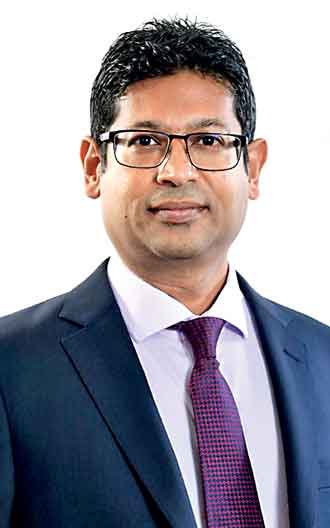
Colombo Stock Exchange Executive Senior Vice President – Marketing Niroshan Wijesundere discusses the stock exchange and its role as a source of mid-to-long term investment returns, capital raising mechanism, and the equities outlook for 2026.
|
CSE Executive Vice President - Marketing
|
Q: How has the market performed over the past five years, what is the outlook for the market for 2026, and why should someone invest?
A: 2020 began with an All-Share-Price-Index (ASPI) of 6,129.21 points. 2025 ended with an ASPI that stood at 22,624.31 points. That represents a 269% increase over the course of five years. An investment made in the equity market would yield a 24.32% CAGR (Compound Annual Growth Rate) – from which all capital gains acquired would be tax free. As we enter 2026 the CSE continues to provide an opportunity for investors and issuers to participate and diversify.
Last year CSE saw 25 new listings including several issuances including products that were a national first. From our GSS+ debt instruments we saw Blue Bonds, Green Bonds, Sharia Bonds and High Yield Social Sustainability Bonds. 2025 saw the issuance of the newest instrument – the Orange Bond – aimed at gender equity. The success of these bonds and new listings demonstrates the demand for sustainable investment options that are now easier than ever to invest in through our digital platform.
In January 2026 we saw two new milestones, ASPI and S&P SL 20 records set in January and record market cap surpassing LKR 8.46 bn. A growth of the capital market following the robust recovery from previous crises, has made the capital landscape more nuanced, with several sectors which grew positively.
The current market environment appears to be a reflection of sustained fiscal discipline and institutional reform that is taking place in the country. A standout indicator of this stability is the Government’s achievement of a primary balance surplus of nearly 5% of GDP in 2025, which significantly outperformed the targets established by the IMF.
Furthermore, the economy has demonstrated notable resilience in the face of physical shocks; while Cyclone Ditwah was a serious event, its impact remained localised, affecting approximately 95,000 houses out of a total of 5.2 million nationwide. This suggests that overall household exposure is manageable, and the broader macroeconomic framework remains intact.
Ultimately, the market is fundamentally stronger than in previous decades, and has challenged traditional investment options, which no longer suffice to provide the same level or returns that were provided by a high-interest rate regime. This makes a compelling case for investors to diversify their portfolio and invest in the capital market.
The recent market rally has been driven mainly by domestic investors. With 2025 ending with an ASPI Year-To-Date (YTD) of 41.89%, investing in shares remains one of the best ways to achieve superior mid-to-long-term returns.
Q: What is the state of the foreign investment in the Stock Exchange, over the past five years and going into 2026?
A: 2022 to 2024, saw a cumulative Rs. 77.83 billion total net foreign inflow, and from 2024 to 2025 there were outflows presumably due to profit taking and rebalancing of their portfolios. Markets are generally cyclical and looking at the trends of the Sri Lankan capital market over the past five years we see foreign investors coming in when prices are low and selling when the economy prospers and share prices are high.
We believe that in 2026 the market will continue to attract even more investors, thanks to the macro-economic discipline, culture of good corporate governance, and on the back of a possible country re-rating.
In January 2026, the CSE and SEC have just successfully conducted the first round of our flagship ‘Invest Sri Lanka’ Investors Forums in Dubai, UAE and Riyadh, Saudi Arabia. We will have another forum later this year in London as well. Going forward we are confident that we will see increased foreign investment in the market.
Q: How has the CSE assisted in rebuilding the economy in the wake of Cyclone Ditwah?
A:The effects of Cyclone Ditwah have severally affected communities and especially small-to-medium sized enterprises (SMEs). For leveraged SMEs, the Diri Savi Board – a platform specifically built for SMEs – is the ideal venue to raise equity, giving room to expand. The disaster has also pushed the Government towards alternate sources of funding due to their budget cap constraints.
Furthermore, we believe that the Infrastructure Bonds framework of the CSE can be used effectively for this purpose. Launched in early 2024 it provides a facility to raise long term capital needed for infrastructure projects, such as vital projects such as roads, rail, water management, waste management systems etc and it can be used to fund the recovery projects following the wake of Cyclone Ditwah.
To that end the SEC is in discussions with the Finance Ministry on mobilising long-term funding through infrastructure bonds to support large-scale reconstruction following Cyclone Ditwah. Additionally, both the SEC and CSE are considering the development of ‘Municipal Bonds,’ a variant infrastructure bond that would allow local authorities and councils to directly tap into the capital market.