Friday Mar 13, 2026
Friday Mar 13, 2026
Wednesday, 7 January 2026 00:00 - - {{hitsCtrl.values.hits}}
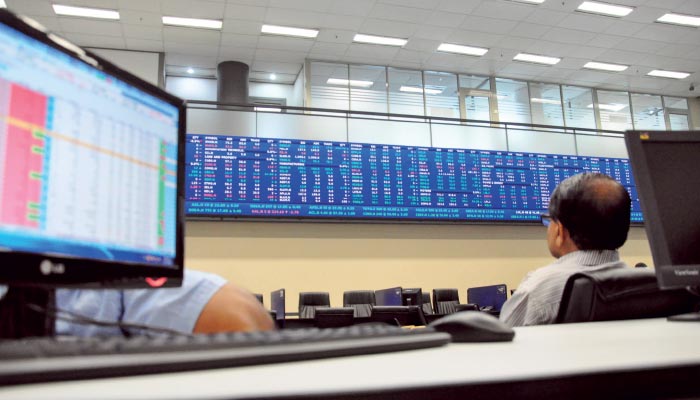
 Despite unprecedented challenges — tariff pressures and the devastation brought by Cyclone Ditwah — 2025 will be remembered as a year of records for Sri Lanka. It was a year in which discipline, reform, and resilience converged, and the country demonstrated that recovery is not just possible — it is happening.
While final December numbers are still being compiled, the trends are unmistakable. Across monetary policy, fiscal management, macroeconomic stability, and capital markets, Sri Lanka outperformed expectations.
Macro economy: Stabilising, then growing
GDP growth for 2025 is expected to be around 5%, exceeding earlier forecasts. This recovery — after years of contraction — is broad-based and reflects improving confidence across agriculture, industry, and services.
Inflation remained low — even deflationary at times — while interest rates eased to the 8–9% range (AWPLR), supporting credit growth without destabilising prices. The rupee was broadly stable most of the year, with a modest depreciation toward the end due to vehicle imports and the cyclone shock.
Sri Lanka also recorded a Balance of Payments surplus, strengthened foreign reserves of around USD 6.3 billion, and rebuilt buffers — even after absorbing nearly USD 2 billion for vehicle imports and servicing close to USD 4 billion of external obligations.
Fiscal Discipline: A turnaround story
If there was one area where structural discipline was most visible, it was public finance.
This discipline — supported by the IMF program — is changing habits, expectations, and institutions. Importantly, debt restructuring is nearly complete, with agreements covering about 99% of eligible obligations, including in-principle progress on SriLankan Airlines.
Exports and external inflows: Record momentum
Exports reached all-time highs, with several sectors outperforming:
Tourist arrivals reached their highest since 2018, and workers’ remittances recorded the largest inflows ever. Together, these sustained our external earnings base and reduced vulnerability.
Capital Markets: Three years of compounding confidence
The Colombo Stock Exchange (CSE) delivered another remarkable year:
In just three years, the ASPI has risen 166% — not on speculation, but on earnings growth and improving fundamentals.
Corporate results confirm this:
Market valuations remain attractive. The CSE trades at a P/E of 10.7, well below regional peers and historical averages. Market capitalisation has reached Rs. 8 trillion ($ 26 billion) — only about 25% of GDP, compared with 100–200% in mature markets. Liquidity improved materially too, with average daily turnover hitting a record Rs. 5.18 billion.
The only cloud: foreign outflows of Rs. 38 billion in 2025 (after Rs. 9.9 billion in 2024). This should reverse as ratings improve and confidence builds.
Reconstruction after Cyclone Ditwah: A difficult opportunity
Cyclone Ditwah inflicted immense human and economic loss. Estimates suggest rebuilding costs near $5 billion. Yet within this tragedy lies a generational opportunity: to rebuild better — stronger, safer, and more productive.
The Government already holds about Rs. 1.2 trillion in treasury cash, of which roughly Rs. 500 billion may be deployed initially. Additional funding will come from:
Historically, only a fraction of capital budgets were spent. In 2025, usage was roughly 25%. In 2026, utilisation could exceed 80%, injecting stimulus and pushing growth beyond 5–6%. This will require execution discipline — but the payoff could be transformative.
2026: The next phase — Growth with reform
Several elements point to continued momentum:
This is not the speculative boom of old. It is a recovery supported by fundamentals, policy credibility, and rebuilding needs.
A call to participate not watch
The next phase belongs to businesses, investors, entrepreneurs, and innovators who believe in Sri Lanka’s rebuilding story. Opportunities will emerge across construction, energy, agriculture modernisation, logistics, banking, IT, and capital markets.
Those who positioned early — and believed — have already seen value creation. With reforms continuing, 2026 can be another blockbuster year, not by chance, but through resilience, discipline, and shared effort.
Sri Lanka has shown that when reform and resolve align, records can be broken — even in the toughest of times. Now is the moment to rebuild stronger, together.
(The author is an entrepreneur and a high net worth investor)




