Thursday Sep 10, 2026
Thursday Sep 10, 2026
Thursday, 10 September 2026 04:01 - - {{hitsCtrl.values.hits}}
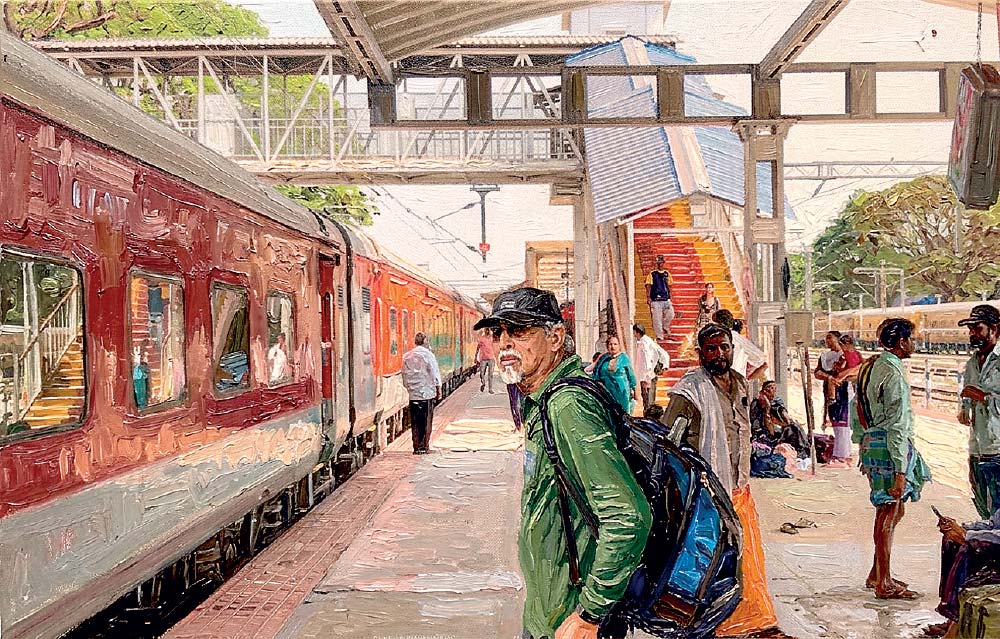
 Take the train, rather than merely flying between its major cities, because it is from the carriage window and through conversations along the way in a train that you can feel the diversity of a country and begin the human-to-human connection - Saman Athaudahetti
By Shanika Sriyananda
|
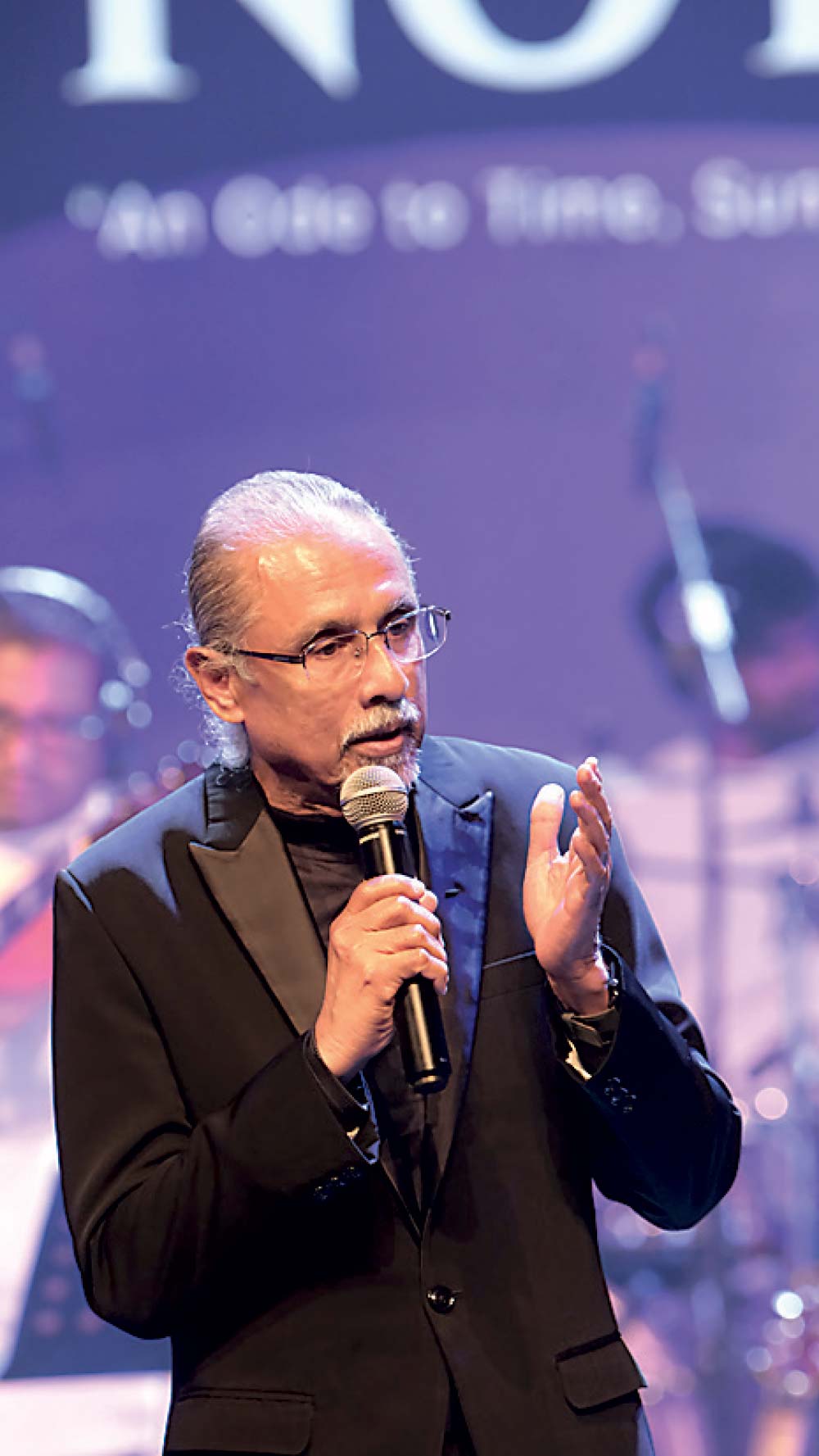
Saman Athaudahetti |
Boarded on a postal train, 30-years ago Saman Athaudahetti’s first journey on an Indian train was a night trip from Thiruvananthapuram in Kerala to Chennai in Tamil Nadu.
This experience remained with the veteran broadcaster, author and media personality for over decades and the idea of writing a book on Indian trains remained on his mind for years, although there was one practical obstacle.
“I wanted to do a travelogue on Indian railway journeys, but it was very expensive,” he recalled in a chat with the Daily FT.
Three decades later, that long-held ambition became reality when, with the support of the India-Sri Lanka Foundation and the assistance of Swami Vivekananda Cultural Centre in Colombo former Director Prof. Ankuran Dutta, Athaudahetti embarked on a 40-day journey covering nearly 13,000 km, 25 trains and 22 railway stations.
The journey, planned over three months, stretched from Katra in the north to Kanyakumari in the south and from Ledo in Assam to Mumbai and Surat in the west, giving him an opportunity to experience India not simply as a series of destinations but through the constantly changing landscape viewed from its railway lines.
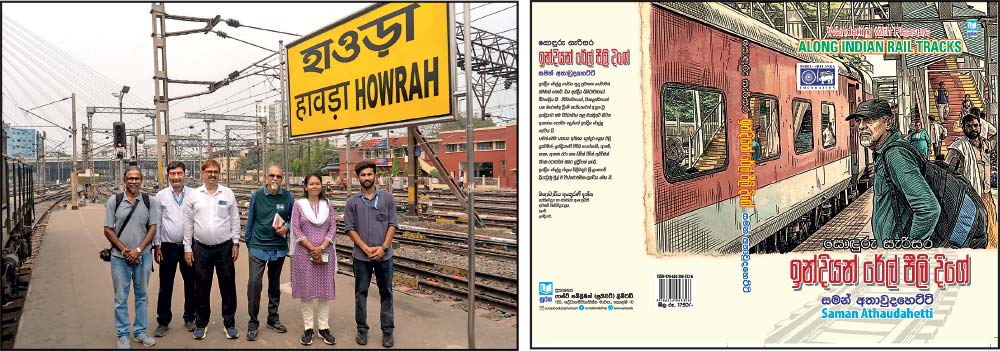
The result is Soduru Sarisara Indian Rail Pili Gige (Wondering with pleasure: Along Indian Rail Tracks), a 470-page travelogue published by Surasa Publications Ltd. and scheduled to be launched at the Sri Lanka Foundation Institute on 11 September. Most chapters feature QR codes through which readers can access visual material relating to the places described in the book.
India seen from the railway cabin window
India reveals itself differently when seen from a railway carriage, where the traveller has time to observe the gradual transitions that can be missed when flying between major cities.
It is found in the changing landscape outside a train window, the food served in different regions, the languages heard at railway stations, the clothing of passengers, the religious practices encountered along the way and, above all, the people who opened conversations and sometimes their homes to a traveller from Sri Lanka.
Athaudahetti deliberately used the railway network to experience these contrasts, allowing the journey itself to become a way of understanding the country.
“You can experience the terrain, cultures, people, food, languages, religions and clothing of India by travelling by train,” he said.
Among the most memorable encounters were those with railway employees who invited him into their humble homes and offered him lunch, turning what began as a professional journey into a series of human-to-human connections.
For Athaudahetti, these moments were as significant as the places he visited, providing a glimpse of everyday life across India's different regions and communities.
Conversations with passengers have also offered him their perspectives about Sri Lanka, its people, and historical cultural connections between two nations.
He said some Indians he met knew little about Sri Lanka, while others associated the island mainly with cricket and players such as Arjuna Ranatunga and Sanath Jayasuriya. Some had also visited Sri Lanka and they had spoken about the country’s beauty and hospitality of Sri Lankans.
India’s technologically advanced railways
Athaudahetti said that he had seen the transformation taking place within Indian Railways since his first railway trip in that night postal train. “The railway is an important indicator of national development because it reflects not only the movement of people and goods but also India’s investment in infrastructure, technology and connectivity,” he said, adding that India is to commence bullet trains from next year.
Across the journey, he said he had seen there were digitised railway stations and the growing use of technology in railway operations, including the Kavach, an indigenous Automatic Train Protection (ATP) system, which was developed to enhance railway safety by helping to prevent trains from passing signals at danger and initiating braking, an indigenous Automatic Train Protection (ATP) system developed in India to prevent train collisions and improve rail safety.
“Kavach means body armour in Hindi. It is a highly sophisticated sensory system and known as one of the best security systems in the world for trains. Any danger is highly visible under this sensory system to the pilots, which they call as train drivers. This is designed to maintain zero accidents in Indian railway. Indian Railway is now expanding its latest version to other stations,” he explained.
According to Athaudahetti, the beauty of the Indian railway is it is developed under a long-term national plan, which will remain under any political change in the country.
In Assam, he also encountered efforts to use technology to reduce elephant deaths on railway tracks, illustrating how the expansion of transport infrastructure is increasingly being balanced against environmental and wildlife concerns.
Athaudahetti has written about railway platforms where India has invested in large scale infrastructure projects with technological innovative enhancements to have an efficient public transport network to meet the challenges in rapid urbanisation and environmental related hazards.
He said that he took trains from the world's second largest platform in India and platforms were stretched for more than a kilometre, with Gorakhpur in Uttar Pradesh, whose platform extends to about 1.3 km. The train normally has 24 carriages.
For Athaudahetti, travelling by rail therefore became a way of watching India change, not through official statistics or policy documents, but through stations, platforms, coaches and conversations.
Among the most striking examples he encountered was that a railway line can make differences in a law between two states.
“It was fascinating to know the railway station on the Gujarat-Maharashtra border, one side which belongs to the Gujarat state alcohol is prohibited while the other side of the platform which belongs to the Maharashtra state it is permitted to sell alcohol, " he recalled.
Instead of standing outside India and looking in, he travelled through it, station by station, State by State, train by train.
Now heading the Department of Communication and Journalism, University in Assam, Prof. Dutta, in his foreword in Athaudahetti’s travelogue, has commended the author's longstanding curiosity about India and his role in bringing the country's stories to Sinhala readers.
“This 40-day research expedition is the first comprehensive work written in Sri Lanka dedicated entirely to the Indian Railway network. It offers an immersive exploration of iconic trains, stations, and terminals, interwoven with reflections on the past, present, and future of a system that is, quite literally, the lifeline of the nation,” Dutta said in his foreword.
According to Dutta, Indian railways is far more than a mode of transport; it is the circulatory system of a civilisation, connecting metropolises to remote villages, carrying pilgrims to sacred shrines, students to universities, and traders to distant markets.
“It is a mirror of India itself: diverse, sprawling, resilient, and unified in its very plurality. Athaudahetti captures this beautifully, weaving into his narrative India’s kaleidoscope of cultures, faiths, languages, cuisines, and customs,” he has stated.
He had met Athaudahetti during his three-year tenure at the Swami Vivekananda Cultural Centre in Colombo and again at the Gauhati university after he had completed his 40-day railway expedition.
In his foreword, Dutta describes Athaudahetti as a celebrated commentator, author, compère and broadcaster, while highlighting that in his book he had described how Indian railway network connects major cities with remote villages, pilgrims with sacred sites, students with universities and traders with markets, making the railway not merely a transport system but a social and economic artery that binds together an extraordinarily diverse country.
Dutta sees him as an important interpreter of India for a Sri Lankan audience, a role that has developed through years of engagement with Indian culture and society.
Human-to-human connection
Athaudahetti said that travelling in Indian trains offered him an opportunity to observe India from within rather than from the perspective of a conventional visitor moving between tourist destinations in a way of storytelling.
Writing six travelogues, his earlier travel writing has taken readers through countries including Japan, China, Malaysia, India and Tibet-China, while his work as a translator has introduced Sinhala readers to Indian writers.
After completing the ‘Soduru Sarisara Indian Rail Pili Gige’, the 40-day Indian train expedition, this veteran communicator is not ready to rest but ready to step into another adventure to pen down his next expedition in Japan.
Concluding the interview, his advice to those who plan to visit India is simple.
“Take the train, rather than merely flying between its major cities, because it is from the carriage window and through conversations along the way in a train that you can feel the diversity of a country and begin the human-to-human connection,” Athaudahetti said.