Tuesday Sep 15, 2026
Tuesday Sep 15, 2026
Tuesday, 10 February 2026 03:53 - - {{hitsCtrl.values.hits}}
Sri Lanka’s economic collapse is often analysed through the lenses of debt, deficits and political misjudgement. These explanations are valid — but incomplete. They overlook a more fundamental weakness that continues to undermine reform efforts: the absence of systematic institutional training for those who govern.
The country does not suffer from a lack of laws or reform proposals. It suffers from a chronic failure to ensure that elected representatives and public officials understand how democratic institutions are meant to function, constrain power, and deliver accountability. Without that capacity, reforms remain performative — impressive on paper, fragile in execution.
This is not a uniquely Sri Lankan problem. But Sri Lanka’s crisis makes it unusually visible.
When institutions exist but do not function
In stable democracies, institutional literacy is assumed. Legislators know the procedure. Officials respect limits. Accountability mechanisms are routine. In stressed democracies, these norms are often uneven, improvised or ignored — not always out of bad faith, but because governance has never been treated as a professional discipline that must be learned.
The result is predictable: policy paralysis, procedural shortcuts, and erosion of public trust. Investors see volatility. Citizens see dysfunction. Reform cycles repeat.
Sri Lanka’s recent protest movement demonstrated the power of civic mobilisation. But mobilisation alone does not build institutions. Democracies survive not because people demand change, but because states can operationalise it.
Training democracy as infrastructure
It is in this context that the work of the Institute of Democracy and Governance (IDAG) deserves attention beyond Sri Lanka’s borders.
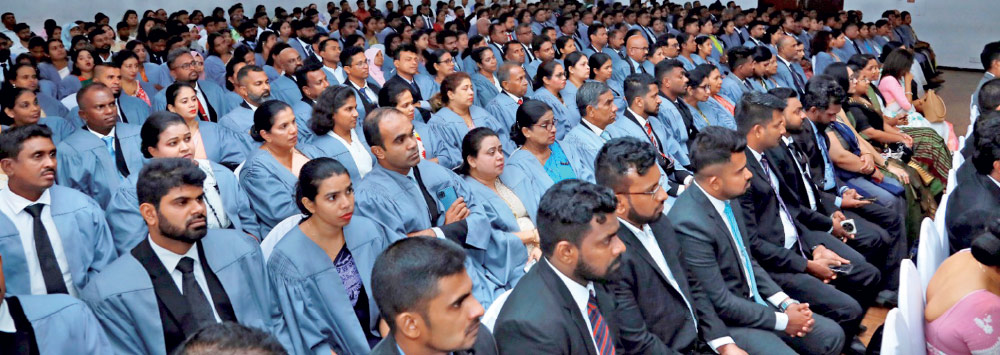
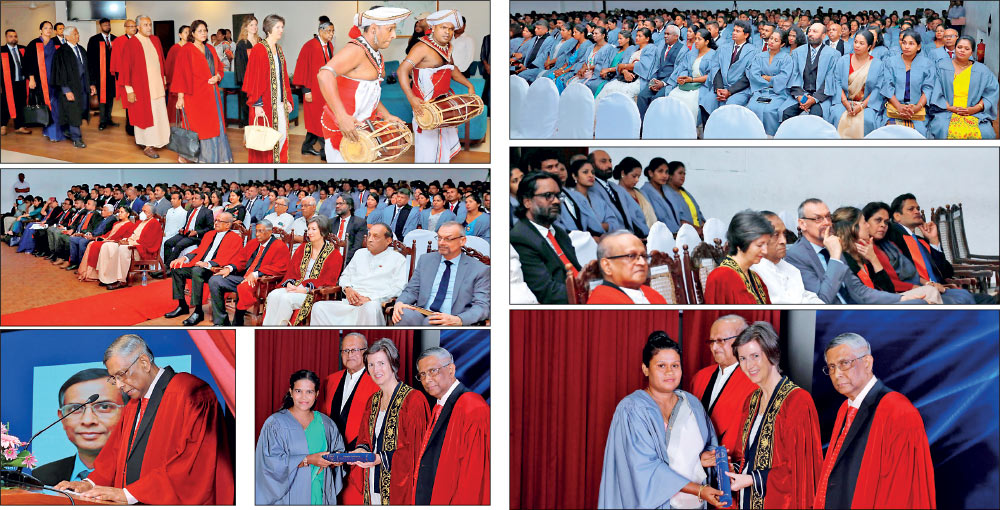
On 24 January, IDAG concluded two executive-level programs focused on democratic governance at local and parliamentary levels. More than 300 elected representatives, senior officials and civic actors completed structured training in constitutional mandates, parliamentary procedure, ethical decision-making and accountability.
The significance lies not in the ceremony, but in the premise: that democracy requires continuous professional training, much like fiscal management or central banking.
Too often, democratic reform is treated as a matter of leadership change. Institutional reform is assumed to follow automatically. Experience suggests the opposite. When leadership changes without institutional capacity, failure is simply redistributed.
An institutional response to political fragility
IDAG was founded by former Speaker of Parliament Karu Jayasuriya, during a period when Sri Lanka’s constitutional order was under severe stress. Its founding logic was deliberately restrained and non-political: democracy cannot depend on the integrity or competence of individuals alone; it must be reinforced through shared rules, knowledge and institutional discipline.
This approach is notable precisely because it avoids the language of moral renewal or political salvation. Instead, it treats governance as a system that can be strengthened through education, repetition and norms.
Participants were not trained to agree politically. They were trained to disagree within institutional rules — a distinction that many fragile democracies fail to internalise.
Why this matters to markets and multilaterals
For international investors and development partners, Sri Lanka’s recovery is often assessed through macroeconomic indicators and IMF conditionalities. But policy credibility ultimately depends on institutional execution.
Markets reward predictability. Predictability depends on procedures that survive political turnover. That, in turn, requires officials and legislators who understand limits, process and accountability.
Democratic capacity building is therefore not a “soft” reform. It is governance infrastructure.
The presence of international diplomatic actors at IDAG’s January programme was not incidental. It reflects a growing recognition that long-term stability in emerging markets depends as much on institutional competence as on fiscal repair.
A lesson beyond Sri Lanka
Sri Lanka offers a cautionary lesson for democracies under strain: political crises are often treated as failures of leadership, when they are equally failures of preparation.
States that invest in democratic training — for parliamentarians, local representatives and senior officials — build resilience into their systems. Those that do not remain trapped in cycles of crisis, reform and disappointment.
Sri Lanka’s recovery will not ultimately be judged by speeches about reform, but by whether institutions perform more reliably five and ten years from now.
Democracy, like any complex system, deteriorates without maintenance.
And maintenance begins with training the State.




