Tuesday Sep 15, 2026
Tuesday Sep 15, 2026
Thursday, 4 June 2026 00:22 - - {{hitsCtrl.values.hits}}
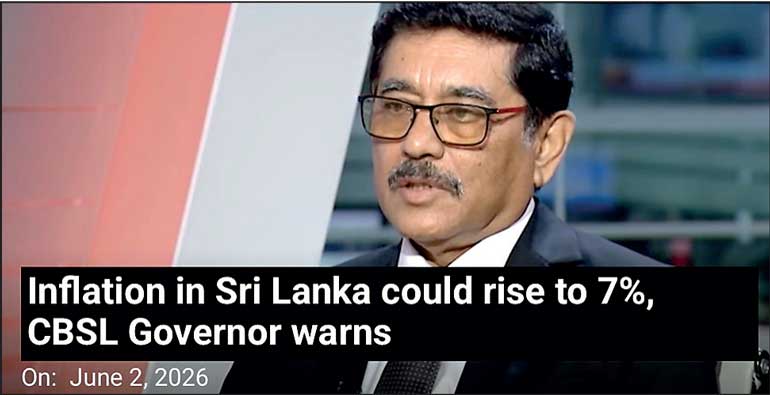
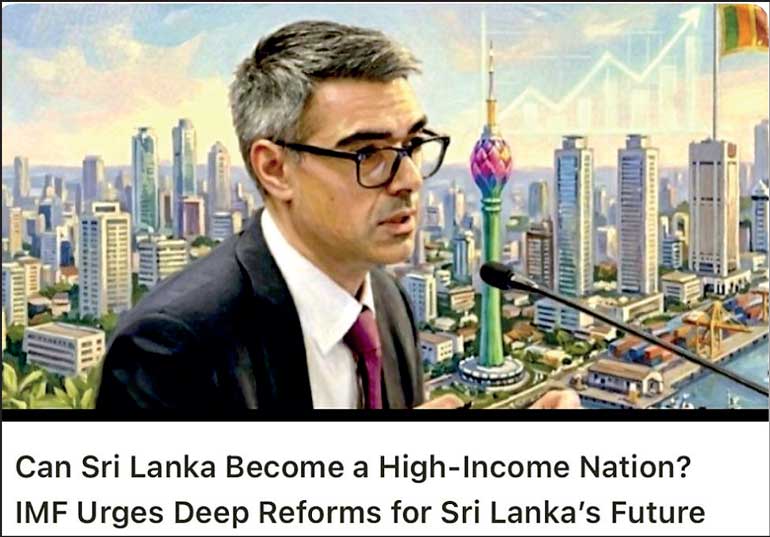
 Sri Lanka’s post-default recovery is entering a more complex and uncertain phase. Just as macroeconomic stability appeared to be taking hold after the 2022 sovereign debt crisis, a new wave of external pressures is exposing the fragility beneath the surface. Despite continued support from the International Monetary Fund (IMF), rising import costs and renewed pressure on the rupee are raising serious questions about the durability of the recovery.
At the centre of the challenge is a renewed strain on the external sector. Geopolitical tensions in the Middle East have reportedly driven up global oil prices, contributing to a sharp increase in Sri Lanka’s fuel import bill, which rose by nearly 150% in April 2026, according to available trade data. The gradual reopening of vehicle imports has further intensified foreign exchange demand, compounding pressures on already constrained reserves.
The external imbalance has widened significantly. The trade deficit expanded to approximately US$1.38 billion in April, while the current account recorded a deficit of US$532 million — one of the largest monthly shortfalls since the 2022 crisis peak, based on preliminary balance of payments estimates.
Pressure on the currency
These dynamics are now feeding directly into exchange rate pressures. The Sri Lankan rupee has depreciated by approximately 5.4% against the US dollar since the beginning of the year, reflecting increased demand for foreign currency to finance essential imports. The impact on households is immediate: higher prices for food, fuel, medicine, and other imported essentials, further eroding real incomes in a still-recovering economy.
The “Triple Shock” economy
These developments cannot be understood in isolation. Sri Lanka remains caught in what economists increasingly describe as a “triple shock.”
First, the lingering effects of the 2022 sovereign default continue to shape fiscal and external constraints. Second, the economy is dealing with the estimated $ 4.1 billion reconstruction burden associated with Cyclone Ditwah, based on preliminary Government and development partner assessments. Third, global geopolitical instability continues to inject volatility into energy and capital markets.
Against this backdrop, the IMF has approved a disbursement of approximately US$695 million under its Extended Fund Facility program. While the Fund has acknowledged the need for limited fiscal flexibility to address reconstruction and humanitarian pressures, it has also reiterated that debt sustainability risks remain elevated and that reform momentum must be sustained.
External analyses of IMF financing structures — including discussions by former IMF Chief Economist Dr. Gita Gopinath on the sensitivity of lending costs to global interest rate conditions and SDR-linked pricing — suggest that effective borrowing costs can rise significantly in high-rate environments. In this context, some estimates place the effective cost of Sri Lanka’s IMF-related financing at around 5.33% per annum, depending on repayment structure, surcharges, and global rate assumptions. While not an official IMF headline rate, it underscores the importance of understanding the true long-term cost of external adjustment support.
Policy at the edge
This leaves policymakers walking a narrow path between competing imperatives. On one side is the urgent need to protect households from rising costs and fund post-disaster reconstruction. On the other is the necessity of maintaining fiscal discipline to preserve IMF program credibility and safeguard external stability.
The risk is not abstract. Premature policy relaxation or external shocks could quickly erode the gains achieved since the crisis, particularly in an economy still heavily dependent on imports and external financing. While the acute phase of the 2022 crisis — marked by shortages and systemic disruption — has passed, the recovery remains highly exposed to global volatility.
Sri Lanka’s trajectory will ultimately depend on its ability to strengthen export competitiveness, sustain remittance inflows, attract durable investment, and stabilise the rupee in a structurally constrained external environment. In an era of shifting geopolitical alliances and uncertain global growth, policy discipline is not optional — it is foundational.
The recovery is real, but it is not yet resilient. The coming months will determine whether Sri Lanka consolidates stability or slips back into vulnerability under the weight of external shocks, given the new world order.
References :
1. International Monetary Fund (IMF), Extended Fund Facility (EFF) program reviews and staff reports (latest available).
2. Central Bank of Sri Lanka (CBSL), External Sector Performance Reports and exchange rate data (2026).
3. Ministry of Finance, Sri Lanka – Fiscal and reconstruction updates (Cyclone Ditwah assessments).
4. World Bank, Sri Lanka Development Update (latest edition).
5. Asian Development Bank (ADB), Sri Lanka Economic Outlook reports.
6. Government of Sri Lanka and development partner assessments on cyclone reconstruction requirements.
7. IMF policy papers on SDR-based lending, interest rate structure, and external commentary referencing Dr. Gita Gopinath (former IMF Chief Economist) on global financing conditions (2024–2026).b




