Friday Oct 09, 2026
Friday Oct 09, 2026
Thursday, 14 May 2026 00:40 - - {{hitsCtrl.values.hits}}
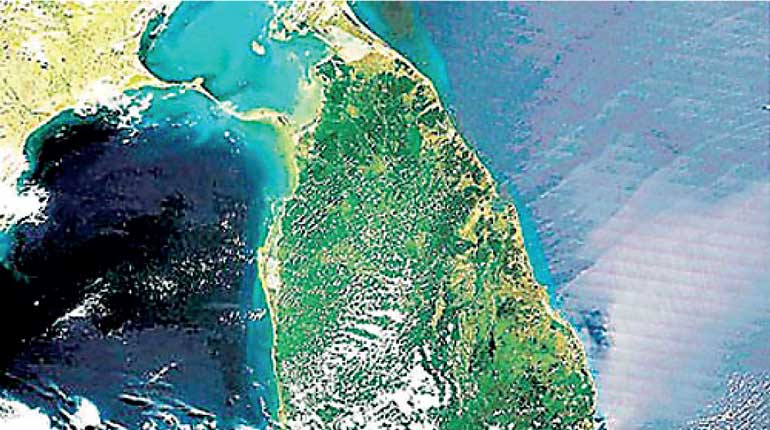
Permanent land link would make our island an extension and annexure of India
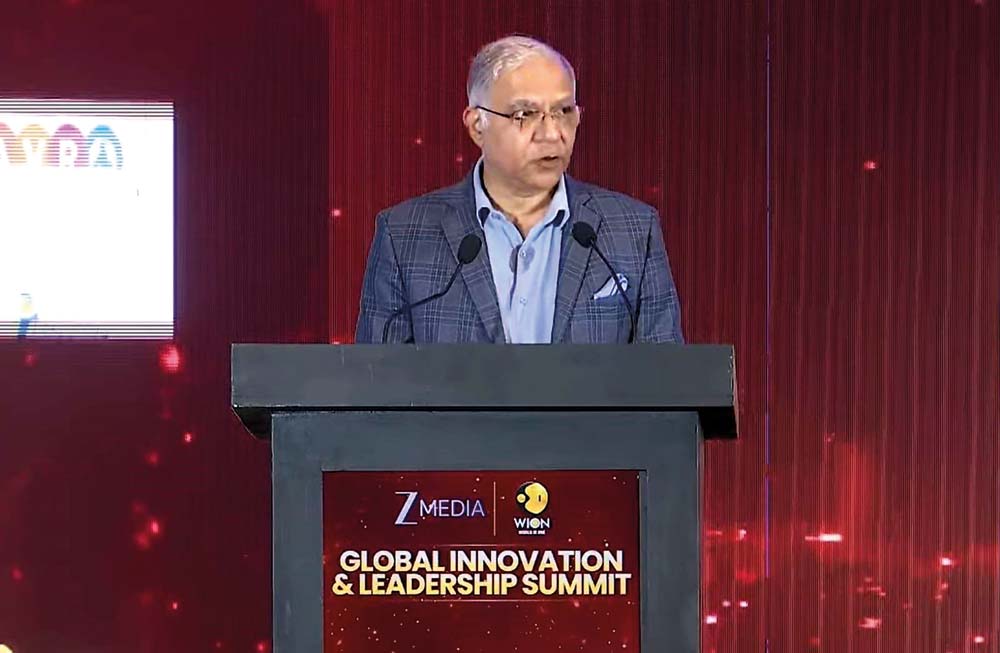
India’s High Commissioner Santosh Jha won’t waver, and warns us against wavering
 The record shows the only thing that has been agreed to formally by the Sri Lankan side is a feasibility study. Certain things, even if feasible, should be considered undesirable and axiomatically ruled out due to the geopolitical and existential threats they pose. What High Commissioner Jha terms a ‘permanent land link’ should top that list. It has three dimensions to it, which are geopolitically, historically and existentially catastrophic
 Delivering the keynote address at the Global Innovation and Leadership Summit in Colombo organised by Z Media and WION on 2 May, the High Commissioner of India to Sri Lanka Shri Santosh Jha attempts to give Sri Lanka a bit of a hurry-up, insisting that it gets on with constructing permanent land connectivity which links Talaimannar in Sri Lanka to Rameshwaram in India. (https://www.ft.lk/news/Indian-Envoy-urges-Sri-Lanka-to-fast-track-trade-connectivity-agenda/56-791441)
His Excellency’s strident push for land connectivity is part of Delhi’s ‘double-tap’. It comes in the wake of the Indian Vice-President’s announcement during his recent visit, of the conferment of Overseas Citizen of India (OCI) status on Sri Lanka’s hill-country Tamils up to 6th generation Indian-origin, amounting to one-and-a half million people, with 500,000 applying immediately. (https://www.jaffnamonitor.com/india-expands-footprint-in-sri-lanka-as-radhakrishnan-announces-oci-plan-for-tamils/)
If Sri Lanka is so apprehensive about the results and consequences of the recent Tamil Nadu election, imagine the precarity of our situation if this island is permanently linked to Tamil Nadu via our Northern province.
Furthermore, imagine the outcome during the days of MGR and the Eelam War, if Sri Lanka had a permanent land link to Tamil Nadu.
Cancelling Kautilya?
If we follow the Indian High Commissioner’s admonitory advice which underscores that of his Prime Minister, we shall have to utterly reject the advice of the greatest strategic mind of his own country.
The foundation stones of Asian realist thought were provided by China and India in two key texts, Sun Tzu’s The Art of War and Chanakya a.k.a Kautilya’s Arthashasthra. The Chinese text was a century older.
Kautilya drove home that the main strategic threat to any state would come from its neighbour precisely because proximity provides issues to contend over. He urged therefore that every state should seek its main ally further afield, among its neighbour’s neighbours rather than its immediate neighbour—and do so for the explicit purpose of countervailing the immediate neighbour.
The Indian Prime Minister and his High Commissioner are insisting that we do the exact opposite by building a permanent land link to our immediate neighbour. This would:
A) Enhance the handle India has on us of being our only neighbour and incomparably vaster and more populous than we are.
B) Eliminate the flexibility we have enjoyed since Independence of safeguarding our strategic autonomy and national interest by power-balancing through our relations with China and Pakistan.
Whatever Prime Minister Modi says and his representative in this country echoes, Sri Lanka and India are NOT “civilisational twins”; they are ‘civilisational cousins’. If they were “civilisational twins” or even civilisational siblings, there should be at least one linguistic state of India in which the Sinhala language predominates, and at least one state if not a whole swathe of India which has a Buddhist majority— not just the Union Territory of Ladakh. But that’s not the case. Minus the two main markers of the island’s demography, Sri Lanka and India are hardly “twins”!
Civilisational cousins, not twins
High Commissioner Jha’s background buildup is tendentious.
‘…“This is not simply a bilateral relationship. It is a civilisational bond,” Jha said, recalling Indian Prime Minister Narendra Modi’s description of India and Sri Lanka as “civilisational twins” during his April 2025 visit.
He said ties between the two nations predate treaties, trade agreements, and formal diplomatic structures, citing shared religious, cultural, and historical linkages ranging from the Ramayana tradition to the transmission of Theravada Buddhist texts and the region’s ancient architectural influences.
“These are not coincidences of geography. These are the signatures of a shared civilisation,” he said…’ (ibid)
Whatever Prime Minister Modi says and his representative in this country echoes, Sri Lanka and India are NOT “civilisational twins”; they are ‘civilisational cousins’.
If they were “civilisational twins” or even civilisational siblings, there should be at least one linguistic state of India in which the Sinhala language predominates, and at least one state if not a whole swathe of India which has a Buddhist majority—not just the Union Territory of Ladakh. But that’s not the case. Minus the two main markers of the island’s demography, Sri Lanka and India are hardly “twins”!
Sri Lankans are fortunate that we aren’t India’s “civilisational twin”. India’s civilisation is predominantly Hindu (‘Brahminic’)—in which structural casteism is legitimised. India had the civilisational choice of Buddhism in which caste was drastically subverted by the Buddha who said that high or low caste is a matter of one’s deeds not one’s birth.
Just as Israel rejected the radical universalist-humanistic doctrine of Jesus who was born a Jew, and preferred the martial, pre-existing Judaic doctrine of a Chosen People, India chose to roll-back the Asokan moment of Buddhism and restore Hinduism with its enduring social structure based on caste hierarchy. Mao’s rural revolution which swept away feudalism/semi-feudalism explains why China is more modern and economically more advanced than India.
High Commissioner Jha recalls us to the “historical linkages ranging from the Ramayana tradition…” He doubtless thinks we shouldn’t mind awfully that in the Ramayana, including in its rendition in today’s India, Rama is a God, Ravana is the villainous enemy and a Demon. In ceremonies in India, Ravana is burnt in effigy. In the Ramayana, Ravana is the ruler of Lanka which is a neighbouring island. Hanuman is a monkey-god whose stratagem of building a bridge with boulders that link India to Lanka, makes the island vulnerable to invasion and subject to defeat. That bridge is the primary key to Lanka’s defeat in the Ramayana. A second key is the treachery from within Lanka’s ruling elite: Vibheeshana.
Had we been physically connected to the vast, teeming subcontinental landmass with its primordial caste, clan and tribal structures, our language, composition and history would have been completely different. We would not have been who we are. We would have been unrecognisable to ourselves. To maintain our distinctive collective identity, we must retain that strip of separation by water, a slim geographic gap which has a high symbolic value: it symbolises our distinct, separate, independent political-historical existence and trajectory
A (Hanuman) bridge to sell us
High Commissioner Jha’s main pitch followed:
‘…One of the strongest themes of his address was physical connectivity between the two neighbours, particularly across the Palk Strait.
Jha noted that while Colombo and Chennai are separated by roughly 300 kilometres by sea, the distance between Rameswaram and Talaimannar is just 30 kilometres. “And yet, there is no direct road. No railway. No ferry service that runs at scale. No energy grid connection. No pipeline. It is, frankly, an anomaly. The time for wavering is over,” he said.
Jha argued that a permanent land link, whether by bridge or tunnel, would fundamentally reshape the economic geography of the region and help Sri Lanka realise its ambitions of becoming a regional hub…’ (ibid)
What the High Commissioner describes with puzzlement and horror as “frankly, an anomaly” is frankly, the exact opposite. An absence of connectivity, a gap that has lasted and been maintained for millennia, is no “anomaly”. It is a fact of tectonic and geographic evolution, retained as a geostrategic choice by the island and its rulers over long historical time—because it gives the island existential space and autonomy, reinforces its radical distinctiveness from the Indian landmass and saves it from being sucked into the subcontinental vortex.
Though the British empire ruled both India and Ceylon, the latter was not ruled by the British Raj based in Delhi, but from Whitehall in London. Even British colonialism recognised India and Ceylon as two quite distinct entities. With its global sweep, the British empire understood that though India in all its vastness and with all its enormous diversity could be ruled as one, Ceylon was fundamentally different and should not and could not sustainably, successfully, be ruled/administered from a single common centre. Notably, the British saw no reason to build a bridge/road linking the two which would have been an easy feat for its famed engineers.
This qualitative distinctiveness and autonomy were leveraged by D. S. Senanayake on the advice of Sir Ivor Jennings to advance Ceylon’s case for Independence on a quite separate and different track from India’s. Now India urges us to efface that demarcation and difference.
If Prime Minister Modi and his diplomats are keen on enhancing connectivity with India’s “civilisational twins”, they should start with neighbouring Pakistan with which they shared a common historical existence and still share millions of adherents of the Islamic faith. Then they should move on to Bangladesh which they helped create.
His Excellency sounds as if Sri Lanka is dragging its feet on implementing a formal agreement it signed with India at the Heads of State level to build a land bridge. That’s hardly the case.
A ‘Hanuman bridge’ was first mooted by Ranil Wickremesinghe (his terminology) and his ‘segundo’ Milinda Moragoda in 2002. Ranil was Prime Minister, not the President and Head of State. President Chandrika Bandaranaike Kumaratunga and Lakshman Kadirgamar in no way endorsed the idea despite their warm friendship with India. Evicted by CBK, Ranil was not restored to office by the voters as the General Election of 2004. He returned to the ‘Hanuman bridge/road’ in 2022 when he was appointed (not elected) as Prime Minister by Gotabaya Rajapaksa, and reiterated it in 2023 when he had been selected (not elected) as President by the SLPP majority in Parliament.
Meanwhile Milinda Moragoda who had been posted as High Commissioner to Delhi by Gotabaya Rajapaksa with whom he shared a politico-ideological affiliation (US Republican) and antipathy to devolution, was busily neutralising the commitment in the Indo-Sri Lanka Accord to the 13th Amendment by hooking Sri Lanka up with India and the USA every which way in a Karma Sutra of geostrategic ‘connectivity’. For ‘pathfinder’ Moragoda, all paths lead (even with a Beijing detour) to Washington DC.
India’s High Commissioner insists that we expeditiously implement something suggested by Ranil Wickremesinghe who was never the popularly-elected President of Sri Lanka, which means he never had a mandate to suggest anything of that magnitude. Ranil is a political leader who lost every election, Parliamentary and Presidential, that he ran for every time he had made this suggestion—including in 2024 when he ran as incumbent (though unelected) President.
Pushing ‘fixed links’, High Commissioner Jha portentously pronounces: “…but let me say clearly: the time for wavering is over.” Had Ranasinghe Premadasa or Mahinda Rajapaksa occupied the Presidency today, there would be no “time for wavering” at all before Sri Lanka responded – as UK High Commissioner David Gladstone and UK Foreign Secretary David Miliband discovered decades apart. But that’s not President Dissanayake—and he has no Lakshman Kadirgamar to have a word with High Commissioner Jha
Constructed contiguity, greater Tamil Nadu
The record shows the only thing that has been agreed to formally by the Sri Lankan side is a feasibility study.
Certain things, even if feasible, should be considered undesirable and axiomatically ruled out due to the geopolitical and existential threats they pose. What High Commissioner Jha terms a ‘permanent land link’ should top that list. It has three dimensions to it, which are geopolitically, historically and existentially catastrophic.
I) It doesn’t merely establish connectivity but artificially creates geographical contiguity. What the tectonic plates kept apart, the “fixed land link” will bring together. The closer the gap between a whale and a minnow, the more dangerous it is for the minnow; the greater the gap the better. India and Sri Lanka have a thin blue line of separation—the Palk Strait—which permits and enhances Sri Lanka’s autonomous identity. Integration by bridge/road would entrench the disadvantages to Sri Lanka of the extreme lopsidedness stemming from the great asymmetry between us and our giant neighbour.
II) Ours is a small island with a distinctive demographic composition and therefore, destiny. Had we been physically connected to the vast, teeming subcontinental landmass with its primordial caste, clan and tribal structures, our language, composition and history would have been completely different. We would not have been who we are. We would have been unrecognisable to ourselves. To maintain our distinctive collective identity, we must retain that strip of separation by water, a slim geographic gap which has a high symbolic value: it symbolizes our distinct, separate, independent political-historical existence and trajectory.
III) The permanent land link that High Commissioner Jha insists upon with considerable urgency, would connect us not merely to India as such. It would connect us very specifically to Tamil Nadu. Furthermore, it would not connect merely Sri Lanka as such but a very specific part of Sri Lanka, the Northern province, to India in general and Tamil Nadu in particular. A ‘permanent land link’ would render Sri Lanka a downward extension of India and an annexure of Tamil Nadu.
High Commissioner Jha is irked that Sri Lanka, which has not signed let alone ratified any such agreement which rightly should require a national referendum, isn’t promptly establishing connectivity –notwithstanding the fact that it would automatically and artificially create geographical contiguity between:
a) Sri Lanka’s Tamil-speaking Northern province, which until 2009 was the epicentre of a major secessionist war and still contains streaks of separatist sentiment and
b) India’s Southern cone, Tamil Nadu, which contains 80 million Tamils, was the sympathetic and supportive rear base of the Tamil secessionist war in Sri Lanka, makes piratical incursions into Sri Lanka’s territorial waters, and still ventilates demands for Sri Lankan territory.
The only real “civilisational twins” that a constructed contiguity would unite are the Tamil people of Tamil Nadu and Northern Sri Lanka.
A permanent land corridor between ‘ethnic kin’, or more accurately ethnolinguistic (Tamil) and ethnoreligious (Hindu) kin on both sides of the Palk Strait, would result in a Greater Tamil Nadu.
Sri Lanka as extension
High Commissioner Jha declared categorically in his 2 May speech that “The benefits, wherever such bridges have been built, are unmistakable.” Really? I support Russia rather than NATO-backed Ukraine, but am lucid enough to note the strategic reasons for the repeated attacks by Ukraine on the bridge built by Russia linking-up Crimea.
The proposed permanent land link poses an existential threat to Sri Lanka.
1) It would re-draw the map of the sub-region. Our natural, self-contained island home would become a physical extension of India/South India/Tamil Nadu.
2) A “permanent land link” between Tamil Nadu and Sri Lanka’s Tamil majority North, will drastically shift the geopolitical, strategic and economic center of gravity of this island to a newly emergent Tamil-speaking/ethnic Tamil majority zone traversing the Palk Strait: a Greater Tamil Nadu.
3) That newly-created zone comprising India’s Tamil Southern cone and Sri Lanka’s Tamil Northern cone will be the much-advertised economic ‘hub’ or ‘node’, which will inescapably be an ethno-economic hub/node, shifting the balance of power against the island’s Sinhalese and the South.
4) The only place on the planet the Sinhalese are the majority is on this island. If a ‘fixed land link’ is established, Sri Lanka would no longer be completely, fully, entirely, an island, but a South Indian annexure or ‘spur’—and on this annexure or ‘spur’ the Sinhalese would inevitably be rendered a minority.
5) With a ‘fixed’ ‘direct’ ‘permanent land link’ to a gigantic India (through Tamil Nadu) the sheer weight of India or simply of Tamil Nadu will tilt the balance drastically and unalterably. The massive lopsidedness in the equation will make us a de facto state unit of India, and our destiny will never again be primarily determined and steered by us. Either the whole of Sri Lanka will be pulled in the wake of India via Tamil Nadu, or Sri Lanka’s North and East will be absorbed into Tamil Nadu.
Pearl on the Indian chain
Pushing ‘fixed links’, High Commissioner Jha portentously pronounces: “…but let me say clearly: the time for wavering is over.”
Had Ranasinghe Premadasa or Mahinda Rajapaksa occupied the Presidency today, there would be no “time for wavering” at all before Sri Lanka responded – as UK High Commissioner David Gladstone and UK Foreign Secretary David Miliband discovered decades apart. But that’s not President Dissanayake—and he has no Lakshman Kadirgamar to have a word with High Commissioner Jha.
Sri Lankans must ‘unwaveringly’ ask themselves two basic questions:
 When looking at a map or satellite photograph of the world or Asia, do they wish to see Sri Lanka having a “fixed”, “direct”, “permanent land link” through its Northern province with Tamil Nadu, and through Tamil Nadu with India, reducing the island to a pearl hanging permanently on the Indian chain?
Will we, the present generations, be forgiven for permitting this by generations to come, and by ‘Future History’ including the Mahavamsa?
(https://dayanjayatilleka.webflow.io/)




