Thursday Sep 03, 2026
Thursday Sep 03, 2026
Thursday, 3 September 2026 00:27 - - {{hitsCtrl.values.hits}}
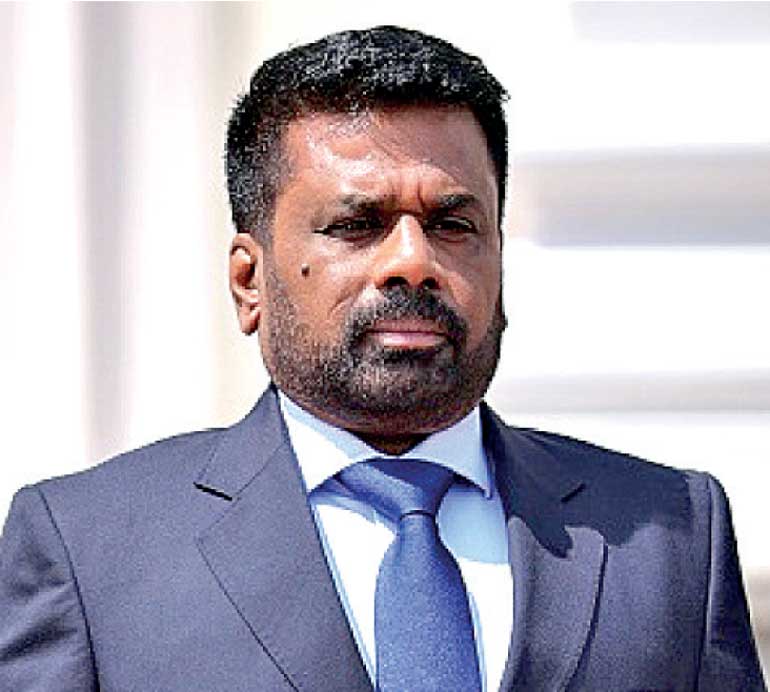
AKD should avoid decisions which erode his legitimacy
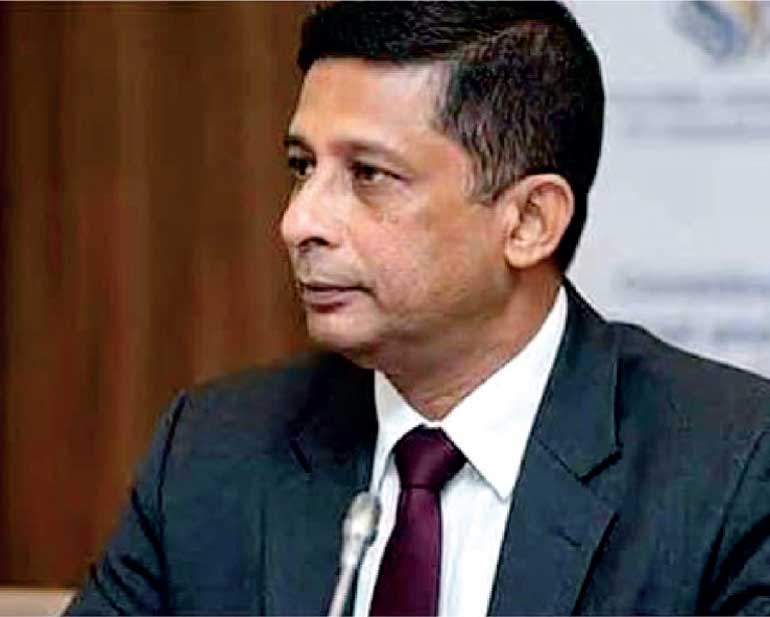
Detaining anywhere but in a hospital, a Retd. Major-General who has a cardiac device implanted, is cruel
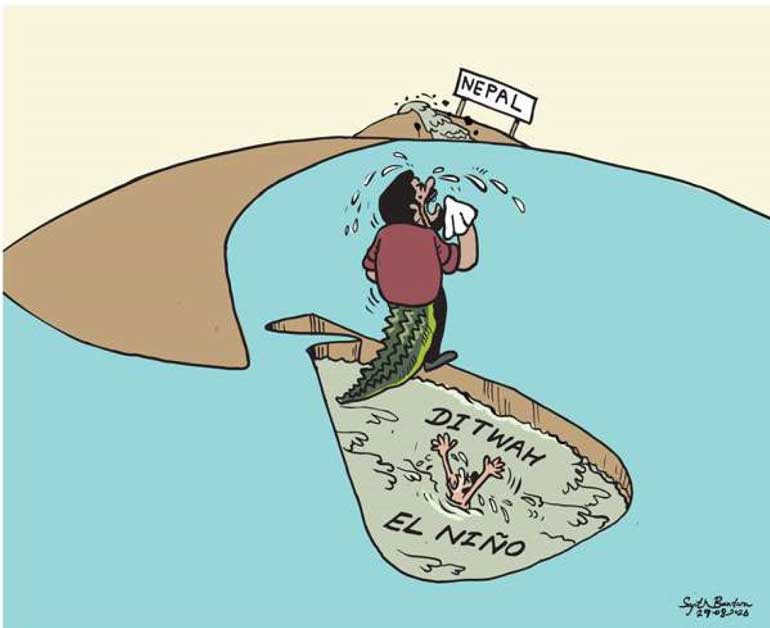
SL recovered faster under CBK-MR from the 2004 tsunami, than it has from Ditwah under AKD
 There’s an official committee exploring our electoral systems with a view to change—and it is NOT the same body that is drafting a new election law for the Provincial Councils. Chaired by a Minister, this exercise seems to have a broader sweep and more dangerous systemic implications.
Entitled ‘Expert Panel begins work on structural transformation of Sri Lanka’s Electoral System’ the news story broke on 26 August:
‘A special meeting was held at Parliament yesterday to chart the future work of the Expert Panel appointed to reform Sri Lanka’s electoral system, excluding Provincial Council elections, with the aim of making it more efficient, transparent, and responsive to public expectations.
The discussion was chaired by Public Administration, Provincial Councils and Local Government Minister A.H.M.H. Abeyaratne, who also heads the Parliamentary Select Committee tasked with reviewing election laws and submitting proposals to Parliament.
Committee members Ruwanthilaka Jayakody, Attorney at Law Thushari Jayasinghe, and Chandima Hettiarachchi joined the meeting, which focused on the role of the Expert Panel, the scope of matters to be reviewed, and the process for the next stages.
The Panel is expected to conduct an in depth review of 31 proposals submitted by citizens and organisations concerning electoral reforms. Relevant studies and research from universities and institutions will also be considered.
The review period has been set at two months, during which the Panel will not only identify shortcomings in the current system but, where necessary, recommend the establishment of a new electoral system and culture with more constructive features.
Officials stated that the ultimate objective is not merely to introduce piecemeal amendments.
Instead, the Committee aims to present Parliament with a comprehensive report containing policy and legislative recommendations for a more credible, democratic, and efficient electoral system suited to current needs and the expectations of the people.
The meeting marked the formal start of the Expert Panel’s work, which is expected to play a pivotal role in shaping Sri Lanka’s electoral future.’ (Expert Panel begins work on structural transformation of Sri Lanka’s
Electoral System - Newswire)
The Government has overridden the eminently sensible proposal by M.A. Sumandiran and Shanakiyan Rasamanikkam, supported by the entire Opposition, that the inordinate delay in holding the PC elections and reviving a functioning provincial legislature be overcome by introducing an exception under the rubric of exigent circumstances: hold the elections just this once under the pre-existing electoral system while the Parliamentary Select Committee continues to deliberate on and formulate a new electoral law. Nilanthi Kottahachchi, MP, was caught on camera assuring an NPP activist audience that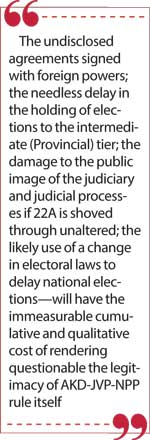 “Provincial Councils [elections] won’t be held”.
Bad as that is, the qualitatively greater dangers of an agenda for “…the establishment of a new electoral system and culture with more constructive features…a more credible, democratic, and efficient electoral system suited to current needs and the expectations of the people…” should be self-evident.
The United Front Government of Prime Minister Sirimavo Bandaranaike and the LSSP and CPSL, which had “more Marxists in Cabinet than any elected Government in the world outside Allende’s Chile” as The Economist (London) intoned, generously helped itself to two years beyond the term of office it was elected for, using as the start-date, not the date of its election but that of the promulgation of the new Republican Constitution. That extension from 1975 to 1977 ensured a decimation which would only have been a defeat if incurred in 1975.
Though the JVP-NPP Cabinet has decidedly fewer Marxists than that of 1970-1977, it is more likely to delay and defer elections than any post-Independence administration, due to its ideology (a warped caricature of Marxism-Leninism), collective mentality and behavioural propensity.
What would be the implications, consequences and outcome? Leafing through some Political Science books while rearranging my library a shelf a day as part of my ‘ritual audit’ for turning 70 late this year, I came across an excellent summary of the contribution by John Locke, one of the three major Social Contract theorists and founding father of Liberalism/Liberal Democracy: ‘The Right to Revolt’.
(a) Elected representatives of the people are prevented from assembly. 
(b) Foreign powers are bestowed with authority over people.
(c) The election system or procedures are changed without public consent.
(d) The rule of law is not upheld.
(e) The Government seeks to deprive people of their rights.
(John Locke: Rationality and Enlightenment, The Politics Book, DK London, p 109.)
The undisclosed agreements signed with foreign powers; the needless delay in the holding of elections to the intermediate (Provincial) tier; the damage to the public image of the judiciary and judicial processes if 22A is shoved through unaltered; the likely use of a change in electoral laws to delay national elections—will have the immeasurable cumulative and qualitative cost of rendering questionable the legitimacy of AKD-JVP-NPP rule itself.
Imbalanced rule
Very little works without balance. That balance can be one of equilibrium or a shifting, dynamic balance. But balance there must be; not lop-sidedness. Sustained disequilibrium leads to destruction and self-destruction.
Two years after Anura’s and the JVP-NPP’s victory, there is a state of disequilibrium in the North/South equation. It is a Govt-led and Govt-facilitated disequilibrium.
It is only natural that with the passage of time, issues of justice and accountability left over from wartime would surface, sometimes literally. These must not be criminalised or suppressed.
Civic mobilisation is proliferating on a number of issues (e.g. land, disappearances) in the North, because the AKD administration is keeping in suspended animation the elected Provincial Councils through which such grievances would normally be ventilated.
It must always be remembered that no community, Tamil or Sinhala, and no region, North or South has a monopoly of victimhood or virtue.
The war must be understood in its historicity and totality. The string of atrocities from the evisceration and dismemberment by the LTTE of the wounded and dead soldiers in the July 1983 Tinnavely ambush, the Anuradhapura massacre, the butchery of babies in the so-called border villages, the massacres of TELO activists and EPRLF captives, through to the killings of Rajani Thiranagama, Lakshman Kadirgamar and Kethesh Loganathan, must also be recognised—as must the Pongu Thamil ritual (photographed in Trincomalee) of ‘liberated’ people rolling bare-bodied on the hot tarred road behind a carriage bearing a portrait of Prabhakaran. Jude Ratnam’s movie ‘Demons in Paradise’ provides a deep and holistic perspective.
The actions of State authorities on President Dissanayake’s watch have given the impression of one-sidedness, lack of balance. 
Pillaiyan who continued to fight against the LTTE even when Karuna had withdrawn from the field, and thereby helped the State to eventually liberate the East and hold Provincial Council elections, is charged with a 2008 wartime murder. But those who committed or enabled such acts on behalf of the LTTE are not pursued and charged by this Government. Furthermore, what about the JVP-DJV gunman who murdered Colombo
University V-C Prof Stanley Wijesundara in his office?
One cannot equate on the one hand, the Sri Lankan military and its allies, fighting to keep the island-nation territorially united as a single, sovereign, independent entity, following the command decision of legitimately elected Presidents and Governments (unlike the liberal West’s pin-up Ukraine, Sri Lanka unfailingly held elections during the two civil wars) with no choice except surrender because of the LTTE’s repeated unilateral return to war despite efforts at a negotiated peace, and on the other hand the totalitarian formation led by ‘demi-God’ Prabhakaran that fought to split the country despite many opportunities to stop the war and accept power-sharing as the solution. Lincoln’s Union armies from the North scorched their way through the secessionist South but history doesn’t equate it with the Confederate army.
In a massive moral inversion, the proto-LTTE and pro-LTTE elements here and overseas are not an enemy of Anura-JVP rule, but the war-winning Sri Lankan military brass is. Perhaps this inversion is because:
It was shocking to read a young woman belonging to the Tamil Diaspora in a First World society, the winner of a literary award, decry the world’s silence about “2009”. 2009 is when the war stopped after 30 years and bewailing that is as if a young German accusatorily lamented that the world is not critical of “1945”.
The Tamil Diaspora has never forgiven the Sri Lankan State, military and Mahinda Rajapaksa for defeating and killing its ‘demi-god’ Velupillai Prabhakaran and destroying his ‘invincible’ army. To slake their collective trauma and thirst for revenge, they’d fund anyone handsomely, even a historical revisionist, subversive Sri Lankan Government.
Example of Spain
It is never wise for a Government to re-fight a long civil war in court. Nor is it wise for a judiciary to seek to adjudicate such a darkly tragic conflict. That’s also why ‘transitional justice’ wasn’t part of Northern Ireland’s Good Friday Accords.
One of the most progressive and engaging societies I’ve visited is Spain. While Sri Lanka’s Ambassador to France and Permanent Delegate to UNESCO I was also accredited to Spain and Portugal. My wife and I were lucky to visit during the Spanish uprising of 2011, the ‘Occupy’ type progressive upsurge with its tent cities in Madrid.
Spain was the arena of the first war between Fascism and Republican democracy (supported by the Marxist and Anarchist lefts), in the 1930s. The fascists won, supported by Hitler’s air force. Generalissimo Franco established a dictatorship that lasted a half-century. Bitter memories of the civil war lived on, down the generations.
In the 1980s the dictatorship was replaced through a democratic transition which has proved stable and (for the most part) enlightened. Socialist Prime Minister Pedro Sanchez is among the world’s most admired left leaders today.
One reason for Spain’s stable liberal democracy and progressive society is a historic decision taken by all, including the Communist Party led by the iconic Santiago Carrillo, as part of the transition from dictatorship. Codified in the 1977 Amnesty Law is the decision that the State would not prosecute anyone involved in the civil conflict not only of the 1930s but also the subsequent decades of dictatorship. While society is perfectly free to cathartically memorialise – and they do so, especially in Catalonia and the Basque country—the State, including judges, are prevented by law from violating that prohibition. (https://www.amnesty.org/en/latest/news/2013/06/spain-blocks-investigations-franco-era-crimes/)
Unlike Sri Lanka today, Spain knew better than to undertake a retroactive witch-hunt and tear itself apart, pitting the judiciary (and police) against the armed forces, intelligence agencies and police. Spain resorted to ‘The Pact of Forgetting’.
Judge Balthazar Garzon who pioneered the commendable doctrine of universal jurisdiction by handing down the judgment on Chile’s Pinochet, became an icon in and out of Spain (we met at a conference in Moscow) for his progressive act which extended the global reach of justice. But he was rapped severely across the knuckles by the Spanish judiciary when he trespassed on the domestic ban on legal probes into the Spanish Civil War of 90 years ago.
Cruel choice
For many years, I have been struck by the difference between ‘sin’ and ‘evil’. Sin is forgivable especially if followed by repentance; evil is not. My personal understanding and interpretation of evil has been ‘the intentional commission of avoidable cruelty’. Cruelty sometimes takes place inadvertently. On rare occasions it may be inescapable – the textbook example being the apprehension with evidence of someone who has planted a time-bomb in a civilian area and the overriding need to extract information.
But cruelty as a matter of choice, resorted to wittingly, in circumstances that aren’t urgent, unavoidable, and exceptional, is evil.
The most recent letter from Maj. Gen. (Retd) Suresh Sallay’s wife Manori to President AKD implored the latter not to renew the 90-day detention order on him which consigned him to captivity in the CID headquarters. Her plea was on the grounds that when transferred to the National Hospital, his condition was found to be so fraught that he was rushed to the Cardiac Unit and a device surgically inserted—an Implantable Cardioverter-Defibrillator (ICD).
The obvious option was to keep Maj. Gen. Suresh Sallay detained under armed guard in the prison hospital. The downside of not doing so and signing the 90-day detention order which keeps him under CID custody on its premises, is the very real risk of a cardiac episode which either damages him so much he cannot answer questions in court, or causes his avoidable impairment or death by cardiac arrest.
With Manori Sallay’s written plea in front of him, President Anura Kumara Dissanayake had the choice of making a decision on humanitarian grounds which would also have been the more prudent decision on pragmatic grounds.
AKD chose to take the option which was both risky and non-humanitarian. As philosophers from the Ancient Greeks to the post-WWII Existentialists have insisted, choice reveals character: if you wish to comprehend a person’s character, even your own, look to the trail of choices made.
Anura made a choice on the issue of Maj. Gen. Suresh Sallay with (and despite) his recent cardiac implant, just as he did on the (non) attendance of the BRICS summit in Russia; the appointment of the Chairman of the Ceylon Chamber of Commerce as Presidential Economic Advisor and negotiator; the terms of IMF program and the debt repayment package with the private ISB holders; and the unknown number of agreements with India.
President AKD’s choices reveal his character beyond any reasonable doubt.
(https://dayanjayatilleka.webflow.io/)



