Friday Mar 13, 2026
Friday Mar 13, 2026
Thursday, 5 February 2026 02:59 - - {{hitsCtrl.values.hits}}
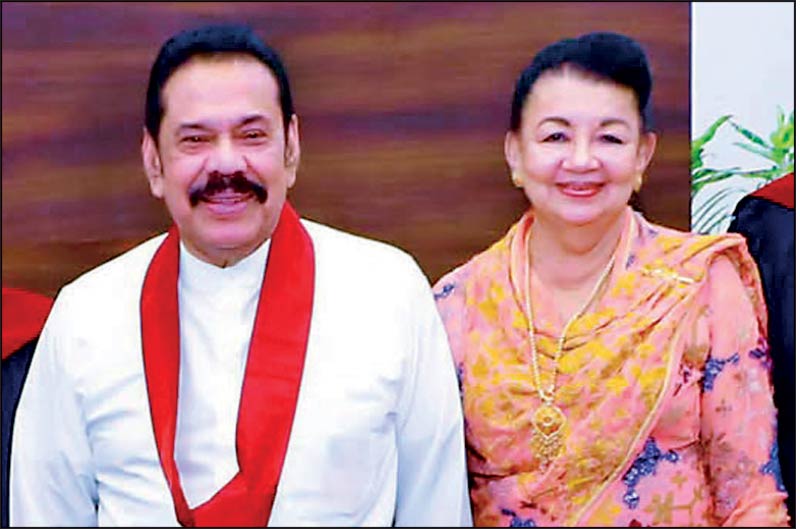
Wartime First Lady should have been afforded the courtesy of a statement recorded at home by the FCID
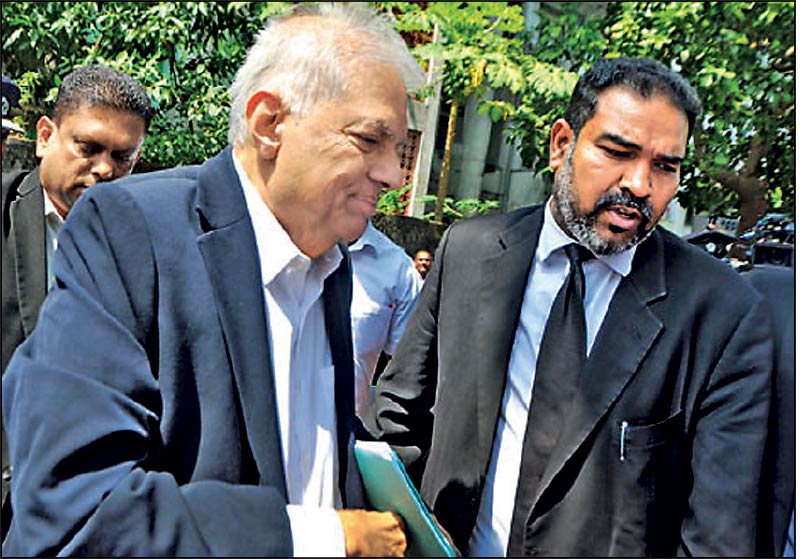
Ranil Wickremesinghe: Accountability or witch-hunt?
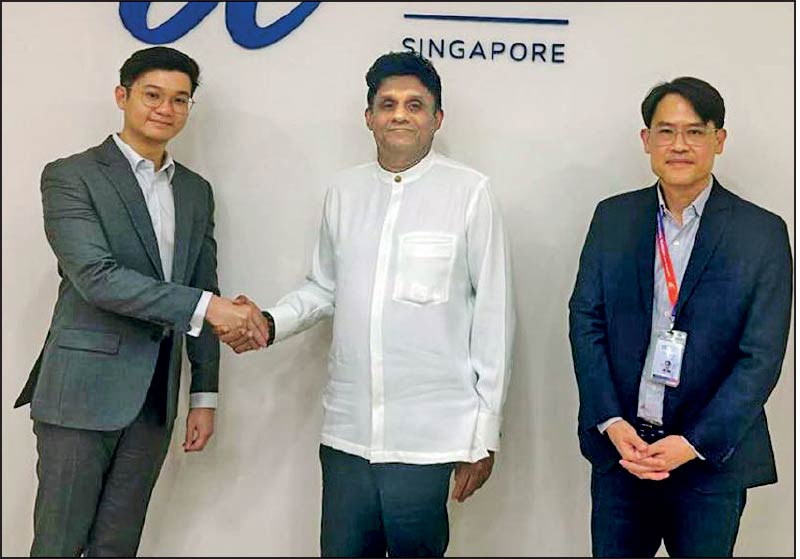
High-minded abroad; hardly hard-hitting at home
 Sri Lanka is caught in an AKD-JVP-NPP pincer of the worst of both worlds: Far-Right economic orthodoxy; and Far-Left political techniques. The goal was stated by JVP veteran and Cabinet Minister KD Lal Kantha’s in his ‘Reading Lenin’ lecture that though the JVP/NPP had obtained Governmental power it had not yet acquired State power, but is proceeding to do so
 Instead of spending the years of the last war in safe luxury in a friendly country with her sons, Shiranthi Rajapaksa stayed with her husband, family, home and country when Mahinda was giving political leadership to the nation and the armed forces, in the permanent shadow of assassination.
Under a civilized, cultured administration, the former First Lady would not be summoned to the FCID, though the FCID may certainly call on her at home and record a statement. I’m not calling for impunity and immunity, but common decency and courtesy. That is not, however, the ethos of the Anura Dissanayake dispensation.
Meanwhile, interestingly, Minister Mahinda Jayasinghe announced that Namal will be hauled up on the Krish issue in two weeks.
Hounding Ranil
Additional Solicitor General Dileepa Peiris, whose excessive zeal reminds me of Ian Wickremanayake, the Bribery Commissioner and Director Public Prosecutions under Minister Felix Dias Bandaranaike, informed Court on behalf of the Attorney General that “indictments will be filed before a three-judge Bench of the High Court in March in connection with the case against ex-President Ranil Wickremesinghe, following the conclusion of investigations.”
The trial-at-bar ‘nuclear’ option is to be used against former Prime Minister and former President Ranil Wickremesinghe, who, by Anura Dissanayake’s public admission, stabilised the economy, carrying it across a precarious rope-bridge, which Anura continued upon.
A brief Google search shows that:
‘A Trial-at-Bar is an extraordinary court proceeding...reserved for cases of exceptional public importance or those involving complex points of law. It consists of a panel of three High Court judges sitting together. Cases are often heard on a day-to-day basis to ensure rapid conclusion.’ Under ‘Contexts for Application’ it lists ‘grave offences against the State, such as conspiracy to overthrow the Government.’ Other contexts include ‘murder of public officials’. Historically, a trial-at-bar was used in England and Wales for crimes of ‘High Treason’.
Ranil Wickremesinghe doesn’t stand accused of any crime which falls into such categories. When the law is so grossly misapplied by the authorities, it has two results:
 Renders the sociopolitical atmosphere more polarised and toxic than it already is.
Sets a precedent of escalation which a successor administration tends to mimic or supersede—Sirimavo Bandaranaike, Felix Dias Bandaranaike and Ian Wickremanayake were found guilty of ‘abuse of power’ under the incoming Jayewardene administration and deprived of their civic rights.
Ranil Wickremesinghe is not being charged for the arguably treasonous conduct of calling off, against the entreaty of Army chief Lionel Balagalle, an operation by the Long-Range Reconnaissance Patrol targeting Velupillai Prabhakaran on 21 December 2001. Nor is he being tried on charges relating to the Batalanda torture camp. Nor yet is he being charged on the Central Bank Bond scam, nor plunging us into a debt trap by borrowing heavily from the private international money markets on the cusp of the 2019 election.
No, he is to be hauled up before a trial-at-bar, for allegedly filing a dodgy claim for a relatively modest sum of Rs. 16.6 million while accompanying his wife for the ceremonial conferment on her of an honorary professorship by a British university as publicly announced that month by the Mayor of Wolverhampton.
The trial-at-bar ‘nuclear’ option is to be used against former Prime Minister and former President Ranil Wickremesinghe, who, by Anura Dissanayake’s public admission, stabilised the economy, carrying it across a precarious rope-bridge, which Anura continued upon
Anura’s hypocrisy
Ranil is not being prosecuted according some radical Jacobin notion of justice, but by the successor administration which pivoted sharply to the Right, continued seamlessly from where he left off and proceeded further—spurning course correction—along the same policy path.
Meera Srinivasan of The Hindu accurately contextualised it.
‘Sri Lanka will press ahead with the ongoing International Monetary Fund (IMF) program—criticised by sections for imposing painful austerity on ordinary people — despite the devastation caused by Cyclone Ditwah that struck the island nation in late November 2025.
Following President Anura Kumara Dissanayake’s meeting with a visiting IMF delegation earlier this week, his office said that the Fund pointed to Sri Lanka moving “in the right economic direction despite facing a severe disaster situation” and stated that there would be “no changes to the agreement”, on the Extended Fund Facility (EFF) program.
…President Dissanayake, who was elected to office in September 2024, promised not to derail the IMF program aimed at achieving macroeconomic stability, even as some in Sri Lanka flagged crushing austerity measures linked to the program, including a drastic drop in value of ordinary people’s pension funds, tax hikes, rise in fuel and electricity prices, and a high cost of living that persists as a consequence.
In the wake of the cyclone, over 70 civil society groups and activists across Sri Lanka called for the renegotiation of the IMF deal, accusing the Dissanayake Government of becoming a “prisoner” of the ongoing IMF program. “The IMF controlling Government spending not only restricts the ability of the Government to respond to the ongoing humanitarian crisis, but severely impedes investment in infrastructure, recuperating livelihoods, and adapting to further climate change impacts,” they contended. A group of globally renowned economists, including Nobel laureate Joseph Stiglitz, echoed this demand and called for a halt to Sri Lanka’s debt repayments.
…Both the IMF and the Sri Lankan Government agreed to continue implementing the Extended Fund Facility program without making any changes to the existing agreement, the statement issued by the Presidential Media Division said…’
Prosecuting Ranil is hardly in the same category the progressive Lula administration prosecuting Far-Right former President Bolsonaro for inciting a coup.
State seizure
Sri Lanka is caught in an AKD-JVP-NPP pincer of the worst of both worlds:
Far-Right economic orthodoxy.
Far-Left political techniques. The goal was stated by JVP veteran and Cabinet Minister KD Lal Kantha’s in his ‘Reading Lenin’ lecture that though the JVP/NPP had obtained Governmental power it had not yet acquired State power, but is proceeding to do so.
Intelligent Sri Lankans have long agreed that one of the causes of the country’s failure to fulfil its brilliant potential at Independence was the dismantling through politicisation of the excellent independent Civil Service we had inherited from colonialism. The abolition of the independent Public Service Commission in the 1972 Constitution and its non-restoration in 1978 guaranteed our deterioration.
After the second insurrection, President Premadasa appointed a Youth Commission with Prof. GL Peiris as Vice-Chairman. A conclusion of its celebrated report was that the politicisation of the State administration and the State sector in general was a root cause of the alienation of the educated youth which had exploded in barbaric violence. As recommended by the report, President Premadasa began depoliticising the State sector and reintroducing examinations with interviews too, thereby reinstating merit as criteria of selection for the State apparatus.
What Minister KD Lal Kantha announced in a hitherto uncontradicted statement, was the intention to discard the notion of a State free of party-political control, and to embark relentlessly on a path of ‘State seizure’. It must be recalled that ‘the capture of State power by the party of the proletariat’, was precisely the aim of the two insurrections in 1971 and 1986-90. It is now being openly pursued by top-down infiltration and institutional insemination.
Ranil’s prosecution, Shiranthi Rajapaksa’s grilling and the threatened incarceration of Namal Rajapaksa are part of ‘mowing the lawn’ for this larger project.
Opposition Leader Sajith Premadasa responds far too tepidly and tardily to these totalitarian symptoms. If he is myopic enough to think the JVP-NPP will remove Ranil and Namal from the board, clearing a path for the son of President Premadasa who crushed the JVP and ended Rohana Wijeweera, he’s politically naïve beyond belief. When the JVP-NPP frames him, there’ll be none left to resist.
Under a civilised, cultured administration, the former First Lady would not be summoned to the FCID, though the FCID may certainly call on her at home and record a statement. I’m not calling for impunity and immunity, but common decency and courtesy. That is not, however, the ethos of the Anura Dissanayake dispensation
Federalist failure
Indispensable columnist DBS Jeyaraj has written a piece on the centenary year of SWRD Bandaranaike’s pioneering call for a federal Ceylon. He informs us that MA Sumanthiran hopes to commemorate the year by recanvassing the case for federalism including among the people and parties of the South.
That the call for federalism is a century old but has remained a failure reminds us of the line attributed to Einstein, namely that to keep doing the same thing and expecting a different result is the acme of lunacy. The federalist or federalising effort, right up to the Yahapalanaya Constitution reform process (2015-2019) has failed. Not even under the most extreme pressure of a major war for secession was federalism adopted.
The recent renewal of fighting by the Kurds in Syria shows that without a political solution, any nationalities question can and probably will flare up—but despite longstanding US support, the Syrian Kurds haven’t been able to secure federalism from either the Assad regime or the newly established Al Sharaa Presidency. The two were mortal enemies and polar opposites, but share the rejection of federalism. There are many such countries, from the Philippines to Nicaragua, Vietnam to South Africa, which just won’t go federal for complex, abiding reasons of geopolitics, history, State formation and political culture. Sri Lanka is one such.
Revisiting SWRD Bandaranaike’s exposition a century ago, what I find most striking as a political scientist, is his correct insistence that no country with our diversity and ethnic distribution, managed to maintain a centralist political superstructure; a centralist State. This remains true. A centralised unitary State, which Sinhala ultranationalists wish for, is geopolitically unsustainable as we saw in 1987.
However, SWRD’s recommendation of federalism is fatally flawed. As DBS Jeyaraj points out, Bandaranaike had abandoned federalism by 1940 in favour of Provincial autonomy.
‘…Subsequently, SWRD moved away from espousing federalism to encouraging decentralisation…
SWRD began envisaging the province as the unit of greater local authority. He wanted to set up Provincial Councils. The Local Government Ministry’s Executive Committee released a report advocating more powers to these proposed councils. In 1940, R.S.S. Gunawardena introduced a motion in the State Council proposing the setting up of Provincial Councils. The State Council approved it but for some inexplicable reason SWRD did not proceed further and present a Bill in the State Council during its tenure.
Bandaranaike later joined the United National Party (UNP) with his Sinhala Maha Sabha. He was appointed the Local Government Minister in Independent Ceylon’s first Cabinet under D.S. Senanayake. It is said that SWRD tried to revive his Provincial Council formulation again as a means to bring Government closer to the people. But his Cabinet colleagues enjoying power as full-fledged Ministers were reluctant to dilute or reduce their newly-gained authority. So SWRD could not go through with his plans…’
Prof GL Peiris’ memoir on Sri Lanka’s Peace Process contains a fascinating piece of historical information that unwittingly underscores this centrist solution.
‘The Donoughmore Commissioners were not friendly to the idea of federalism because of their robust aversion to division along communal or other lines, and their commitment, as the foundation of their report, to the unity of the body politic.
A nuanced approach typified their recommendations, insofar as they showed themselves well disposed to the concept of Provincial Councils. They accepted the system in principle, although inclined to leave the modalities of implementation to an elected administration…’
(GL Peiris, The Peace Process of Sri Lanka, p 2)
Thus, the Donoughmore Commission, a ‘neutral umpire’, regarded federalism as potentially centrifugal, divisive, and sagaciously preferred non-federal Provincial Councils. Provincial autonomy is the Middle Path between federalism and a centralised unitary State.
Given the continued piracy in Sri Lankan waters by South Indian fishermen and the recent physical brutalisation of Sri Lankan fishermen allegedly by the Indian Coast Guard, one can well imagine the consequences of land connectivity and a shared border. The scenario can be summed-up in the Sinhala saying warning against “gifting a monkey a razor”
Roads not to be taken
From the USA through Europe to Myanmar and Bangladesh, the problem of migration has been a huge, and hugely polarising, problem. Migration is almost always an issue when there are land borders. It is far less of a problem for islands. Why then would Sri Lanka not give daily thanks to all the devas that it is an island, devoid of land connectivity with South India?
Has Sri Lanka forgotten the initial military presence in the island’s north was that of TAFAII, i.e., Task Force Anti Illicit Immigration? True, Tamil Nadu is now much more prosperous than Sri Lanka, but these things change, while land connectivity once established, will not, and will become organic because of an ethnic kinstate as neighbour.
What if Sri Lanka had land connectivity with Tamil Nadu during the 30 years war? What if the LTTE’s rear base (‘pin thalam’) was physically contiguous with its frontline, and the Sri Lankan navy’s role was reduced?
Why would the High Commissioner of India keep harping on this controversial, tendentious outlier of an idea, at a time when India’s Sri Lankan diplomacy is exceedingly successful and its relationship with all parties, excellent? Here is an extract from an interview in the Jaffna Monitor.
‘Q. You have noted that traditional connectivity links, such as the Mannar–Rameswaram corridor, are under renewed discussion with the new Government. How serious is India about pursuing land or bridge connectivity between the two countries, and what factors will determine whether this moves beyond the discussion stage?
A. Physical connectivity is an important aspect of India–Sri Lanka relations, and India has been consistently working to improve it…
…With regard to the proposed land bridge connecting Talaimannar and Rameswaram, it is important to clarify that this proposal originated from the Sri Lankan side as far back as 1998–99, although it is often mistakenly described as an Indian proposal. The idea was subsequently included in the India–Sri Lanka Vision Statement of July 2023. Following this, the proposal was discussed in detail with the then Government in Sri Lanka…
The proposed land bridge would, in fact, be far more beneficial to Sri Lanka than to India. It has the potential to spur tourism and infrastructure development and would significantly transform the Northern and Eastern parts of Sri Lanka by enhancing connectivity. Improved connectivity would be a game-changer, particularly for the people of the North even though significant benefits will accrue to the entire Island.’
Physical connectivity and contiguity with India would tilt this island’s geopolitical and economic balance to its North and East, away from the South where the majority lives.
Who originated the idea “from the Sri Lankan side…as far back as 1998-9”? Does the record show President Chandrika Bandaranaike Kumaratunga or Foreign Minister Lakshman Kadirgamar having done so? As for the “India–Sri Lanka Vision Statement of July 2023… discussed in detail with the then Government in Sri Lanka…” this refers to Ranil Wickremesinghe and his administration. Wickremesinghe was never elected the leader of the country—the President—by the people of Sri Lanka, and had no mandate to discuss any proposal of such existential magnitude.
Ranil is not being prosecuted according some radical Jacobin notion of justice, but by the successor administration which pivoted sharply to the Right, continued seamlessly from where he left off and proceeded further—spurning course correction—along the same policy path
Given the continued piracy in Sri Lankan waters by South Indian fishermen and the recent physical brutalisation of Sri Lankan fishermen allegedly by the Indian Coast Guard, one can well imagine the consequences of land connectivity and a shared border. The scenario can be summed-up in the Sinhala saying warning against “gifting a monkey a razor” (“wandurata dalipihiya dunna vagey”).
Sri Lankan leaders and citizens should be inspired by Greenland/Denmark and Canada which demonstrated the patriotic backbone to say NO to the leader of the mighty American Empire, and stand staunchly by their sovereignty, boundaries, national interests, and identities.




