Friday Oct 02, 2026
Friday Oct 02, 2026
Friday, 2 October 2026 00:26 - - {{hitsCtrl.values.hits}}
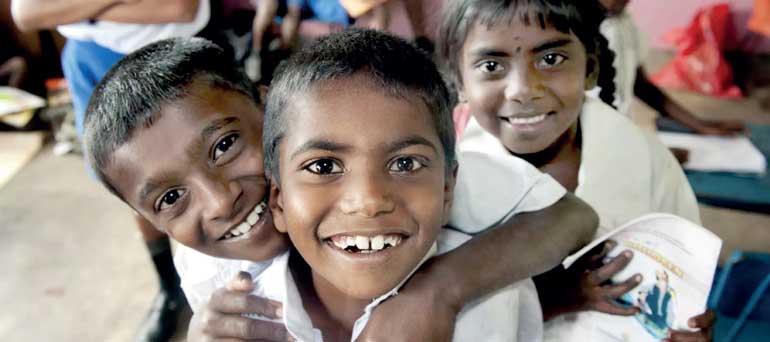
 Across the country, children will be on stages, in classrooms, at events, in photographs and on social media.
There will be art exhibitions, concerts, celebrations, gifts, ice cream, special offers, colourful campaigns and beautiful messages about children. And there is nothing wrong with celebrating children.
Children deserve joy. They deserve celebration. They deserve to laugh, play, sing and simply be children.
But child protection is something very different.
Child protection is not the celebration. It is what happens when the celebration is over.
It is what happens when an eight-year-old tells an adult something that no eight-year-old should ever have to know.
It is what happens when a child comes to school carrying something far heavier than their schoolbag.
It is what happens when a child discloses abuse.
It is what happens when a child is afraid to go home.
It is what happens when a child has been groomed online.
It is what happens when a child tells us that someone they trusted has hurt them.
And I know this because these are not hypothetical situations to us.
These are children who have sat in front of us.
These are children whose stories we have heard.
These are children who have told us things that are difficult to repeat, difficult to process and, sometimes, almost impossible to comprehend.
Children as young as eight are telling us that their 12 year old brother is raping them at home.
Children as young as 11 are being groomed by teachers to sexual activity and being told “this is good for you”
Children are living through nightmares during absolute horrific violence at home at the hands of their caregivers.
Children as young as 7 years old stating that they are completely addicted to watching sexually explicit content.
Children as young as 4 who are completely addicted to devices watching adult content.
I will not put the worst of what we hear into a social media post.
But I wish every adult who speaks about child protection could sit in a room and listen to even one of these children. Because once you have heard them, child protection stops being a campaign.
It becomes personal.
Sri Lanka ratified the United Nations Convention on the Rights of the Child in 1991. That was 35 years ago.
Thirty-five years of saying that children have rights. Thirty-five years of saying that children deserve protection. Thirty-five years of saying that their best interests matter.
And yet we still have children who cannot access even the most basic protection they are entitled to.
Yes, we have laws.
Our Penal Code, for example, specifically recognises cruelty to children and criminalises wilful assault, ill-treatment, neglect and abandonment of a person under 18 in circumstances likely to cause suffering or injury, including psychological or mental trauma.
But a law existing on paper is not the same as a child being protected in reality.
A survivor still encounters massive delays.
They encounter systems that are difficult to navigate.
They are asked to repeat what happened over and over and over again.
They can be exposed to processes that do not sufficiently account for trauma.
And sometimes the very systems that are supposed to protect a child can become another part of the child’s ordeal.
That is where we need to be honest with ourselves. We cannot keep measuring child protection by the number of programs conducted. We cannot measure it by how many children attended an event. We cannot measure it by how many photographs were taken. We cannot measure it by how many pledges were made at a press conference. And we certainly cannot measure it by how impressive our Children’s Day activity report looks at the end of the year.
The real measure is much harder.
What happened when that child needed us?
Did someone listen? Did someone believe them enough to act? Did someone know what to do? Was the child kept safe? Was the child treated with dignity? Did the system move? Did justice become accessible? Did the child receive the support needed to heal?
And most importantly, did we prevent another child from experiencing the same thing?
Every adult has a responsibility here.
Parents. Teachers. Professionals. Law enforcement. Government. Civil society. Communities.
And organisations that work in the field of child protection have a responsibility to ensure that their work does not end with a programme, a publication, a pledge or a photograph.
The work has to reach the child.
Because somewhere today, while we are celebrating Children’s Day, there is a child who does not feel safe.
Somewhere, a child is carrying a secret.
Somewhere, a child is trying to decide whether an adult can be trusted.
Somewhere, a child is waiting for someone to notice.
We cannot say we didn’t know.
We know.
The children are telling us.
The question is whether we are prepared to do something about it.
So celebrate them today. Let them have the cake. Let them have the ice cream. Let them sing. Let them dance. Let them make their art. Let them have their day.
But tomorrow, when the decorations come down and the photographs stop appearing on our feeds, the protection must continue. Because the greatest gift we can give a child is not a celebration for a day.
It is a childhood they are safe enough to remember.
(The author is an Attorney-At-Law and Founder/Senior Legal Consultant Child Protection Force)



