Saturday Nov 14, 2026
Saturday Nov 14, 2026
Saturday, 14 November 2026 00:00 - - {{hitsCtrl.values.hits}}
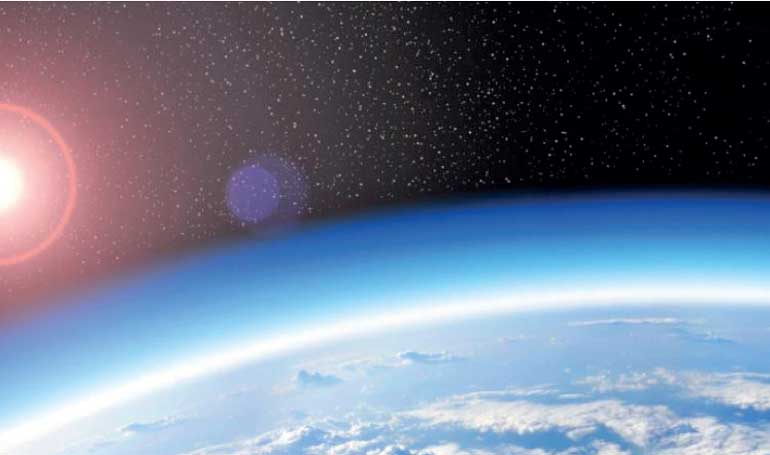
The same right that allows the mining of the commons of air for private profit must recognise the right to replacement, where privately produced gasses are placed into the commons of air. In this way the Global Commons of Air could act very much as a global bank to hold and account for the critical stocks it accepts into and dispenses out of the global capital
 There is an urgent need to consider our responsibility by the most ubequitious and essential common resource, air! The atmosphere has been identified as a Global Common by every national and internaional statement to date. The Global Commons are the Earth’s shared natural resources and environmental domains that lie outside the political jurisdiction of any single nation-state. The assumption being that, because no individual country owns them, all nations share access to and responsibility for them.
International law traditionally recognises four core domains as Global Commons.
1. High Seas: The open ocean areas beyond national exclusive economic zones (more than 200 nautical miles from a coast).
2. Atmosphere: The layer of gases surrounding the planet that regulates climate and air quality.
3. Antarctica: The southernmost continent, governed by the Antarctic Treaty System
4. Outer Space: The void beyond Earth’s atmosphere, including celestial bodies and orbits
It is the commons of air or the atmosphere of Earth that requires urgent address. The atmosphere, is the multi-layered mixture of gasses that surround Earth’s planetary surface which is retained by gravity. It is comprised of 78 percent · Nitrogen, 21 percent Oxygen ,· 0.93 percent Argon and 0.04 percent Carbon dioxide . Although Oxygen is the third most abundant element in the universe, Free molecular Oxygen or (O2) is one of the rarest things in the entire universe. The only place known to have it is the atmosphere of planet Earth. This phenomenon began when the earliest plants began colonising the land about 470 Ma adding Oxygen to the atmosphere. Again continued onwards until by 400 Ma, when present levels atmospheric oxygen was reached. At these levels fire became a planetary feature which then helped to maintain the subsequent evolution of the atmosphere.
Currently, the free Oxygen in the atmosphere is about 1.2x10¹⁵ tonnes (12,000,000,000,000,000 t), but it is unstable in our planet’s atmosphere and must be constantly replenished by photosynthesis of green plants. Recent human activity, mostly the burning of fossil fuels and deforestation have led to an increase in the concentration of Carbon Dioxide and a decrease in Oxygen.
Not just gasses
In addition to gasses, Earth’s atmosphere also contains variable quantities of suspended aerosols and particulates that can effect human health and create weather features such as clouds and hazes. Particulates or fine particulate matter with a diameter of 2.5 micrometers or less, which is about 30 times smaller in diameter than a human hair, is known as PM 2.5. Because of its tiny size, it stays in the air for a long time and can travel deep into the lungs and bloodstream.
Another significant pollutant of the atmosphere are the Volatile Organic Compounds (VOCs). These are carbon-based chemicals that easily turn into gas and evaporate into the air at room temperature. When VOCs react with sunlight and nitrogen oxides in the atmosphere, they form ground-level ozone and are a primary driver of photochemical smog and atmospheric haze. Chronic or high-level exposure can cause permanent damage to the liver, kidneys, and central nervous system. Certain common VOCs, such as benzene, formaldehyde, and methylene chloride, are known or suspected carcinogens linked to cancer.
A recently detected substance of concern that affect air quality are the Microplastics, defined as, “synthetic solid particulate matter or polymeric matrices, with regular or irregular shape and with size ranging from 1 μm to 5 mm, of either primary or secondary manufacturing origin, which are insoluble in water”. They represent the final stage of erosion of these resistant chemicals within the environment that they are released into. There is now an airborne fraction of microplastics consisting of synthetic polymer particles smaller than 5 mm (often less than 1 mm, structured as fibers or fragments) suspended or transported in the atmosphere. These small microplastic particles can remain in the atmosphere for up to one year, facilitating their transport around the globe. They have now become cloud condensation nuceli (CCN) intensifying rainfall in many areas.
Recent research by scientists at the Stockholm University reveals that rainwater across every region of Earth is now contaminated not only with microplastics but also now contains toxic per- and polyfluoroalkyl substances (PFAS) at levels that exceed safety limits set by major health agencies.
Much like plastics they are known as ‘forever chemicals’ due to their extreme resistance to natural degradation, these man made compounds have circulated through the global water cycle, contaminating even the most pristine and isolated regions, including Antarctica and the Tibetan Plateau. This pattern of widespread dispersal means that rainfall everywhere on the planet is no longer safe to consume without specialised purification.
These chemicals have been manufactured for decades in products like nonstick cookware, waterproof gear, and firefighting foams, leaching into waterways and cycling into the atmosphere via ocean spray. Exposure to such persistent pollutants is linked to severe long-term health risks, including various forms of cancer, compromised immune systems, decreased fertility, and developmental delays in children.
But we have to remember it’s not just the microplastics or just PFAS, that have began to degrade the quality of the air we breathe; it includes pharmaceuticals, herbicides, pesticides adsorbed onto PFAS, plastic and partially combusted carbon. The quality of the very air we breathe is being eroded. The warning has been given by the loss of flying insects and invertebrates that use the air as their living enviroment, as the quality of air goes down so do the creatures who live in it. This is why 70% to 80% of all flying insects in agricultural fields are gone and why biodiversity is declining at a rate of 1% year on year.
The commons of air have largely become a repository to the ‘negative externalities’ produced by industrial and transport activities of the modern economic system. These negative externalities are exemplified by the process of obtaining energy for industry or transport. All the combustion gasses of burning fossil carbon compounds, provoke a cost to the environment but that cost is considered a ‘negative externality’ and the person discharging these toxins has no responsibility nor cost for that action.
This assumption implies, that if a process produces a benefit to the environment during its activity, it must be considered a ‘positive extenality’ and reflect a value for that action. If the product is something that is being taken out or mined out of the commons, the replacement of what has been lost must have value. The same right that allows the mining of the commons of air for private profit must recognise the right to replacement, where privately produced gasses are placed into the commons of air. In this way the Global Commons of Air could act very much as a global bank to hold and account for the critical stocks it accepts into and dispenses out of the global capital.




