Why modernising labour laws is essential for Sri Lanka

Monday, 30 November 2026 00:41 -     - {{hitsCtrl.values.hits}}


Sri Lanka cannot create enough jobs, attract investment or retain its talent without modernising its labour laws. Labour law reform is no longer simply a legal or industrial relations issue; it is an economic imperative. If all the stakeholders serious about employment generation, entrepreneurship and competitiveness, it must rethink how its labour market is regulated. The Government’s initiative to consolidate and modernise existing labour legislation is therefore timely. The proposed reforms, being developed by an expert committee appointed with Cabinet approval, are structured around four pillars: labour standards, occupational health and safety, industrial relations and dispute resolution, and trade union rights. The publication of four drafted chapters of the proposed Labour Standards Bill for public consultation is a welcome step towards a more transparent and inclusive reform process.
The challenge is to strike the right balance between protecting workers and enabling employers to grow, invest and recruit. Labour laws should not become barriers to formal employment or discourage businesses from expanding.


Modernising the world of work

The proposed reforms cover employment contracts, working hours, overtime, leave, maternity protection, paternity leave, part-time employment and social security. Formal employment contracts can provide clarity and certainty for both employers and employees. Similarly, modernising working-hour provisions and introducing greater flexibility could help businesses respond to changing market conditions while giving workers more opportunities to participate in the economy.

The world of work has changed considerably. Employment is no longer confined to the traditional workplace or a rigid working-day model. Flexible working hours, part-time work, remote working, hybrid arrangements and project-based employment are increasingly relevant, particularly for younger workers, women and professionals balancing family responsibilities. Labour legislation must evolve to accommodate these realities without compromising fundamental worker protections. Greater flexibility could also help bring more women into the workforce and enable the country to make better use of its available talent.


Protecting workers while encouraging participation

Maternity protection and paternity leave deserve particular attention. Sri Lanka must encourage women to enter, remain in and advance within employment, particularly given the significant number of women who are now professionally and academically qualified to contribute to the economy. However, these benefits must be structured carefully to avoid creating unintended disincentives to hiring women. Social protection mechanisms and equitable financing arrangements should be considered so that the burden does not fall disproportionately on individual employers.

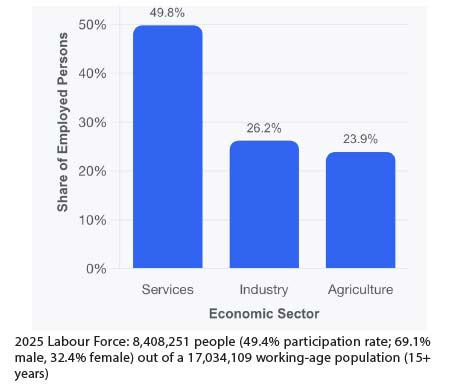
Sri Lanka also needs to confront its growing employment challenges, particularly youth unemployment, low female labour-force participation, skills shortages and the migration of skilled professionals. Small and medium-sized enterprises, which are critical to employment generation, need regulations that are clear, predictable and proportionate. Excessive complexity, uncertainty and compliance costs can discourage recruitment, delay investment and encourage businesses to remain informal.

Worker protection, however, must never be compromised. Safe workplaces, freedom from violence and harassment, fair dispute resolution and legitimate trade union rights are essential. Good industrial relations build trust, improve productivity and reduce disruption. The objective should not be to weaken workers’ rights but to make the framework more effective, relevant and compatible with economic growth.


Labour reform and Sri Lanka’s competitiveness

As I argued in my earlier Daily FT article, Labour Reform and Attracting Investment (21 July 2023), labour-market modernisation must be considered an important part of Sri Lanka’s investment and economic reform agenda. Similarly, in Skills Accumulation Key for Recovery Post-IMF (17 March 2023) and Sri Lanka’s Talent Exodus and the Challenge of Retention (24 February 2023), I highlighted the importance of developing and retaining human capital as a foundation for sustainable economic recovery. The Sri Lanka Human Capital Summits have also highlighted these challenges, particularly the need to align education, skills development and employment opportunities with the changing demands of the economy.

The ongoing public consultation provides an opportunity for employers, trade unions, professional bodies and workers to shape a framework suited to Sri Lanka’s future. The proposed legislation must be informed by evidence, international best practices and the realities of operating a business in an increasingly competitive global economy.

Ultimately, the success of labour law reform should not be measured simply by the number of laws consolidated or provisions amended. It should be measured by whether more businesses invest, more people find decent employment, productivity improves and Sri Lanka becomes more competitive. In the final analysis, Sri Lanka needs labour laws that protect workers, but it also needs laws that encourage employers to employ. Labour reform is economic reform—and a key to employment generation.

References:

Daily FT

1. Govt. seeks to reassure unions over labour law reforms – 31 October 2026.

2. Govt. moves to consolidate labour laws under new reform framework – 24 November 2026.

3. Labour Reform and Attracting Investment – 21 July 2023.

4. Skills Accumulation Key for Recovery Post-IMF – 17 March 2023.

5. Sri Lanka’s Talent Exodus and the Challenge of Retention – 24 February 2023.

6. Sri Lanka Human Capital Summit reports – National Human Resources Development Council (NHRDC), Sri Lanka.

Recent columns